
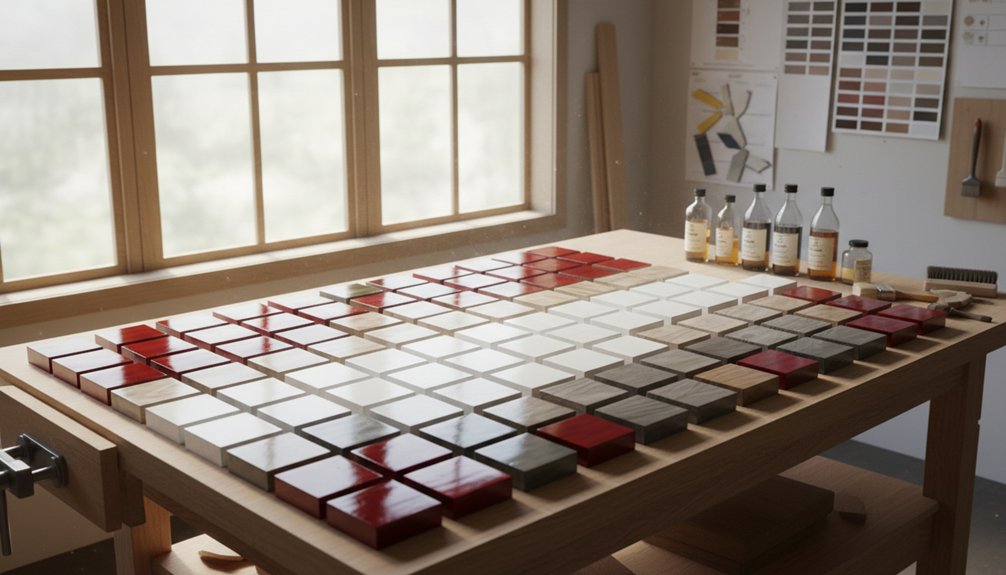
You can choose from over 50 furniture finish options that cater to various needs and preferences. Traditional oil-based stains penetrate deep into the wood grain, enhancing the natural appearance of the wood. Water-based treatments offer low VOCs, making them safer for indoor use. If you work with dense woods, gel stains provide excellent coverage without running. For water resistance, tung oil protects surfaces effectively. If you’re aiming for a vintage look, chalk paint delivers that classic aesthetic. High-gloss lacquers are ideal for surfaces that require durability and easy cleaning.
Each finish has a specific purpose. For instance, oil-based stains emphasize the wood’s natural grain, while chalk paint is designed to create a distressed texture. High-traffic surfaces benefit from the durability of lacquers. Understanding these options ensures you select the right finish for your custom project, meeting its unique requirements effectively.
Traditional Wood Stains and Their Applications
When I select a finish for my woodworking projects, I rely on traditional wood stains for their proven effectiveness in enhancing the natural wood grain. These stains penetrate deeply into the wood fibers. This penetration creates a rich color while maintaining the wood’s texture and pattern.
Traditional wood stains penetrate deeply into fibers, creating rich color while preserving the wood’s natural texture and grain pattern.
I prefer oil-based stains because they provide excellent penetration. They allow for longer working times, which helps achieve even coverage on large surfaces. In contrast, I sometimes use water-based stains for smaller projects because they dry quickly and have lower odor. However, I’ve to be mindful that they can raise the wood grain slightly.
For dense woods like maple or cherry, I choose gel stains. These thicker formulations prevent blotchy results that can occur with liquid stains. I find gel stains easier to control, especially when working on vertical surfaces.
Before applying any stain, I always test it on scrap wood to ensure the color matches my vision. This step is crucial for achieving the desired finish on my projects.
Oil-Based Finishes for Protection and Beauty
Oil-based finishes protect wood while highlighting its natural grain and color. You can choose from several popular types, including polyurethane, varnish, and tung oil, each suited for different projects and wood species.
Applying these finishes requires specific techniques, such as proper sanding and layering, to ensure even coverage and optimal adhesion. Regular maintenance, including cleaning and reapplication as needed, will keep these finishes looking great and extending the life of your furniture.
Understanding these relationships helps ensure your woodworking projects maintain their beauty and durability over time.
Popular Oil-Based Types
Oil-based finishes are essential for woodworkers who want to enhance the beauty and durability of their projects. Tung oil penetrates deep into wood fibers and creates a water-resistant barrier. This barrier highlights the natural grain patterns of the wood. It dries to a satin finish, which doesn’t build up on the surface like traditional varnishes do.
Linseed oil, made from flax seeds, provides excellent penetration and flexibility. It works particularly well on softwoods and develops a warm, amber tone as it ages.
Danish oil offers a balance between penetrating oils and surface finishes, making it easier to apply while still providing moderate protection.
Boiled linseed oil dries faster than raw linseed oil, which makes it a practical choice for furniture projects that require quicker turnaround times.
Each oil-based finish has its specific application and benefits, allowing woodworkers to choose the right product for their needs.
Application and Maintenance
To achieve a durable and attractive oil-based finish on wood, you need to follow proper application techniques. First, sand the wood surface using progressively finer grits of sandpaper, finishing with 220-grit. This step smooths the surface and prepares it for the finish.
After sanding, clean all dust off the surface to ensure proper adhesion of the finish.
Next, apply the finish using a high-quality brush or a clean cloth. Work the finish into the wood by applying thin, even layers. Always work with the grain to avoid streaks and drips. Heavy buildup can ruin the look, so keep your application light and controlled.
Allow each coat to dry completely before applying the next one to ensure a strong bond between layers.
For maintenance, dust your finished furniture regularly with a soft cloth to keep it looking fresh. If the wood starts to look dry, reapply the oil finish. I recommend doing this at least once a year.
Avoid using harsh cleaners and excessive moisture, as these can damage the finish. For minor scratches, use fine steel wool to buff them out, then apply a fresh coat of oil to restore the surface.
Water-Based Treatments and Eco-Friendly Options
Water-based finishes provide a healthier alternative to traditional oil-based products.
These finishes protect furniture effectively while minimizing harmful chemical emissions. Low-VOC stains reduce volatile organic compounds, improving indoor air quality in homes. Using these stains means your living environment becomes safer without sacrificing durability.
Plant-based finishes, derived from natural ingredients like soy and hemp, offer sustainable protection.
These finishes ensure that you can maintain your furniture’s appearance without compromising your family’s health or harming the environment. By choosing water-based and plant-based options, you support eco-friendly practices while achieving solid results for your furniture.
Low-VOC Stain Benefits
Homeowners who choose low-VOC stains improve indoor air quality and lessen environmental impact. Low-VOC stains contain fewer volatile organic compounds, resulting in less odor during application and quicker drying times.
These stains help reduce headaches, respiratory irritation, and chemical sensitivity reactions that often occur with traditional stains.
Low-VOC stains perform effectively like conventional options while prioritizing health. They maintain color depth and durability without sacrificing finish quality. This makes them ideal for indoor projects, especially where ventilation is limited.
Additionally, low-VOC stains enhance long-term air quality in homes. This is particularly important for furniture in bedrooms, nurseries, and living spaces where families spend significant time.
Plant-Based Finish Options
Plant-based finishes provide a sustainable alternative to synthetic options without sacrificing performance. Natural oil finishes, such as those made from tung, linseed, and walnut, protect wood while being environmentally responsible.
These eco-friendly treatments penetrate wood fibers and create durable surfaces that improve with age.
Plant-based finishes have several advantages for those who prioritize sustainability:
- Application: You can easily apply most natural oil finishes by simply wiping them on the surface, eliminating the need for special tools.
- Sourcing: These finishes come from renewable plant resources that can be harvested sustainably and replanted.
- Safety: Plant-based finishes generally contain fewer harmful chemicals compared to traditional synthetic products.
You can select from a variety of plant-derived formulations tailored to your specific project needs while supporting sustainable manufacturing practices.
Paint Finishes: From Chalk Paint to High-Gloss Lacquers
Choosing the right paint finish for furniture requires understanding the differences between finishes, from matte chalk paint to high-gloss lacquers.
This knowledge helps you achieve the desired look and durability for your project.
Chalk paint provides a vintage, distressed look. You can apply chalk paint with minimal surface preparation.
Chalk paint creates an effortless vintage aesthetic with minimal prep work required for authentic distressed charm.
To enhance the effect, sand certain areas to reveal layers beneath. Chalk paint suits farmhouse and shabby chic styles well.
High-gloss lacquers offer maximum durability and are easy to clean.
Use high-gloss finishes for high-traffic items like dining tables and kitchen cabinets. These lacquers need careful surface preparation and multiple thin coats to achieve the best results.
In between chalk paint and high gloss, satin and semi-gloss options balance aesthetic appeal and practicality.
Use satin or semi-gloss finishes for everyday furniture pieces. They provide a nice sheen while still being easy to maintain.
Specialty Textures and Distressed Treatments
Specialty textures and distressed treatments enhance furniture surfaces beyond standard paint finishes. These techniques create unique character and visual interest, transforming ordinary pieces into statement furniture with authentic aged appearances or distinct tactile qualities.
Distressed finishes replicate years of natural wear. I achieve this by strategically sanding, scraping, and layering. I focus on removing paint from edges and high-wear areas, mimicking the wear that occurs through normal use. This process adds depth and history that new furniture simply doesn’t have.
To add dimensional appeal, I use various methods for textured surfaces:
- I apply crackling medium to create authentic antique paint cracks.
- I use dry brushing to build subtle color variations and depth.
- I implement stippling techniques to produce organic, hand-crafted textures.
These specialty treatments require careful application. I consider the furniture’s style and intended use when selecting the level of distressing and texture intensity. This ensures the best results and enhances the overall aesthetic. By maintaining regular dusting, the beauty of these specialty finishes can be preserved over time, adding to the furniture’s charm.
Clear Protective Coatings and Sealers
Clear protective coatings and sealers play a crucial role in preserving furniture and extending its life. Each type of clear coat offers specific benefits tailored for different needs.
For example, polyurethane provides high durability and water resistance, making it the best choice for furniture that experiences a lot of use. Lacquer creates a smooth, hard finish, ideal for fine furniture that requires a polished look. Shellac is easy to apply and gives a natural amber hue, while wax offers a traditional, soft appearance but needs regular upkeep.
Choosing the right application method also impacts the final outcome. Brush application allows for precision on detailed pieces, while spray techniques ensure even coverage across larger surfaces.
Applying several thin coats delivers better protection compared to one thick layer. Successful coating relies on proper surface preparation and favorable environmental conditions, which are critical for achieving a durable finish.
Choosing the Right Finish for Your Wood Type and Project Goals
Several factors influence the finish selection for your furniture project. First, consider the wood species. Dense hardwoods like maple accept stains differently than porous woods like oak or pine. Understanding how your chosen wood interacts with various finishes is essential for making the right decision.
Next, evaluate your project’s location and intended use. Indoor furniture often requires less protection compared to outdoor furniture, which needs finishes that withstand moisture and UV exposure.
Indoor projects need minimal protection while outdoor furniture demands finishes that resist moisture and harmful UV rays.
Then, think about your maintenance preferences. Some finishes, like oils, require regular reapplication, while others, such as polyurethanes, can last for years without needing touch-ups.
Additionally, define your desired appearance. If you want to showcase the natural wood grain, choose a transparent finish. If you prefer complete coverage, opt for a solid color or opaque stain.
Finally, assess the durability of the finish in relation to your project. High-traffic items, like kitchen tables, require finishes that offer strong protection against scratches and spills, while decorative pieces like shelving can use less durable options.
Match the finish’s protective qualities to the specific use and environment of your project. Furthermore, when choosing a finish, consider the option of quality handmade furniture which can provide a unique aesthetic and durability tailored to your needs.