
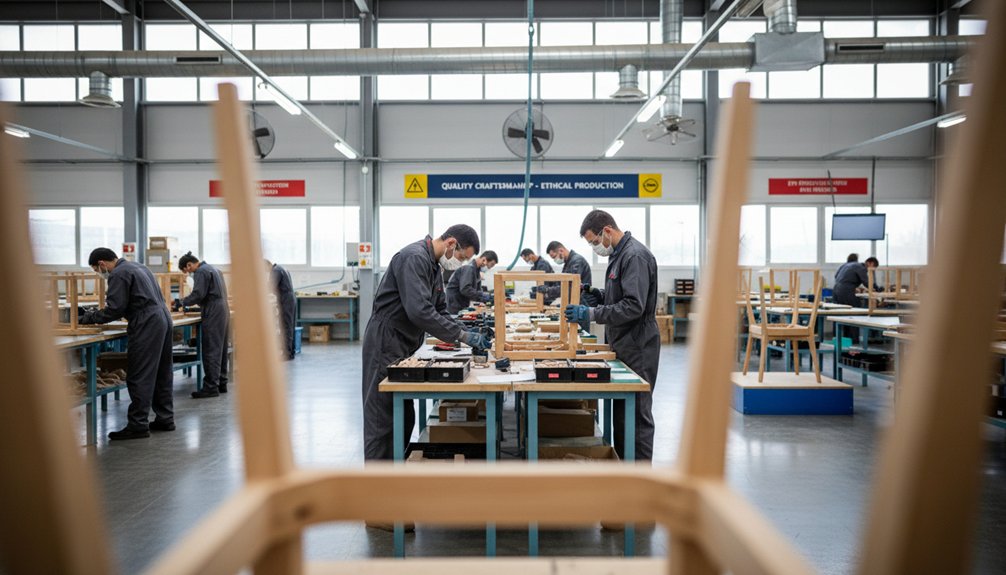
SMETA auditing assesses ethical labor standards in furniture supply chains by examining specific factors: worker rights, safety conditions, and business practices. Auditors evaluate fair wages, reasonable working hours, child labor prevention measures, workplace safety protocols, and the freedom of association for workers. They verify compliance by tracking conditions from raw material suppliers to final assembly facilities, using supply chain mapping and conducting unannounced visits.
SMETA certification enhances brand reputation and builds consumer trust, but it only provides snapshots of compliance rather than ongoing accountability. To ensure effective monitoring, companies should understand these assessment criteria and implement robust tracking systems. By prioritizing transparency and continuous improvement in labor standards, businesses can create ethical supply chains that benefit both workers and consumers.
What SMETA Auditing Encompasses in Furniture Manufacturing
When I evaluate ethical practices in furniture manufacturing, I rely on the SMETA (Sedex Members Ethical Trade Audit) framework. This framework focuses on four key areas: labor standards, health and safety, environmental practices, and business ethics.
First, I assess labor standards by examining workers’ rights. I check if the company pays fair wages, maintains reasonable working hours, and prohibits child labor. Clear documentation is essential here.
Next, I focus on health and safety protocols. I evaluate workplace conditions, ensuring proper ventilation, equipment maintenance, and established emergency procedures. A safe work environment is crucial for productivity.
A safe work environment with proper ventilation, maintained equipment, and emergency procedures is essential for both worker wellbeing and productivity.
Then, I inspect environmental practices. I look for sustainable sourcing of materials and waste management systems. Companies should implement practices that minimize their environmental impact.
Finally, I review business ethics. I analyze the supply chain for transparency. I trace materials from raw sources to finished products, ensuring suppliers adhere to international labor standards. Additionally, I consider suppliers who provide dropship fulfillment services, which can further support ethical sourcing in the furniture manufacturing industry.
This thorough auditing process holds every level of production accountable and supports ethical sourcing in the furniture manufacturing industry.
Key Labour Standards and Worker Rights Evaluated During SMETA Assessments
Labor standards are the most detailed area in SMETA assessments. Auditors evaluate specific worker rights that have a direct impact on employee welfare and workplace fairness.
For instance, the assessment checks freedom of association, confirming that workers can join unions without any interference from management. Auditors also look for signs of forced labor, ensuring that no employee is trapped in situations like debt bondage or document retention.
Child labor verification is another critical component. Assessors verify age documentation and ensure that younger workers in allowed roles have access to education.
Working hours are examined closely to confirm compliance with local overtime regulations. The assessment also evaluates fair compensation, checking for adherence to minimum wage laws and the transparency of payment systems.
These labor rights elements are essential for establishing ethical sourcing practices. By focusing on these areas, you can identify suppliers who genuinely prioritize worker dignity and comply with legal requirements throughout your furniture supply chain operations.
How SMETA Audits Navigate Complex Multi-Tier Furniture Supply Networks
Furniture supply chains span multiple countries and involve numerous subcontractors. SMETA audits track labor standards effectively across these complex networks. Auditors systematically map each tier of the supply chain, starting from raw material suppliers and extending to final assembly facilities. They identify all subcontractors and assess their compliance with established ethical standards.
When a company operates with multiple tiers, audit complexity increases. However, SMETA’s framework offers clear guidance for navigating these complexities. Auditors require transparency regarding supplier relationships and often conduct unannounced visits to subcontractors. They check that contracts include specific labor standard requirements and ensure companies monitor compliance regularly throughout the supply chain.
In practice, maintaining compliance demands constant attention. Companies must continuously evaluate supplier performance and address any identified issues. Regular communication with subcontractors can prevent compliance gaps and foster a culture of ethical practices within the supply chain. Furthermore, companies like Artisan Furniture emphasize ethical manufacturing practices to enhance product value for consumers who are environmentally conscious.
Benefits and Limitations of SMETA Certification for Furniture Brands and Consumers
SMETA certification offers clear benefits for furniture brands that prioritize ethical labor practices. First, certification helps brands build a strong reputation by providing third-party validation of their responsible sourcing efforts. This transparency directly increases consumer trust, as many buyers actively seek out ethically-made products.
Additionally, certified brands often enjoy better relationships with their suppliers, leading to smoother operations and reduced regulatory risks.
SMETA certification strengthens supplier partnerships, creating operational efficiency while minimizing compliance risks for furniture brands.
However, SMETA certification has its limitations. Audits only provide a snapshot of compliance at a specific time and don’t ensure ongoing supply chain accountability. Smaller suppliers may find the costs and complexity of certification to be a barrier.
Furthermore, SMETA doesn’t address environmental sustainability, which is increasingly important to consumers. The certification also lacks robust enforcement mechanisms for non-compliance beyond the audit results.
While SMETA establishes basic standards, brands should engage with suppliers continuously to ensure compliance and improve practices over time.
Implementation Strategies for Furniture Companies Pursuing SMETA Compliance
When furniture companies pursue SMETA compliance, they need to create a detailed implementation strategy that focuses on both their operations and their supplier relationships.
Start by conducting risk assessments throughout your supply chain. Identify compliance challenges early to address them before they escalate. Map your supplier network. Set clear ethical standards that all suppliers must meet.
Engage stakeholders effectively for successful implementation. Train procurement teams on SMETA requirements. Establish communication channels with suppliers to ensure they understand your compliance expectations.
Implement regular monitoring systems to track progress and pinpoint areas that need improvement.
Consider collaborating with consultants who specialize in ethical sourcing. These experts can help navigate complex SMETA requirements and establish sustainable practices that protect workers while ensuring operational efficiency.