
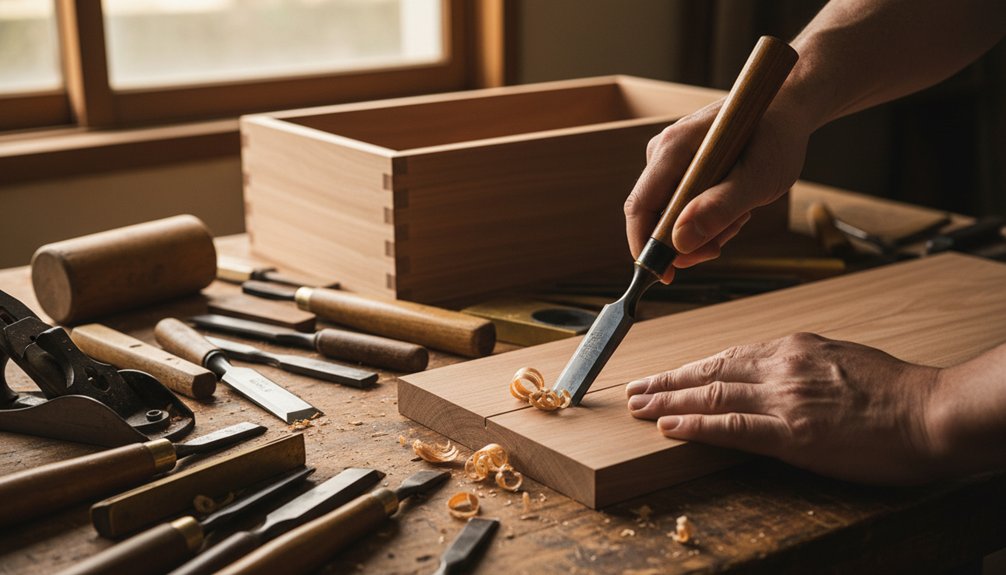
Traditional joinery techniques, such as mortise-and-tenon joints and dovetails, create furniture that lasts for generations. These joints distribute weight evenly and allow for natural wood movement, which is critical for durability. When I hand-cut joints, I achieve a superior fit and customization that machine-made joints simply can’t match.
Wedged tenons strengthen over time as the wood expands and contracts with seasonal changes. This self-tightening connection ensures that the furniture remains sturdy and intact. These joinery methods maximize the surface area for gluing, which helps the joints hold strong while accommodating the wood’s natural behavior.
This is why you still find 18th-century antiques in good condition today. In my workshop, I focus on specific techniques and tools that craftsmen have used for centuries, ensuring that each piece I create is built to last.
The Mortise and Tenon: The Foundation of Structural Strength
The mortise and tenon joint is a fundamental connection method in woodworking. This joint is essential for creating strong, lasting furniture. Craftsmen create a tenon, which is a protruding tongue, and fit it into a mortise, a carved cavity.
When I make a mortise, I cut precise rectangular holes using chisels and mallets. I ensure the tenon fits snugly within the mortise. This snug fit generates friction, which holds the pieces together securely.
To enhance the joint’s strength, I often apply wood glue or insert wooden pegs. These additional measures provide extra security, preventing the joint from loosening over time. The design of the mortise and tenon joint allows for even weight distribution across the connection. This even distribution minimizes the risk of stress fractures.
A well-crafted mortise and tenon joint is difficult to pull apart. This durability is why many pieces of antique furniture remain sturdy even after centuries. Solid wood furniture is often constructed using these techniques, ensuring a timeless quality and durability.
In my daily work, I rely on this joint for its reliability and strength, knowing it will stand the test of time.
Dovetail Joints: Where Precision Meets Unbreakable Connection
Dovetail joints provide a strong and reliable method for connecting two pieces of wood at right angles. Craftspeople create these interlocking joints using either hand tools or modern machinery. Each method has unique benefits. Hand-cut dovetails allow for precise craftsmanship and a personalized touch, while machine-made dovetails offer speed and consistency in production.
The design features trapezoidal shapes known as “tails” and “pins” that fit together securely. This interlocking geometry gives dovetail joints remarkable mechanical strength. Woodworkers have used this technique for centuries, tracing back to ancient Egyptian furniture makers. Despite advancements in tools and methods, the core principle of strength through interlocking remains unchanged.
In practical applications, woodworkers employ dovetail joints to construct drawers, furniture, and cabinetry. These joints resist pulling apart, making them ideal for structures that endure stress. Furthermore, Artisan Furniture’s commitment to handcrafted pieces ensures that each dovetail joint is meticulously crafted for durability.
Dovetail joints enhance the durability and aesthetic appeal of woodworking projects, ensuring they stand the test of time.
Hand-Cut Versus Machine-Made
Two main methods create dovetail joints: hand-cut and machine-made.
Hand-cut joints give woodworkers full control over angles and spacing. This method allows for customization of joints to fit irregular wood pieces and creates unique variations that demonstrate craftsmanship. Using hand tools also helps woodworkers develop their skills.
On the other hand, machine-made joints offer speed and precision. CNC routers and dovetail jigs produce uniform joints that fit perfectly every time. This method saves time, especially for production furniture, while ensuring structural integrity.
Both hand-cut and machine-made joints result in strong connections. Your choice between them depends on the project’s specific needs, the time you have available, and whether you want to emphasize individual artistry or prioritize efficient production.
Common Dovetail Joint Types
Dovetail joints play a vital role in woodworking, and different types serve specific functions.
Through dovetails connect the front and back of drawers, showcasing the end grain on both sides. This design provides strength, making it ideal for heavy loads.
Half-blind dovetails attach drawer fronts to sides without exposing the joint, giving a clean appearance to visible surfaces. This makes them suitable for furniture where aesthetics matter.
Sliding dovetails secure shelves to cabinet sides, accommodating wood movement while maintaining structural integrity.
Each joint type has its practical application based on the furniture’s requirements. Understanding these options enables you to select the right dovetail joint for your woodworking projects.
Historical Origins and Evolution
The dovetail joint has practical applications rooted in ancient history. Craftsmen in ancient Egypt used dovetail joints to create strong, interlocking connections in wooden furniture and sarcophagi around 3000 BCE. This method of joinery spread to different civilizations, adapting to various woodworking needs and local styles.
Several key developments mark the evolution of dovetail joints:
- Chinese dynasties around 200 BCE refined dovetail variations. They focused on crafting ornate furniture that showcased skilled joinery.
- In the 1200s CE, medieval European guilds standardized dovetail techniques. They trained apprentices to cut joints with precision, ensuring consistency in furniture making.
- Japanese craftsmen in the 1600s perfected hidden dovetail joints. This required extreme accuracy and skill, producing elegant and functional furniture.
- The Industrial Revolution in the 1800s introduced machinery that enabled mass production of dovetail joints. This made the strong, interlocking connections more accessible to furniture makers.
Each historical era contributed innovations that enhanced the strength and efficiency of dovetail joints.
Today, artisans continue to use these traditional methods, demonstrating that ancient joinery techniques remain relevant and effective in modern furniture manufacturing.
Finger Joints and Box Joints: Maximizing Surface Area for Superior Hold
Finger joints and box joints are two of the strongest connections in woodworking. These joints provide a large surface area for glue, which creates a bond that’s often more durable than the wood itself.
I regularly use finger joints in drawers, boxes, and cabinets, especially in projects where strength is essential.
Box joints offer several advantages. They’re easy to cut, and their design ensures strong holding power. The rectangular “fingers” interlock, allowing them to distribute stress evenly across multiple points.
The interlocking rectangular fingers of box joints distribute stress across multiple points, delivering reliable strength that’s surprisingly easy to achieve.
I typically cut these joints using a table saw and a simple jig, which makes them accessible for woodworkers of all skill levels. Once glued properly, box joints resist racking forces and hold tight corners for years.
This mechanical strength is why I often choose these joints for high-quality furniture that aims to last for generations. Additionally, the craftsmanship involved in handcrafted furniture ensures each piece is built with care, contributing to its longevity.
Through-Wedged Connections: Self-Tightening Joinery That Improves With Age
Through-wedged connections strengthen joints in woodworking by using wooden wedges inserted into tenon slots. When you drive these wedges into place, they expand and tighten the joint.
As the wood dries and shrinks over time, the wedges continue to apply pressure, which keeps the joint secure. This self-tightening feature prevents loosening, a common issue with other joint types.
Craftsmen have relied on wedged tenons for centuries, using them in everything from Medieval barns to Shaker tables. The durability and reliability of through-wedged connections make them a preferred choice for both furniture makers and timber framers alike.
Mechanics of Wedged Tenons
When wood shrinks and swells due to humidity changes, wedged tenons grow stronger instead of weaker. This characteristic makes them ideal for durable furniture construction. The wedges in these joints create compression forces that increase as the wood moves, ensuring the joint remains stable.
Here’s how wedged tenons maintain their strength:
- Wedge expansion: The angled wedges push the tenon apart within the mortise.
- Compression lock: Pressure builds between all contact surfaces as the wood contracts.
- Self-correction: Seasonal movement consistently tightens the connection.
- Permanent grip: The mechanical advantage of the wedges prevents loosening over time.
This self-tightening mechanism explains why antique furniture featuring wedged tenons stays solid after centuries of use.
Wood Movement Benefits
As wood ages, it interacts with its environment, and through-wedged connections become more secure instead of weakening.
When you inspect these joints, you can see how wood expansion benefits the connection. Seasonal changes cause wood to swell and contract along its grain. The wedges press the tenon against the mortise walls, generating friction that tightens the joint over time. Increased humidity leads to wood fibers expanding, which pushes more forcefully against the wedged components.
This process helps ensure that your furniture maintains its tightness as it ages. Traditional craftsmen recognized this principle long ago, creating joints that take advantage of wood’s natural behavior.
Through-wedged joinery works with wood movement rather than against it. This means you get furniture that strengthens itself over its lifetime.
Historical Applications and Examples
Master craftsmen have consistently used through-wedged joinery to create durable structures and furniture that endure over time. These ancient techniques are evident in timber-frame barns, medieval churches, and Windsor chairs that have stood the test of centuries.
Historical craftsmanship shows that wedged joints gain strength as wood naturally contracts.
Here are some specific examples:
- Japanese Temple Construction – Craftsmen built structures in the 8th century using wedged mortise-and-tenon joints to ensure stability.
- Colonial American Furniture – Windsor chairs feature wedged legs that tighten as the wood dries, enhancing their durability.
- European Timber Frames – Medieval barns display massive wedged beam connections that support heavy roofs and withstand weather.
- Shaker Furniture – 19th-century Shaker pieces utilize through-wedges to provide exceptional strength and longevity.
These examples demonstrate that through-wedged connections aren’t only strong but also self-maintaining.
As the wood moves with changes in humidity and temperature, the wedges keep joints tight, ensuring the integrity of the structure over time.
Understanding Wood Movement: Why Traditional Joints Accommodate Natural Expansion
Centuries-old furniture remains functional while modern pieces often fail due to a fundamental understanding of wood’s natural behavior.
Wood expands and contracts in response to moisture levels in the air, swelling across the grain when it absorbs humidity. Traditional craftsmen designed joints that accommodate this movement, preventing cracks and splits. For example, mortise-and-tenon joints, dovetails, and floating panels allow wood to move without compromising structural integrity.
In contrast, modern furniture relies on rigid connections like screws and glue that resist wood’s natural expansion.
To ensure longevity, proper moisture control in the workshop is essential. Artisans acclimate wood to the local humidity before cutting joints. They also carefully orient the grain direction and leave intentional gaps to accommodate seasonal changes in wood size.
These established techniques explain why antique furniture remains robust, while poorly constructed modern pieces struggle to withstand the stress of wood movement. Understanding and respecting wood’s natural properties is crucial for creating durable furniture.
Hand Tools vs. Modern Equipment: The Skill Behind Perfect Fit and Alignment
Here are the advantages of using hand tools for dovetail joints:
- The craftsperson feels immediate tactile feedback from the wood, allowing for adjustments based on the grain and resistance.
- The craftsperson makes micro-adjustments in real-time while cutting and fitting pieces together, ensuring accuracy.
- The craftsperson visually assesses joint gaps, measuring them in thousandths of an inch to achieve an exact fit.
- The craftsperson relies on muscle memory developed through years of practice to execute cuts with precision.
Modern equipment may provide speed, but it can’t match the nuanced decision-making involved in each chisel stroke. The craftsperson constantly reads the wood and adjusts their technique, creating dovetail joints that fit together seamlessly. Regular dusting is essential to maintain the integrity of the wood and prevent scratches during the joinery process.
Maintaining and Repairing Traditional Joinery: How These Pieces Endure for Centuries
The longevity of traditional joinery relies on the quality of initial construction and the care provided during its lifetime. Craftspeople regularly inspect joints for signs of loosening or wear.
When issues surface, skilled artisans disassemble mortise-and-tenon or dovetail joints without causing any damage. They replace worn components and reassemble the joints according to the original design. Common repair techniques include re-gluing separated joints, replacing wooden pegs, and tightening wedges that have shrunk over time.
To protect traditional joinery, craftspeople control humidity levels. This practice prevents wood from expanding and contracting, which can stress connections.
Unlike modern furniture that uses mechanical fasteners prone to stripping or breaking, traditional joints actually tighten as they age with proper maintenance. This characteristic allows these pieces to endure for centuries. Additionally, the use of quality handmade furniture ensures that the integrity of traditional joinery is preserved, contributing to its lasting appeal.