
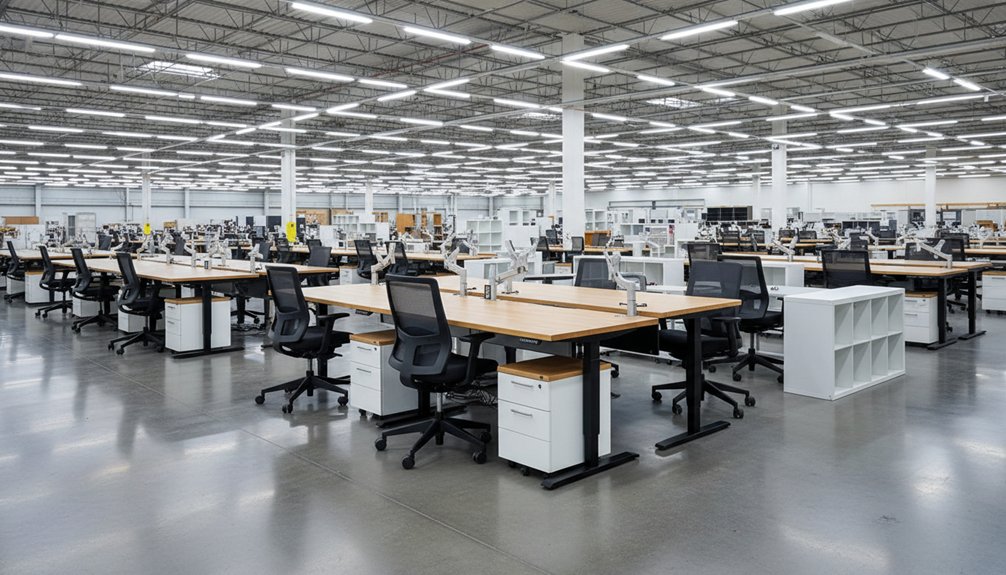
Home office furniture wholesale has become a billion-dollar market due to the rapid increase in remote work. Businesses need ergonomic desk solutions to ensure comfort for employees working from home. We focus on providing multifunctional storage systems that help maximize space in small residential areas.
We partner with suppliers who offer sustainable materials like engineered wood and recycled composites. This commitment to sustainability appeals to retailers and e-commerce platforms that prioritize eco-friendly products.
Our pricing strategies include volume discounts and bundled offerings to attract corporate buyers. These approaches help us maximize profit margins. By identifying effective sourcing and distribution methods, we tap into significant profit potential in this growing market.
The Evolution of Home Office Furniture Requirements
As remote work became a standard practice, the demand for quality home office furniture shifted significantly in the wholesale market. Traditional office furniture designs no longer serve the needs of today’s remote workers.
Now, the focus is on multifunctional pieces that fit well in smaller residential spaces. For example, desk-dining table hybrids and storage solutions that hide work materials have become necessary items for home offices.
Manufacturers have adapted their furniture materials to meet these evolving needs. They’ve moved away from heavy, corporate-style pieces and embraced lightweight, modular designs.
Engineered wood, metal frames, and sustainable composites are now prevalent in wholesale catalogs. These materials offer durability and aesthetic appeal, making them suitable for home environments.
Ergonomic features, once reserved for high-end executive furniture, are now included in budget-friendly wholesale options, ensuring that quality workspace furniture is accessible to all remote workers. This shift aligns with the growing trend of dropshipping furniture to meet immediate consumer needs efficiently.
Key Product Categories Driving Wholesale Demand
When you look into wholesale opportunities in the home office market, three main product categories stand out due to their high demand.
Ergonomic desk solutions lead the pack because remote workers seek comfort and health during long work hours.
Storage and organization systems follow closely, as they help users manage their workspace efficiently.
Finally, technology integration furniture rounds out this list, enabling seamless connectivity for devices that professionals rely on daily.
Each of these categories addresses specific needs that modern home-based workers encounter, making them essential for any wholesale strategy in this market.
Ergonomic Desk Solutions
The wholesale market for desks has shifted towards ergonomic solutions that prioritize employee health and productivity. Companies now focus on adjustable workstations because they understand that employee wellbeing directly impacts performance.
Sit-stand desks are in high demand as they allow workers to choose between sitting and standing, promoting better posture and reducing discomfort. Ergonomic desks help mitigate common workplace health issues such as back pain and neck strain.
Manufacturers design these desks with features like programmable height memory settings, cable management systems, and spacious surfaces for multiple monitors. The demand for such ergonomic furniture is increasing, particularly among remote workers who want professional-grade setups.
Retailers must provide a range of ergonomic desks at various price points to accommodate different budgets while ensuring quality. By offering these solutions, retailers can meet the needs of businesses that prioritize employee health and enhance workplace productivity.
Storage and Organization
The wholesale home office furniture market is dominated by three main storage categories: filing cabinets, shelving units, and modular storage systems. Filing cabinets serve document management needs, with two-drawer and four-drawer models being the most popular choices among buyers.
Shelving units provide versatile options for both display and storage, with floating shelves and bookcases effectively utilizing vertical space.
Modular storage systems are the fastest-growing segment in this market because they adapt to evolving needs. These systems include stackable cubes, wall-mounted organizers, and multifunctional pieces that blend storage with workspace functionality.
Retailers can meet the demand for organization tools by offering drawer organizers, desktop caddies, and cable management systems.
Remote workers often seek clean, organized spaces that enhance productivity. Therefore, wholesale buyers should prioritize storage solutions that combine functionality with aesthetic appeal.
Technology Integration Furniture
Technology integration furniture plays a crucial role in the wholesale home office market because remote work requires efficient connectivity and device management.
Manufacturers design smart furniture with built-in charging stations, USB ports, and cable management systems to reduce desktop clutter. For example, desks now come with wireless charging pads, adjustable-height workstations feature integrated power outlets, and ergonomic chairs include device holders.
Customers prioritize tech accessories that enhance their furniture investments. Common products include monitor arms, keyboard trays, and cable organizers that attach directly to desk surfaces.
Smart furniture often includes LED lighting systems and Bluetooth connectivity to improve productivity. Manufacturers can take advantage of this trend by producing furniture that supports multiple devices while ensuring clean and organized workspaces, which in turn boosts efficiency.
Ergonomic Design Standards for Remote Work Environments
As remote work becomes the norm for many professionals, establishing ergonomic design standards is crucial for productivity and injury prevention. You need furniture that supports proper posture during long work hours.
Conducting effective ergonomic assessments allows you to identify potential issues before they lead to discomfort or injury. Your desk should enable your elbows to rest at 90-degree angles while typing. Proper monitor placement at eye level prevents neck strain.
Ensure your chair height allows your feet to rest flat on the floor with thighs parallel to the ground. Adjustable features on furniture accommodate different body types and preferences. Quality ergonomic furniture reduces fatigue, enhances focus, and decreases the risk of repetitive strain injuries over time.
Sourcing Strategies for Wholesale Furniture Suppliers
When you plan to grow your home office furniture business, you must prioritize finding reliable wholesale suppliers. Start by researching manufacturers who focus on ergonomic office furniture and have established reputations. Evaluate their production capacity, quality control processes, and delivery timelines before entering any agreements.
To build strong supplier partnerships, communicate clearly about your volume requirements and quality standards. Avoid relying on a single supplier; instead, cultivate relationships with multiple suppliers to ensure a steady inventory flow. This strategy also allows for greater product diversification across various price points and furniture categories.
Attend trade shows and industry events to meet suppliers directly. Use online wholesale platforms to access verified manufacturers conveniently. Always request product samples before placing large orders to ensure the quality meets your standards. Additionally, consider partnering with suppliers that offer dropshipping options to simplify your logistics and reduce overhead costs.
Pricing Models and Profit Margins in Home Office Wholesale
To succeed in the home office furniture market, you must implement effective wholesale pricing strategies. Establish your pricing based on costs, desired profit margins, and market demand. Analyze your expenses, including manufacturing and shipping, to determine your baseline cost. Use this information to set competitive prices that attract customers while ensuring you cover your costs and achieve your profit goals.
Focus on volume discount structures to encourage bulk purchases. Offer lower prices for larger orders to incentivize customers to buy more. This strategy helps you maintain healthy profit levels across different order sizes while building strong relationships with wholesale buyers.
Leverage market research to understand competitor pricing and market trends. Adjust your pricing strategies based on your findings. Regularly review your pricing model to ensure it aligns with market conditions and your business objectives. Additionally, consider forming partnerships with sofa wholesalers to enhance your product offerings and meet diverse customer needs.
Wholesale Pricing Strategies
Wholesale pricing strategies directly impact the profitability of your home office furniture business. A thorough cost analysis establishes your baseline prices by calculating manufacturing, shipping, and operational expenses. This ensures that you cover all costs while achieving healthy profit margins.
Conduct competitive pricing research to position your products against rivals effectively. Pricing too high will drive customers away, while pricing too low will cut into your profitability. Analyze competitors’ catalogs, attend trade shows, and monitor online marketplaces to gather insights on current pricing trends.
Implement tiered pricing structures that offer better rates for larger orders. Volume discounts incentivize customers to buy more, allowing you to maintain margins on smaller orders.
This approach fosters mutually beneficial relationships with your retail partners and encourages larger purchases.
Margin Optimization Techniques
Pricing strategies lay the groundwork for your wholesale business, while margin optimization techniques drive your long-term financial success. To maximize profits, focus on specific cost reduction methods that maintain product quality. Negotiate better terms with suppliers, streamline your operations, and cut unnecessary expenses in your supply chain.
Effective inventory management plays a critical role in enhancing your margins. Reducing carrying costs and minimizing dead stock directly impacts your bottom line. Implement just-in-time ordering systems to align your inventory with actual demand. Analyze sales data to predict trends accurately. This strategy helps you avoid overstocking slow-moving items while ensuring that popular products are consistently available.
You can increase average order values by bundling complementary home office furniture pieces. Additionally, offer volume discounts to incentivize larger purchases while keeping profit margins healthy.
Conduct regular margin analysis to pinpoint underperforming products and identify areas for improvement. This process allows you to make informed decisions that enhance your overall profitability.
Volume Discount Structures
In the home office furniture wholesale market, three volume discount models stand out. Each model offers specific advantages for suppliers and buyers.
The first model features tiered pricing structures. Retailers benefit from better rates as they purchase larger quantities. For example, a retailer might receive a 5% discount for ordering 50 units, which can increase to 25% for orders of 500 units. This model encourages retailers to buy more inventory by rewarding them with deeper savings for larger commitments.
The second model uses flat-rate pricing. Suppliers set fixed rates for predetermined volume brackets, making it easier for retailers to calculate costs. This approach maintains profit margins while providing clarity in pricing, allowing retailers to make informed purchasing decisions without complex calculations.
The third model consists of customized discount structures. Suppliers negotiate rates based on annual purchase commitments and partnership agreements. This flexibility allows retailers to tailor their discounts to their specific needs and volume capabilities.
Distribution Channels and Target Market Segments
When you run a home office furniture wholesale business, you need to focus on your distribution channels and target market segments to boost sales and form strong partnerships.
You should prioritize reaching retailers, office supply chains, and e-commerce platforms that cater to remote workers. By segmenting the market, you can pinpoint which customer groups urgently require ergonomic chairs, standing desks, or storage solutions.
Market segmentation helps wholesale furniture businesses identify which remote worker segments need specific ergonomic solutions most urgently.
Begin by building relationships with furniture stores, corporate procurement departments, and online marketplaces. Each channel has unique pricing structures and delivery methods that you must adapt to.
Your target market segments include:
- Small business owners who need affordable and professional workspace solutions.
- Corporate buyers who are adjusting to remote work demands.
- Home-based entrepreneurs who want to create their ideal office spaces.
Additionally, consider leveraging partnerships with suppliers like Artisan Furniture that offer free delivery to all 50 states to enhance your service offerings.
Future Trends Shaping the Home Office Furniture Industry
The home office furniture industry is evolving due to the rise of remote work. Manufacturers focus on sustainable materials, such as bamboo, recycled plastics, and reclaimed wood, to meet environmental standards. Smart furniture integrates technology into workspaces by offering features like built-in wireless charging, automated height adjustment, and effective cable management systems. This technology allows users to customize their work environments through app-controlled settings. Ergonomics play a crucial role in design, as furniture incorporates advanced lumbar support and encourages movement. Modular furniture systems are becoming popular because they allow users to easily reconfigure their spaces. Additionally, the incorporation of handcrafted furniture showcases unique designs that cater to individual tastes. These trends highlight the industry’s goal of creating functional, eco-friendly, and tech-savvy home office solutions.