
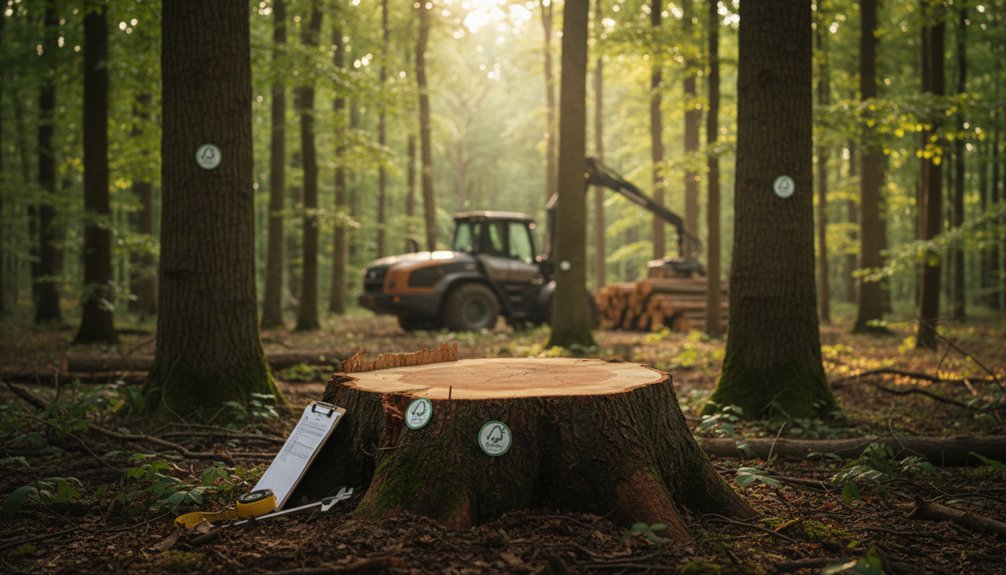
To verify your furniture supplier’s forestry claims, start by checking for certification logos like FSC or PEFC on their products. This indicates that they meet specific sustainability standards. Next, request chain-of-custody documentation, which includes certificates and invoices showing the product’s journey from the forest to your facility. Look out for red flags such as unusually low prices or missing origin information, as these can signal potential issues with sustainability.
Utilize modern verification tools like DNA testing to trace the wood’s origin and ensure compliance with forestry regulations. Conduct regular supplier audits to assess their practices firsthand and confirm that they adhere to sustainable methods. Additionally, monitor deforestation activities using resources like Global Forest Watch to stay informed about any concerning trends.
Building partnerships with certified suppliers is crucial. These partnerships ensure accountability in sourcing, protect your brand’s reputation, and support sustainable forestry practices that benefit ecosystems globally. By taking these steps, you can confidently verify your supplier’s forestry claims and contribute to responsible wood sourcing.
Understanding Forest Certification Systems and Standards
When I source wood for projects, I rely on forest certification systems to verify that the timber comes from responsibly managed forests. These systems assess forests based on clear sustainability criteria, which include environmental protection, social responsibility, and economic viability.
The key certification types I encounter are FSC (Forest Stewardship Council), PEFC (Programme for the Endorsement of Forest Certification), and SFI (Sustainable Forestry Initiative). Each of these systems has distinct standards, yet they all aim to prevent deforestation, protect wildlife habitats, and ensure fair treatment for workers and local communities.
When I choose certified wood products, I look for official logos and chain-of-custody documentation. This documentation tracks the wood from the forest to the final product, which gives me confidence in my supplier’s environmental claims. Additionally, I ensure that my suppliers adhere to ethical production standards, particularly those emphasized by artisan furniture suppliers, as this reinforces my commitment to responsible sourcing practices.
Investigating Your Supplier’s Chain of Custody Documentation
To ensure your supplier’s wood is sourced responsibly, you must thoroughly investigate their chain of custody documentation. Certification logos are a good starting point, but they don’t provide the complete picture. You need to examine the detailed paperwork that tracks the lumber from the forest to the final product.
Request specific documents, including certificates, invoices, and shipping records. These documents should demonstrate continuous custody of the wood. Focus your analysis on three main areas:
| Document Type | What to Verify | Red Flags |
|---|---|---|
| Certificates | Check for valid dates and certification numbers | Look for expired or absent certifications |
| Invoices | Ensure product codes match the certified materials | Watch for vague product descriptions |
| Shipping Records | Confirm clear tracking of origin and destination | Identify any gaps in the custody timeline |
When reviewing these documents, check for consistent information across all of them. Verify the certification numbers with the issuing bodies directly. If you find discrepancies or missing documentation, this should raise immediate concerns about your supplier’s claims regarding forestry practices.
Red Flags That Signal Questionable Forestry Practices
Even when your supplier’s documentation seems complete, specific warning signs can indicate poor forestry practices.
Watch for low prices that are significantly below market rates. These prices often suggest unsustainable logging or attempts to cut costs irresponsibly. Missing or unclear origin information can signal possible illegal harvesting. Suppliers who can’t provide specific harvest dates, GPS coordinates, or detailed species information should raise red flags.
Prices far below market value and vague origin details are major red flags signaling potentially illegal or unsustainable forestry practices.
Examine certificates closely. If they appear altered or have inconsistent formatting, be cautious.
Suppliers who push you to make quick decisions without allowing proper verification may be hiding questionable practices. If a supplier refuses site visits or is hesitant to share contact information for their forest sources, this raises serious doubts about their commitment to responsible forestry standards.
Always prioritize transparency and accountability in your supply chain to ensure sustainable forestry practices.
Tools and Resources for Verifying Wood Origin Claims
To verify the origin claims made by wood suppliers, you need to follow a clear process. Start by requesting chain-of-custody documentation. This documentation tracks the wood from the forest to your warehouse, ensuring accountability.
Next, utilize modern wood traceability technologies, such as DNA testing and isotope analysis. These technologies verify the species and geographic origin of the wood, helping you identify any misrepresentation by suppliers.
Conduct thorough supplier audits. Visit the facilities to inspect their operations and review their procurement records. Look for third-party certifications like FSC or PEFC, as these indicate that the suppliers have undergone independent verification.
Use online resources, such as Global Forest Watch, to monitor deforestation activities in the regions where your suppliers source their wood.
Request detailed shipping manifests and cross-reference them with harvest permits. This step helps confirm that the wood being shipped matches the legal documentation.
Document all findings carefully to maintain accountability and ensure that your sourcing decisions support responsible forestry practices. By following these steps, you create a robust verification process that upholds integrity in your supply chain.
Building Long-Term Partnerships With Transparent Suppliers
After you set up effective verification processes, you should prioritize building strategic relationships with suppliers who consistently demonstrate transparency. These partnerships provide benefits beyond basic compliance checks. You’ll gain quicker access to essential documents, receive prompt notifications about changes in the supply chain, and often obtain better pricing through volume agreements.
In these partnerships, transparency is mutual. You should clearly communicate your sustainability goals and requirements. In turn, suppliers will share comprehensive details about their sourcing practices and forest management policies. This collaboration allows both parties to spot potential issues early, preventing them from escalating.
Strong partnerships foster accountability. Suppliers who are committed to long-term relationships are more likely to uphold high standards and invest in sustainable practices. The advantages of these partnerships include lower verification costs, greater stability in the supply chain, and better protection of your business’s reputation. Additionally, collaborating with suppliers who practice ethical manufacturing can enhance your product value for environmentally conscious consumers.