
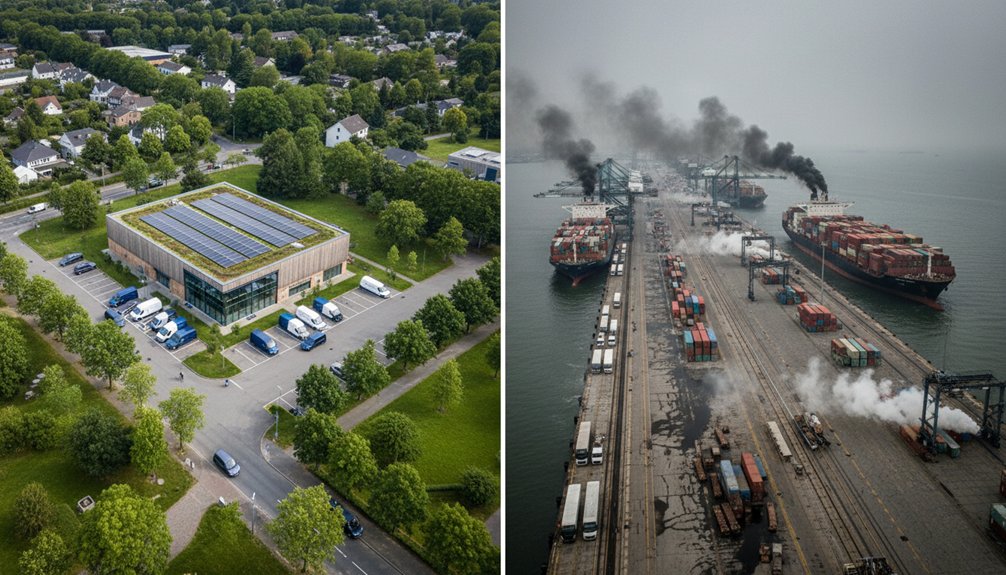
Choosing regional warehouses reduces transportation emissions by 60-80%. Instead of products traveling 2,000 miles or more, they cover only 200-500 miles to reach customers. This shorter distance leads to less protective packaging, which cuts waste. Local distribution centers enable consolidated shipments, allowing companies to use fuel more efficiently. For instance, international shipping can produce 70 pounds of CO2 for each smartphone. By relying on regional fulfillment, businesses minimize their dependence on air freight and reduce carbon taxes, which can raise shipping costs by 15-30%. Companies that strategically place their warehouses can significantly mitigate their environmental impact.
The Carbon Cost of Cross-Continental E-commerce Deliveries
When an online order is shipped from a warehouse in China to a customer’s home in Chicago, that process generates significant carbon emissions. Cross-continental shipping contributes to a large carbon footprint through various transportation methods.
First, the package travels by truck to a shipping port. Next, it crosses the ocean on a cargo ship. Finally, it moves again by truck or rail for the last leg of delivery.
A typical international package journey involves three distinct stages: ground transport to port, ocean crossing by cargo vessel, and final delivery by land.
Ocean freight produces about 3 grams of CO2 for each ton-kilometer, while air freight is much higher at 500 grams. The carbon emissions from e-commerce increase due to the fact that many packages travel on partially empty planes and trucks.
For instance, shipping a single smartphone internationally can result in 70 pounds of CO2 emissions from transportation alone. These long distances make global shipping one of the main contributors to the retail industry’s environmental impact.
Understanding these emissions is crucial for consumers who want to make informed choices about their purchases. By recognizing the carbon cost associated with cross-continental shipping, individuals can better evaluate the environmental ramifications of their online orders.
How Regional Warehouses Cut Transportation Emissions by 60-80
Companies reduce transportation emissions by establishing regional warehouses near customer locations. Regional warehouses store products closer to major population centers. This setup shortens the distance between fulfillment centers and delivery points, converting long-haul shipping into shorter delivery routes.
Regional inventory contributes to emissions reduction in several ways:
- Shorter delivery routes: Products travel 200-500 miles instead of over 2,000 miles from distant warehouses.
- Fewer transportation hubs: Direct shipping minimizes the need for multiple transfer points and handling stages.
- Optimized vehicle loads: Regional facilities improve route planning and ensure fuller truck capacity.
- Reduced air freight dependency: Ground transportation becomes a viable option for meeting faster delivery promises.
Research indicates that this regional warehouse strategy can achieve a 60-80% reduction in emissions compared to centralized distribution models. Additionally, the seamless integration options for e-commerce platforms enhance the efficiency of regional dropshipping processes.
Fuel Consumption Analysis: Last-Mile Vs Long-Distance Shipping
Fuel consumption patterns differ significantly between last-mile delivery and long-distance shipping.
Long-distance trucks operate efficiently on highways, achieving fuel efficiency rates of 6-8 miles per gallon while loaded to capacity. In contrast, last-mile delivery vehicles encounter frequent stops and starts in urban traffic, leading to lower efficiency rates of 4-6 miles per gallon.
When evaluating fuel usage, consider delivery optimization. A single long-haul truck can transport goods to regional warehouses, effectively replacing numerous individual shipments from distant locations.
While local delivery vans may consume more fuel per mile, they travel shorter distances. When you calculate the total miles across thousands of deliveries, the regional warehouses generate considerable fuel savings, even with the reduced efficiency in urban settings.
In summary, long-distance trucking maintains better fuel efficiency on highways, while last-mile delivery faces challenges due to urban traffic.
However, strategic delivery optimization through regional warehouses offers significant fuel savings overall.
Packaging Waste Reduction Through Localized Distribution Networks
Choosing local distribution networks significantly reduces packaging waste. Here’s how it works:
First, shorter shipping distances mean less protective packaging is needed. When packages travel shorter routes, the risk of damage decreases, allowing us to use lighter and fewer materials.
Second, local distribution offers better package sizing options. We can tailor the sizes of our packages to fit the products more accurately, minimizing empty space and unnecessary materials.
Third, local networks create opportunities to consolidate orders. Instead of sending multiple shipments, we can combine several orders into one package, which further cuts down on packaging waste.
Shorter Transit Distances
Packaging waste often comes from the protective materials used during long-distance shipping. When you set up regional warehouses near your customers, you significantly cut down the distance products need to travel. This reduction in transit time results in less need for protective packaging since items experience fewer handling points and less shipping stress.
By sourcing locally and distributing regionally, you enhance delivery efficiency and minimize environmental impact.
Here’s how shorter transit distances enhance your operations:
- Reduced bubble wrap and foam inserts – Products require less protection for safer, shorter journeys.
- Smaller box requirements – You need less void fill because products travel gentler distances.
- Lower damage rates – Fewer transfers decrease the need for protective materials.
- Streamlined packaging processes – You can simplify protection standards for regional deliveries.
Shorter transit distances lead to less packaging waste, making your operations more efficient and environmentally friendly.
Right-Sized Package Selection
Local fulfillment networks allow you to choose the right-sized packages that fit your product dimensions and meet regional shipping needs. By selecting containers that precisely match your items, you can minimize packaging waste and avoid excess void fill and oversized boxes.
Regional distribution centers stock a variety of package sizes, enabling warehouse staff to pair products with suitable containers. This method of sustainable packaging reduces material usage by as much as 40% compared to one-size-fits-all global shipping strategies.
Using right-sized packages optimizes logistics by maximizing truck capacity and lowering transportation costs.
Local warehouses are knowledgeable about regional preferences for packaging materials, whether customers favor recyclable cardboard or biodegradable options. This targeted approach not only reduces environmental impact but also enhances customer satisfaction by decreasing unboxing waste.
Consolidated Shipment Opportunities
Consolidating shipments is key to reducing packaging waste in our operations. When we combine multiple orders into a single shipment, we can significantly decrease the amount of packaging material we use.
Regional warehouses allow us to group orders from nearby customers, which cuts down on the number of boxes needed for delivery. By using consolidated shipping strategies through local distribution centers, we can eliminate unnecessary protective materials and make better use of our containers across several orders.
Working with regional warehouse partners enhances these benefits. They help us coordinate shipments across wider areas, maximizing efficiency.
Here’s how consolidation works in practice:
- Multiple orders share packaging materials, so we avoid separate boxes for each shipment.
- We distribute protective padding more effectively among combined items, reducing waste.
- We minimize the number of shipping labels and documentation, which decreases paper waste.
- We optimize truck capacity, which lowers our transportation-related packaging needs.
This approach allows us to view packaging as a shared resource rather than a cost tied to individual orders.
Economic Incentives Driving the Shift to Sustainable Fulfillment Models
Carbon taxes are influencing how businesses calculate their shipping costs. Companies are recognizing that local fulfillment models are becoming more appealing as governments impose fees on carbon emissions.
When I analyze cost-benefit scenarios, I see that shorter delivery routes often yield better financial outcomes. This is especially true when I include carbon pricing and the costs associated with regulatory compliance.
These economic factors aren’t just about following environmental policies; they’re creating genuine competitive advantages for businesses that focus on reducing shipping distances and minimizing their carbon footprints.
Carbon Tax Implications
As governments implement carbon pricing mechanisms, businesses face significant changes in their fulfillment strategies. Carbon tax policies will increase shipping costs, particularly for long-distance transportation. The financial impact of these taxes differs by region, with some areas imposing steeper rates on international freight compared to domestic shipping.
Here are the key implications of carbon tax for your fulfillment operations:
- International shipping costs will likely rise by 15-30% due to carbon pricing proposals.
- Regional warehouses will become more cost-effective as carbon taxes incentivize shorter delivery distances.
- Supply chain audits will be required for companies that exceed emission thresholds.
- Tax credits may help offset investments in local fulfillment operations in qualifying regions.
To optimize your fulfillment network, evaluate your current shipping patterns against projected carbon tax rates.
Focus on adjusting your logistics strategy to mitigate the financial burden of these new regulations.
Cost-Benefit Analysis Models
To understand the financial impact of carbon taxes on logistics, you need to perform a cost-benefit analysis that compares local fulfillment with global shipping. This analysis requires you to assess transportation costs, warehouse expenses, and carbon tax liabilities. By using these models, you can determine which logistics approach provides better long-term value.
| Cost Factor | Local Fulfillment | Global Shipping |
|---|---|---|
| Transportation Cost | $2.50 per order | $8.75 per order |
| Carbon Tax Liability | $0.45 per order | $3.20 per order |
| Warehouse Operations Cost | $4.20 per order | $1.80 per order |
| Total Delivery Time | 1-2 days | 7-14 days |
When you evaluate benefits, focus on customer satisfaction, delivery speed, and adherence to environmental regulations. You will find that local fulfillment often results in lower total costs, especially as carbon taxes rise. Businesses that apply these models make informed decisions about their logistics strategies, leading to better financial outcomes.
Real-World Case Studies: Companies Leading the Regional Warehouse Revolution
Many companies implement regional warehousing strategies to enhance their operations.
Industry leaders exemplify how these warehousing innovations minimize environmental impact while boosting customer satisfaction. By analyzing their localized fulfillment networks, we can identify measurable results.
- Amazon’s Metropolitan Distribution Centers: Amazon places mini-fulfillment centers in major cities. These centers reduce delivery distances by 60% compared to traditional shipping methods.
- Zara’s European Hub Network: Zara operates 12 regional warehouses across Europe. This network enables them to deliver products within 48 hours and reduces transportation emissions by 40%.
- Walmart’s Neighborhood Markets: Walmart integrates retail locations with micro-fulfillment capabilities. This setup allows them to serve online orders within a five-mile radius.
- IKEA’s Urban Collection Points: IKEA sets up compact warehouses in city centers. These collection points cut last-mile delivery carbon footprints by 35%.
These examples illustrate how regional warehousing can transform supply chain efficiency and environmental responsibility.