
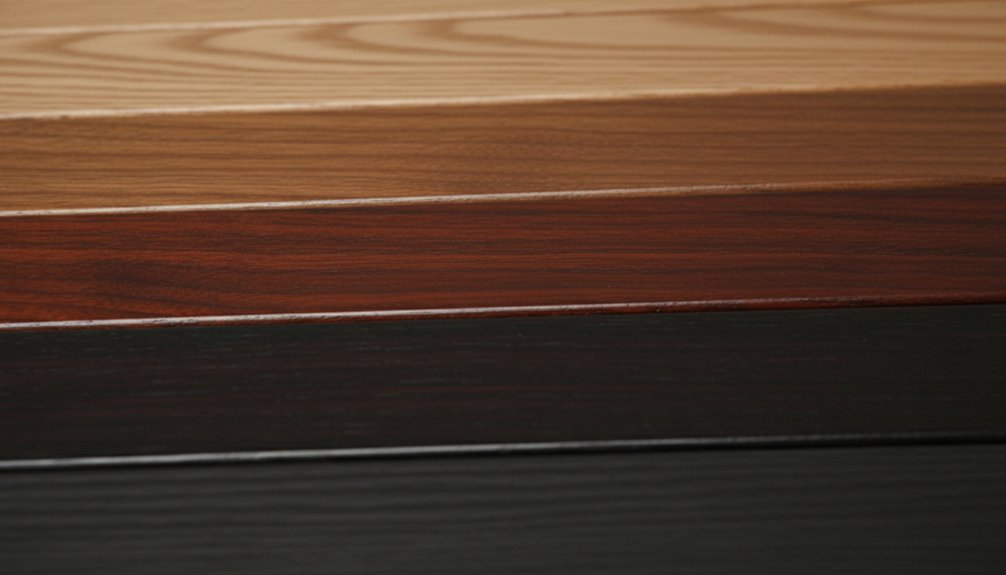
You can select oil-based, water-based, or gel stains for your wood finishing projects. Natural oak highlights the wood’s beauty, while clear coats provide UV protection and moisture resistance. Medium-toned stains, like golden oak and honey maple, add balanced color depth to your pieces. Charcoal and ebony finishes create a striking look that stands out.
To achieve professional results, focus on proper preparation. Start with progressive sanding to create a smooth surface. Then, apply thin, even coats of stain to ensure uniformity. After staining, consider applying a protective topcoat to enhance durability and finish. Keep practicing these techniques to refine your skills and achieve the best results in your wood finishing work.
Understanding Different Types of Wood Stains and Their Properties
Three main types of wood stains are widely used: oil-based stains, water-based stains, and gel stains. Each type has unique characteristics that cater to different project requirements.
Oil-based stains penetrate deeply into the wood grain. They provide a rich color and allow for a longer working time during application. You should use oil-based stains for outdoor projects because they resist moisture.
Oil-based stains deliver rich, deep color penetration and extended working time, making them perfect for moisture-resistant outdoor applications.
However, be aware that cleanup requires mineral spirits, and these stains emit strong fumes while applying.
Water-based stains dry quickly and have minimal odors. For cleanup, you can simply use soap and water, making them user-friendly. These stains are suitable for indoor furniture and cabinetry, but they may raise the wood grain slightly, which requires light sanding after drying.
Gel stains maintain a consistent thickness, which prevents drips and blotchiness, especially on difficult woods like pine. Use gel stains when you need precise control during application, particularly on vertical surfaces or intricate woodwork.
This makes them ideal for detailed projects where accuracy is crucial.
Light and Natural Finishes That Enhance Wood Grain
If you want to highlight the natural beauty of wood without obscuring its grain patterns, consider using light and natural finishes. Clear coats protect the wood while keeping its original look intact. These finishes are perfect for projects where you need durability without altering the wood’s color.
Natural oils penetrate the wood fibers, enhancing the visibility of the grain. They provide an organic finish that not only looks good but also ages well over time. Using these finishes allows the wood’s character to shine through, making them ideal for furniture, cabinetry, and flooring.
In my experience, applying a clear coat or natural oil requires attention to detail. First, prepare the wood surface by sanding it to remove any imperfections. Next, apply your chosen finish evenly to avoid streaks. Allow the finish to cure fully before using the wood, ensuring it provides the best protection while showcasing the grain. Regular dusting and maintenance is essential to preserve the beauty of your finished wood surfaces.
Clear Coat Benefits
Clear coats provide an essential layer of protection for wood surfaces while enhancing their natural beauty. The benefits of clear coats include durability, moisture resistance, and UV protection that prevents fading and yellowing over time.
Different types of clear coats offer specific advantages. Here’s a straightforward comparison of the most common options:
| Clear Coat Type | Durability | Application Method |
|---|---|---|
| Polyurethane | Excellent | Brush/Spray |
| Lacquer | Good | Spray |
| Shellac | Fair | Brush |
| Wax | Limited | Cloth |
| Oil-based | Good | Brush/Cloth |
Selecting the right clear coat depends on your specific project needs and the finish you want to achieve. For instance, if you need a tough finish for high-traffic areas, polyurethane is your best bet. If you’re working on a quick project that requires a smooth, glossy look, lacquer could be the right choice.
Ultimately, understanding how each clear coat functions allows you to make informed decisions for your wood finishing projects.
Natural Oil Applications
Natural oils penetrate deep into wood fibers, enhancing the grain’s natural beauty while providing subtle protection.
These oils preserve wood’s texture and allow it to breathe effectively. Unlike synthetic finishes, natural oils won’t crack or peel.
To achieve the best results when applying natural oils, follow these steps:
- Sand thoroughly: Smooth the wood surface to ensure even oil penetration.
- Apply thin coats: Use multiple light applications for better absorption instead of one heavy coat.
- Allow proper curing time: Ensure each coat has sufficient time to penetrate before applying the next layer.
Natural oils are especially effective on hardwoods like oak. They highlight the wood’s unique patterns without hiding its character.
Medium-Toned Stains for Classic and Versatile Appeal
Medium-toned stains provide a balanced finish that sits comfortably between light and dark. These stains are ideal for various home decorating projects. Popular options include golden oak, honey maple, and classic walnut. These choices work well with both traditional and contemporary designs.
Medium-toned stains enhance the natural beauty of wood, while also offering enough color depth to match different furniture styles. When applied correctly, these stains can transform a room, making it feel cohesive and inviting.
Popular Medium Tone Options
Three main categories of wood stains fit into the medium-tone range. These stains provide homeowners and woodworkers with options that balance light and dark finishes. Each category serves to enhance the natural grain patterns of the wood while complementing various interior design styles.
The common medium-tone options include:
- Traditional browns – These stains, such as walnut and mahogany, add a touch of sophistication to furniture and cabinetry.
- Reddish hues – Cherry stains and amber shades introduce warmth, making spaces feel more inviting.
- Golden tones – Honey and caramel stains create cozy atmospheres, perfect for living areas.
Each category comes with various shades, allowing for precise matching with existing décor or achieving a specific look. Medium tones perform particularly well on woods like oak, maple, and pine.
These stains enhance the wood’s natural beauty without overshadowing other elements in the room.
When selecting a medium-tone stain, consider how it interacts with your wood type and existing furnishings. This careful consideration ensures a cohesive and aesthetically pleasing result.
Matching Interior Design Styles
Classic design styles utilize medium-toned wood stains to achieve warmth and sophistication. Honey oak and golden brown stains work well in traditional and transitional spaces.
These finishes enhance the appearance of both antique and contemporary furniture, ensuring a cohesive room aesthetic.
For rustic design, medium walnut and chestnut stains emphasize wood grain patterns. These stains create cozy atmospheres in farmhouse and cottage-style homes.
When aiming for modern elegance, choose medium espresso or medium cherry stains. These colors add depth while maintaining the clean lines favored in minimalist and contemporary interiors.
Medium-toned stains adapt well across seasons, making them practical for long-term design satisfaction.
Dark and Dramatic Finishes for Bold Statement Pieces
When you aim to create a focal point in your space, dark and dramatic wood finishes provide strong visual impact.
These rich tones transform standard furniture into bold statement pieces that anchor your room’s design.
Dark finishes enhance aesthetics through their deep color saturation. Use them on larger items, such as dining tables, entertainment centers, and bookcases, where their presence can stand out.
Deep color saturation in dark wood finishes creates stunning visual impact when applied to substantial furniture pieces like dining tables and entertainment centers.
For maximum emotional impact, consider these specific options:
- Ebony stains deliver a sophisticated look with their almost black finish.
- Deep walnut finishes bring warmth while maintaining a dramatic depth.
- Charcoal-tinted lacquers offer a modern feel with subtle texture.
Since dark finishes absorb more light than lighter alternatives, pay attention to your lighting setup.
Use proper illumination to showcase their rich character and enhance their visual appeal. Additionally, these artisan furniture features create unique pieces that elevate any interior space.
Application Techniques for Professional-Looking Results
Achieving a professional-quality wood finish requires careful preparation and specific application techniques. Start by sanding the wood progressively through different grits. Use coarse sandpaper to remove imperfections, then gradually move to finer grits for a smooth surface. Clean the wood thoroughly after sanding to remove any dust or debris.
When applying the finish, use thin, even coats. Apply the finish with a natural bristle brush for detail work or small projects. Use long, smooth strokes that follow the wood grain to ensure an even application. Maintain a wet edge to avoid lap marks.
For larger surfaces, consider using a spray gun with a compressor. This method provides a smooth, even finish and covers large areas quickly. If you need to apply penetrating stains or oils, use a lint-free cloth to ensure even absorption. For small areas or touch-ups, a disposable foam brush works well.
If you choose to use a mini roller with a fine nap, it allows for quick coverage on medium surfaces.
After applying each coat, allow sufficient drying time, then sand lightly with 220-grit paper before applying the next layer. This step enhances adhesion and creates a smoother finish.
Remember to remove all dust before applying subsequent coats for the best results. By following these steps, you’ll achieve a durable and professional-looking wood finish. Additionally, using dropshipping services can simplify your sourcing of high-quality finishes and tools needed for your projects.
Protective Topcoats and Sealers for Long-Lasting Beauty
Protective topcoats and sealers guard your finished wood projects against environmental damage.
These coatings play a crucial role in how well your wood stands up to daily wear, moisture, and UV exposure. You have several types of sealants to choose from, each offering varying levels of protection and durability.
When selecting your protective coating, consider these benefits:
- Maintain beauty: A good topcoat keeps your investment looking great for years.
- Preserve craftsmanship: Proper sealing helps your work retain its original shine and character.
- Enhance durability: Quality finishes resist scratches, water rings, and fading.
Polyurethane provides robust protection, making it suitable for high-traffic surfaces.
Lacquer is another option that allows for quick application and smooth finishes.
If you’re working indoors and need fast results, water-based sealants dry rapidly and emit fewer fumes.