
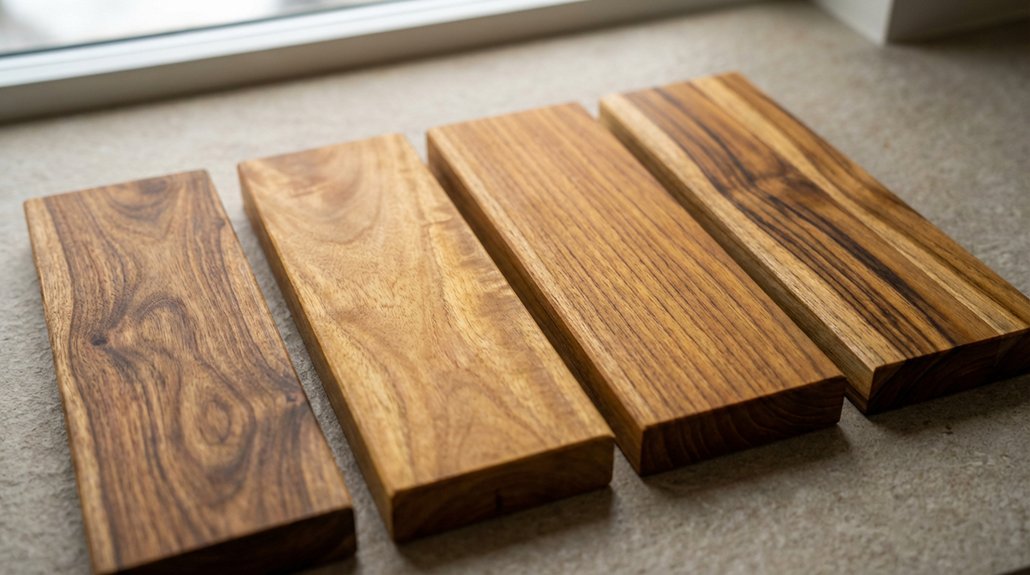
When comparing sheesham, mango, teak, and acacia for your furniture inventory, each wood species presents clear advantages that affect your offerings. Teak and acacia provide high durability and moisture resistance, making them suitable for outdoor furniture and high-traffic areas. Sheesham offers a classic look at a moderate price point, while mango wood appeals to eco-conscious customers seeking budget-friendly options. Your selection of wood species directly influences pricing structures, maintenance needs, and the target customer demographic. Evaluate these factors carefully to determine which species aligns best with your store’s objectives.
Grain, Hardness, and Origin: How Sheesham, Mango, Teak, and Acacia Differ
Each wood species has distinct characteristics that influence furniture quality.
Sheesham, or Indian rosewood, has rich color variations including golden brown and dark walnut.
Sheesham wood captivates with its rich color palette, ranging from warm golden brown to deep, luxurious dark walnut tones.
Mango wood features lighter grains with irregular patterns and streaks of pink and green.
Teak offers a tight, straight grain and a naturally oily texture that enhances moisture resistance.
Acacia showcases a bold, wavy grain in warm amber tones.
On the Janka hardness scale, teak and acacia rank higher than sheesham and mango, making them more durable options for furniture.
Teak requires careful sourcing to address over-harvesting concerns, while mango wood is a sustainable choice, sourced from recycled fruit trees. Understanding these factors helps you select the right wood for your furniture needs, especially considering the benefits of wholesale purchasing that can enhance your retail strategy.
Durability, Moisture Resistance, and Maintenance Across All Four Species
When selecting furniture, focus on durability and moisture resistance. Teak wood ranks highest in durability because its natural oils significantly reduce moisture absorption.
Acacia wood offers strong resistance to warping and cracking, making it a reliable choice in various environments. Sheesham wood performs adequately but requires more maintenance in humid conditions. In contrast, mango wood is the least moisture-resistant, necessitating regular application of sealants to protect it.
For maintenance, immediately wipe up spills from all four wood types to prevent damage. Avoid placing furniture in direct sunlight, as this can lead to fading and cracking.
Use appropriate wood conditioners seasonally to maintain the integrity of each species. Understanding the moisture resistance levels of teak, acacia, sheesham, and mango wood allows you to recommend the right material for specific environments. This knowledge helps build customer trust by ensuring the selected wood type matches the intended use, especially when considering regular dusting techniques for optimal upkeep.
Which Species Fits Which Store Aesthetic
Selecting the right wood species for your store’s aesthetic directly impacts customer perceptions of your furniture. Teak wood enhances urban elegance and modern minimalism because of its fine grain and polished finish.
Sheesham wood provides traditional warmth and eclectic style due to its rich color variations and unique grain patterns. Mango wood complements coastal themes and rustic charm by offering natural color diversity and an organic feel. Acacia wood serves both rustic and modern minimalism, featuring bold grains and structural adaptability.
Understand Your Store’s Theme
Identify your store’s overall theme to ensure that the chosen wood species aligns with your visual identity. A cohesive product range that reflects your store’s style resonates better with your target customers.
For instance, if your store emphasizes modern aesthetics, prioritize materials like teak and acacia. If your focus is on rustic or coastal vibes, consider sheesham and mango wood. Additionally, artisan furniture features can enhance the overall appeal of your offerings.
Assess Wood Characteristics
Evaluate wood characteristics to match them with your desired aesthetic. Teak wood’s durability suits high-traffic environments, while sheesham wood’s appearance adds character to spaces that require warmth.
Mango wood’s variability in color can create a relaxed atmosphere, making it ideal for casual settings. Acacia wood’s strength allows for versatile designs that can fit multiple styles without compromising on quality.
Limitations of Each Wood Species
Be aware of limitations with each wood type. Teak wood can be expensive, which may not fit all budgets. Sheesham wood can have inconsistencies in grain and color, which mightn’t appeal to all customers.
Mango wood, while beautiful, can sometimes lack the structural integrity needed for heavy-use furniture. Acacia wood, although versatile, may require more maintenance to preserve its appearance over time.
Make Informed Decisions
Make informed decisions by considering how each wood species aligns with your store’s theme and customer expectations. Consistent alignment between wood characteristics and your aesthetic increases brand coherence.
This approach not only helps in selecting the right materials but also strengthens your overall brand presentation and market positioning.
What Each Species Should Cost and Why
Understanding wood pricing helps you make informed purchasing decisions for your store. Different wood species have unique cost factors based on availability, harvesting difficulty, and processing needs.
Sheesham and mango wood are generally more affordable due to their widespread growth in South Asia. Teak wood has higher prices because of its strong market demand and limited sustainable supplies. Acacia wood pricing varies based on regional sourcing conditions.
Establishing Pricing Strategies
Your pricing strategies should focus on building strong supplier relationships. Consistent orders from reliable suppliers often result in better rates.
Always assess quality before finalizing purchases, as inconsistent grading can significantly impact your profit margins.
Evaluating Additional Costs
Transportation costs and import duties also affect final pricing. Understand these variables to negotiate better deals.
For example, high shipping costs can erode your profit margin, while favorable import rates can enhance it. Additionally, consider free delivery options to reduce overall shipping expenses.
Building a Product Lineup
By grasping these pricing dynamics, you can negotiate effectively and create a product lineup that balances cost with customer value.
Focus on high-quality materials that meet customer expectations while keeping expenses manageable. This approach will help ensure your store remains competitive and profitable.
Common Customer Objections About Each Species and How to Answer Them
Understanding how to price your wooden products is essential, but knowing how to address customer objections is equally important. Many customers have misconceptions about different wood species, which can hinder sales if not properly addressed.
Mango Wood
Customers often view mango wood as low-quality due to its affordability. Explain that mango wood is durable and features unique grain patterns, making it both visually appealing and strong. Highlight specific qualities such as its resistance to warping and its sustainable sourcing from mango plantations, making it a great choice for wholesale upholstered furniture.
Sheesham Wood
Some shoppers question the value of sheesham wood. Emphasize its density and natural oils, which contribute to its durability and resistance to pests. Provide examples of sheesham furniture lasting for decades, showcasing its long-term value compared to cheaper alternatives.
Teak Wood
Customers frequently express concerns about the high price of teak wood. Remind them that teak’s unmatched weather resistance makes it ideal for outdoor use. Cite specific instances where untreated teak has withstood harsh weather conditions for years, justifying the initial investment.
Acacia Wood
Acacia wood is sometimes dismissed as a trendy option. Counter this by detailing its hardness and longevity. Acacia’s ability to resist scratches and dents makes it suitable for high-traffic areas. Share examples of acacia furniture that has performed well over time to reinforce its reliability.