
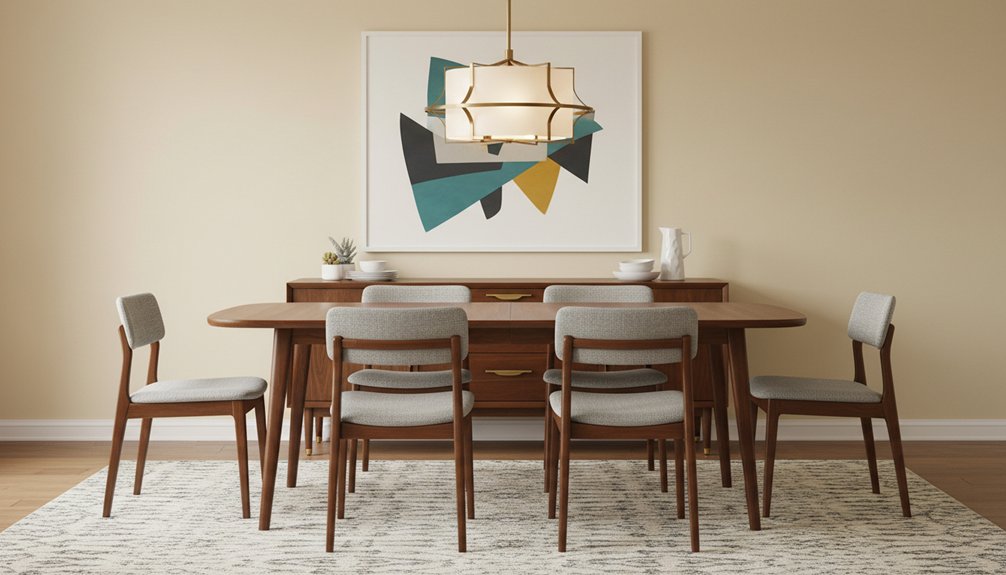
Mid-Century Modern design profoundly influences contemporary dining tables by prioritizing clean lines and functional simplicity. This design philosophy features organic shapes and practical elements crafted from natural hardwoods. Manufacturers often use tapered legs, which enhance the table’s sleek appearance. These dining tables create open, inviting spaces while ensuring durability through minimal ornamentation.
Mid-Century Modern tables combine elegance with practicality, making them a staple in modern homes. Their lasting impact is evident in how they adapt to various interior styles, maintaining both aesthetic appeal and everyday functionality. When selecting a table, consider its timeless design and the quality of materials, as these factors contribute significantly to its overall longevity and style.
The Origins of Mid-Century Modern Design
Mid-Century Modern design emerged between the 1940s and 1960s as a direct reaction to social shifts and technological innovations. Designers like Charles and Ray Eames and George Nelson shaped this style through their focus on simplicity and functionality. They utilized new materials, such as plastic and plywood, to create practical yet aesthetically pleasing pieces.
This design philosophy emphasized clean lines and organic forms, which led to a distinct visual identity. Designers rejected ornate details and instead promoted minimalist beauty. They prioritized the innovative use of resources, which allowed for mass production and accessibility. As a result, Mid-Century Modern design influenced the way modern spaces are conceived today, reinforcing the importance of simplicity and functionality in design. Additionally, many contemporary furniture suppliers now offer handmade furniture that embodies these principles, ensuring quality and aesthetic appeal.
Key Characteristics of Mid-Century Modern Design
Mid-Century Modern design features specific characteristics that define its uniqueness. Designers prioritize clean lines, open spaces, and a seamless connection between indoor and outdoor environments. The use of materials like molded plastic, bent plywood, and metal showcases the technological advancements of the time.
Each piece of furniture or decor serves a functional purpose while maintaining an aesthetic appeal. Designers often integrate organic shapes into their work, creating a harmonious blend of form and function. This focus on ergonomics enhances user experience, making furniture comfortable and practical.
The commitment to minimalism means that excess ornamentation is avoided, allowing each design element to stand out.
Practical Application of Mid-Century Modern Principles
To apply Mid-Century Modern principles in today’s design projects, focus on simplicity and function. Select materials that reflect the era, such as plywood or metal, and incorporate them into your designs. Aim for a balance between aesthetics and usability, ensuring that each piece serves a purpose.
When designing spaces, create open layouts that facilitate natural light and promote a connection to the outdoors. Use furniture that embodies the clean lines and organic shapes characteristic of the style. This approach not only honors the principles of Mid-Century Modern design but also creates inviting and functional environments.
Limitations of Mid-Century Modern Design
Mid-Century Modern design may not suit all contexts. In spaces requiring ornate detailing or historical preservation, this style may clash with existing aesthetics. Additionally, the focus on new materials can present challenges in sustainability, as some modern materials may not be eco-friendly.
Understanding these constraints allows designers to make informed decisions when incorporating Mid-Century Modern elements into their projects. By recognizing where this style fits and where it may fall short, designers can create cohesive and functional spaces that honor the spirit of the era while addressing contemporary needs.
Key Features of Mid-Century Dining Tables
Mid-century dining tables feature distinct design elements that align with the Mid-Century Modern movement. These tables showcase clean lines and simple forms, prioritizing functional design and timeless aesthetics. Typically, manufacturers use natural materials, particularly hardwoods, to create a warm and inviting atmosphere.
Clean lines and natural hardwoods define mid-century dining tables, embodying functional design and timeless aesthetics.
Most mid-century dining tables have tapered legs and minimal ornamentation, which allows them to fit seamlessly into various interior styles. The design emphasizes versatility; these tables can complement both minimalist and eclectic décors due to their understated elegance.
Practicality plays a crucial role in the design, as mid-century dining tables optimize space while maintaining style. Their solid construction ensures durability, and the sleek profiles enhance the overall aesthetic of dining areas. With these features, mid-century dining tables remain a popular choice for consumers who value both function and form in their furniture. Additionally, the use of solid wood furniture in mid-century designs highlights the trend towards handcrafted quality that resonates with modern consumers.
Limitations exist, however. Some mid-century tables may not accommodate large gatherings due to their size and design. Additionally, the use of natural materials means that exposure to moisture or extreme temperatures can affect the wood’s integrity over time.
Transitioning Mid-Century Elements Into Modern Dining Tables
To successfully adapt mid-century elements into modern dining tables, focus on integrating classic design features with contemporary materials. Use wood for the tabletop, as it captures the essence of mid-century design. Pair the wood with metals like stainless steel or chrome for the legs. This combination preserves the authenticity of mid-century style while providing enhanced durability.
Selecting Colors That Resonate
Choose color palettes that reflect mid-century aesthetics while remaining relevant today. Use earthy tones such as muted browns and soft greens for the main surface.
Introduce bold accents, like deep blue or vibrant ochre, to modernize the overall look of the dining table. This approach ensures that the table feels fresh while honoring its roots.
Designing the Table Form
Design the table with sleek, tapered legs and a minimalist silhouette. These elements are characteristic of mid-century design and fit seamlessly into contemporary dining spaces.
Prioritize a balanced proportion between the tabletop and the legs to maintain both visual appeal and structural integrity.
Limitations and Considerations
Avoid overly ornate designs that stray from the simplicity of mid-century style. Ensure that any added features, like extensions or storage, don’t compromise the table’s sleekness.
Check that all materials can withstand daily use without significant wear, particularly in high-traffic dining areas. Additionally, consider sourcing materials from trade only furniture suppliers to ensure quality and uniqueness in your designs.
Practical Examples
For instance, a dining table with a walnut veneer top and brushed stainless steel legs can serve as a strong focal point.
A size of 72 inches long by 36 inches wide provides ample space for family gatherings. Incorporating a bold color in the chair upholstery can tie the entire look together, creating a cohesive dining experience.
Selecting Mid-Century Dining Themes for Your Space
To create a dining room that embodies mid-century style, focus on specific elements like color palettes, furniture materials, and decorative accents.
Choose a Color Palette
Select earthy tones such as olive green and mustard yellow to establish a warm, inviting atmosphere.
These colors reflect mid-century aesthetics and create a cohesive look. Incorporate bold accents like teal or burnt orange to introduce uniqueness and visual interest in the space.
Select Furniture Materials
Opt for natural wood finishes, specifically walnut or teak, which were prevalent in the mid-century era.
These materials not only enhance authenticity but also ensure durability over time. Choose furniture pieces with sleek lines and minimal ornamentation, as these characteristics define the mid-century style. Additionally, consider sourcing from companies that specialize in solid wood furniture, as this reinforces the mid-century ethos.
Incorporate Decorative Accents
Add elements made of brass or chrome to introduce a retro shine.
These materials can enhance the overall design while maintaining a mid-century feel. Look for light fixtures or tableware that incorporate these metals to create focal points in your dining room.
Sustaining Mid-Century Style in Modern Homes
To maintain mid-century style in modern homes, focus on integrating sustainable materials. Use responsibly sourced woods and recycled materials for furniture. Prioritize durability and environmental responsibility in your selections.
Select tables and chairs with clean lines and subtle curves. These design features evoke mid-century elegance without overwhelming the space.
For storage, choose functional solutions that fit seamlessly into the room’s layout. This approach maintains the minimalist aesthetic of mid-century design while addressing contemporary environmental concerns. Additionally, consider incorporating bespoke solid wood pieces to enhance the uniqueness of your dining area.