
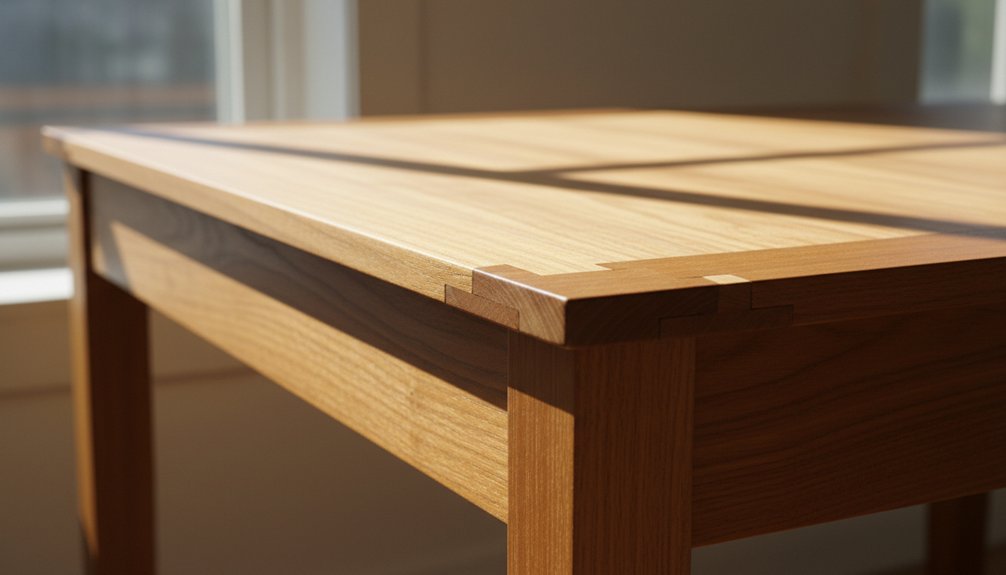
When you examine teak desks, the joinery techniques used are crucial to their strength and appearance. Dovetail joints connect drawers securely, while mortise and tenon joints join legs to the tabletop, providing stability. Biscuit joints align pieces perfectly, enhancing overall durability. These methods create strong, interlocking connections that resist daily wear without the need for metal fasteners.
Expert joinery combines visual appeal with practical functionality. Each technique contributes to the desk’s structural integrity, ensuring that the furniture remains both useful and attractive over time. Understanding these joinery techniques helps you appreciate how craftsmanship improves the longevity and value of teak desks.
When selecting a teak desk, consider the specific joinery methods used. Dovetail joints offer resistance against pulling forces, making them ideal for drawer construction. Mortise and tenon joints are excellent for load-bearing components, as they distribute weight evenly. Biscuit joints provide precision in alignment, essential for maintaining a clean look.
However, not all joinery techniques suit every design. For example, using biscuit joints in high-stress areas may not provide the necessary strength. Evaluate the intended use of the desk to determine the appropriate joinery methods. By focusing on these specific techniques, you can make an informed decision about the quality and durability of a teak desk.
Why Teak Desks Endure
Teak is a durable hardwood that withstands wear and tear, making it an ideal material for desks. Teak desks resist water damage due to natural oils that repel moisture and combat rot. These oils also deter pests, ensuring a long lifespan for the desk.
Teak is renowned for its durability and natural water resistance, ensuring desks remain in pristine condition for years.
The tight grain pattern of teak adds structural strength, minimizing the risk of warping or cracking over time. Additionally, purchasing from reputable dropship & wholesale suppliers can guarantee access to high-quality teak desks at competitive prices.
To maintain the quality of teak desks, regular cleaning is necessary. Clean the desk weekly to remove dust and dirt buildup.
Apply teak oil every six months to maintain the wood’s rich color and sheen. Position the desk away from direct sunlight to prevent fading.
Following these maintenance steps will keep your teak desk functional and visually appealing for many years.
Unique Joinery Techniques in Teak Desks
Artisans crafting teak desks use specific joinery techniques to ensure longevity and stability. Dovetail joints provide strong interlocking connections. These joints consist of tapered pins and tails that resist pulling apart. This design keeps the desk’s corners intact over time.
Mortise and tenon joints are another essential technique. The tenon, a protruding piece from one part, fits snugly into a mortise—a matching hole in another piece. This tight fit holds the components securely together, eliminating the need for external fasteners.
Employing these joinery techniques gives teak desks exceptional strength, even under heavy use. Each method demonstrates the artisan’s skill and contributes to a polished, cohesive appearance. Additionally, these techniques are part of a broader tradition emphasizing handcrafted furniture that combines design and durability.
Understanding these details highlights the craftsmanship involved in creating durable and aesthetically pleasing desks.
Traditional Joinery Techniques for Teak Desks
Traditional joinery techniques for teak desks prioritize durability and craftsmanship. When crafting a teak desk, use mortise joints and tenon connections to ensure a snug fit, enhancing strength and stability.
Dovetail joints secure drawers effectively; their interlocking structure prevents separation under stress. Incorporate dado grooves to join shelves to the sides of the desk, providing solid support.
Use biscuit joints to reinforce edge-to-edge connections, utilizing small wooden wafers for added strength. For a seamless appearance, apply finger joints that fit pieces together like a puzzle, enhancing both aesthetics and stability.
Align mitered corners with spline joints, which strengthen and stabilize those critical angles. Implement lap joints for straightforward overlaps that boost overall stability.
By employing these traditional techniques, you ensure that your teak desk remains robust and functional for years. Additionally, regular maintenance techniques are crucial to preserving the desk’s beauty and functionality. Avoid using modern adhesives or fasteners as they may compromise the integrity of the joinery.
Stick to these reliable methods to stand the test of time.
Innovative Joinery and Desk Durability
Innovative joinery methods significantly improve the durability of teak desks. Manufacturers use modern materials and advanced joinery techniques to strengthen the structural integrity of these desks, ensuring they endure daily use.
Interlocking Joint Systems Provide Precision
Interlocking joint systems create a precise assembly for teak desks. These systems minimize gaps and misalignments, which leads to better stability. Proper alignment reduces wear over time, extending the desk’s lifespan.
Metal Reinforcements Increase Resilience
Metal reinforcements enhance the resilience of teak desks, especially in load-bearing areas. By strategically placing metal within joints, manufacturers provide additional strength where it matters most. This prevents common issues like sagging or joint failure under weight.
Eco-friendly Adhesives Improve Longevity
Eco-friendly adhesives replace traditional nails and screws in teak desk construction. These adhesives distribute stress evenly across joints, which helps prevent weak points that can lead to structural failure. Using these adhesives contributes to a longer-lasting product.
Hybrid Materials Boost Strength
Combining teak with composite materials increases strength without compromising aesthetics. This hybrid approach allows manufacturers to create desks that maintain the visual appeal of teak while benefiting from the added durability of composites. This method is effective in reducing the overall weight while improving structural performance.
In summary, innovative joinery methods enhance the durability of teak desks through precise interlocking systems, strategic metal reinforcements, eco-friendly adhesives, and hybrid materials. Furthermore, the use of solid wood structures ensures that each piece is robust and long-lasting. Each of these advancements contributes to creating a robust, long-lasting desk that can withstand the rigors of everyday use.
How Expert Joinery Adds Style
When you use expert joinery in a teak desk, you ensure a seamless design and greater structural strength. Each joint is meticulously crafted to enhance the desk’s aesthetic appeal while guaranteeing its longevity. This attention to detail means the desk can withstand daily use without losing its integrity, making expert joinery a vital part of high-quality teak furniture construction.
Incorporating precise joinery techniques connects the desk’s components securely, allowing for stability over time. Each joint contributes to the overall structural durability, preventing issues like warping or loosening that can occur with inferior methods.
For example, using mortise and tenon joints provides a solid connection between the legs and the tabletop. This method distributes weight evenly and stabilizes the desk under heavy loads, which is essential for everyday functionality.
Limitations exist when using less skilled joinery techniques. Methods such as dowels or screws may not offer the same long-term durability as expert joinery. Additionally, poorly executed joints can lead to gaps or misalignments, detracting from the desk’s overall appearance and function.
Furthermore, the integration of seamless inventory updates ensures that each piece maintains its craftsmanship and quality throughout the selling process.
Seamless Aesthetic Integration
Expert joinery transforms teak desks into cohesive pieces that enhance both elegance and functionality in your workspace. This process uses precise techniques to ensure each desk integrates seamlessly with your existing decor.
Skilled craftsmanship emphasizes the details that create visual harmony, allowing furniture to blend naturally while still standing out.
Joinery methods, such as dovetail and mortise and tenon, offer specific benefits. These connections:
- Promote smooth visual flow across surfaces.
- Eliminate bulky hardware, catering to minimalist design preferences.
- Preserve the natural color variations of the wood.
- Minimize visual distractions with clean interface transitions.
These joinery techniques enhance the desk’s aesthetic while ensuring it serves practical purposes. Each method supports the goal of achieving a balance between form and function.
You can expect sophistication in your environment without compromising on usability or style.
When selecting teak desks, look for these joinery techniques to guarantee a high-quality, integrated piece that meets your aesthetic and functional needs.
Avoid desks that rely on visible fasteners or inferior joinery, as these can detract from the overall design.
Enhancing Structural Durability
Prioritize Structural Durability in Furniture
When selecting furniture, focus on structural durability alongside style. Expert joinery in teak desks plays a crucial role in ensuring long-lasting performance. The mortise and tenon joint stands out as one of the most effective techniques for creating a strong, stable connection. The mortise holds the tenon securely, allowing for a tight fit that enhances overall strength. This method eliminates the need for nails or screws, which can weaken over time.
The mortise and tenon joint also evenly distributes weight and stress across the desk. This distribution reduces the likelihood of wobbling or breaking, especially under heavy use. When crafted with precision, these joints significantly improve the desk’s stability.
Additionally, quality mortise and tenon joints showcase traditional craftsmanship, adding value to the desk’s design. By using durable joinery techniques like mortise and tenon in combination with high-quality teak, you achieve a desk that balances strength and elegance.
Focus on these elements to ensure your furniture not only looks good but stands the test of time.
Understanding Joinery Design for Teak Desks
Joinery techniques directly impact the strength and aesthetics of teak desks. Skilled craftsmen use specific joinery methods to ensure both stability and visual appeal. Each joinery type serves a unique purpose, enhancing the desk’s construction and longevity.
Dovetail Joints Enhance Stability and Aesthetic
Dovetail joints provide strong connections between wooden pieces. Craftsmen use these joints to connect drawer fronts to sides, ensuring durability.
The interlocking design prevents pulling apart, making it ideal for high-use areas. Dovetail joints also add a decorative element, enhancing the overall appearance of the desk.
Mortise and Tenon Joints Offer Robust Support
Mortise and tenon joints create a solid framework for teak desks. This method involves inserting a tenon from one piece into a mortise on another piece.
Craftsmen rely on this technique for leg-to-top connections, ensuring that the structure withstands weight and stress. Mortise and tenon joints require precise measurements for a secure fit, which enhances overall stability.
Finger Joints Provide Modern Aesthetics
Finger joints connect wood pieces at visible corners, offering a clean, modern look. Craftsmen often use this method for contemporary teak desk designs, where corner visibility is important.
The interlocking fingers create a seamless joint that maintains strength while enhancing visual appeal. Finger joints are suitable for applications where aesthetics are as crucial as durability.
Butterfly Joints Prevent Splitting
Butterfly joints serve both decorative and functional purposes in teak desks. Craftsmen use these joints to reinforce areas prone to splitting, especially in larger tabletops.
The butterfly shape bridges cracks, maintaining the integrity of the wood while adding unique character. While primarily decorative, butterfly joints play a critical role in preserving the desk’s structure.
Limitations and Considerations
While joinery methods enhance the strength and appearance of teak desks, not all techniques are suitable for every application.
For example, finger joints may not provide the required strength for heavy-duty use compared to mortise and tenon joints. Additionally, certain methods require advanced skills and tools, limiting their application for novice woodworkers.