
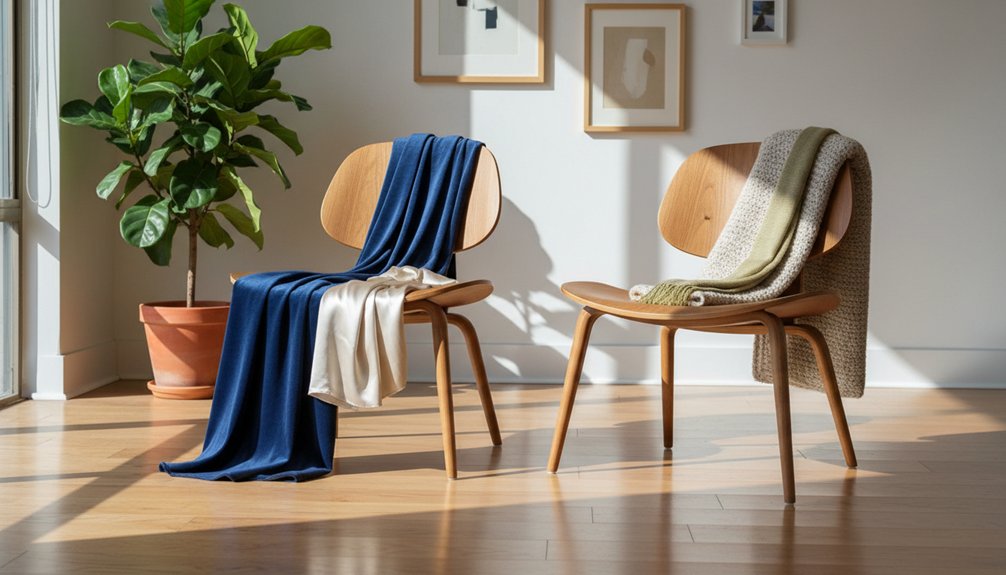
Enhancing mid-century modern chairs involves layering textured fabrics like wool and velvet with wooden frames. Choose earthy tones, such as browns and greens, to match the wood and add bold accent colors for contrast. Incorporate decorative throws and cushions to introduce additional texture and color. This combination creates visual interest and depth while preserving the clean lines characteristic of mid-century design.
Layering wool or velvet directly on the chair’s upholstery provides a tactile experience that invites use. Consider using a plush velvet cushion to contrast a smooth wood surface, creating a balanced feel. When selecting throws, opt for patterns that echo the chair’s design, reinforcing the cohesive look.
Avoid overly bright colors that clash with the wooden tones. Stick to a palette that complements the natural warmth of the wood, ensuring the overall aesthetic remains sleek. This approach maintains the integrity of mid-century modern design while enhancing comfort and style.
In practical terms, aim for a combination of three to four textures in your space. This balance allows for visual depth without overwhelming the design. By thoughtfully selecting fabrics and colors, you can create a stylish and functional area that showcases the beauty of mid-century modern chairs.
Exploring Mid-Century Modern Design
Mid-century modern design combines simplicity, functionality, and natural forms to create a distinctive style. When you explore this design, focus on specific color palettes that emerged during this era. Use earthy tones like rich browns and muted greens alongside vibrant accents such as orange and teal. These color combinations balance subtlety with boldness.
Explore mid-century modern design with earthy tones and vibrant accents, balancing simplicity and boldness.
Understand Material Choices
Mid-century modern design relies heavily on specific materials. Use wood, leather, glass, and metal to achieve the desired aesthetic. Each material contributes to a design that prioritizes durability and visual appeal.
For instance, hardwood provides warmth, while metal adds a sleek, modern touch. Ensure that your choice of materials aligns with the overall design—this promotes a cohesive look. Notably, many suppliers offer quality, handmade furniture that embodies these essential materials.
Create Harmonious Spaces
When incorporating mid-century elements, prioritize harmony among colors, materials, and forms. Choose furniture with clean lines and functional designs.
Select accessories that complement the primary color scheme without overwhelming the space. For example, a leather sofa in a rich brown can pair well with a geometric rug in muted greens and vibrant accents. This intentional combination enhances the mid-century modern aesthetic.
Consider Limitations
Be mindful of limitations in mid-century modern design. Avoid overly ornate details or heavy fabrics, as these contradict the style’s emphasis on simplicity.
Additionally, ensure that the materials you select are sustainable and ethically sourced. This approach not only respects the design principles but also aligns with contemporary values.
Apply Practical Examples
To effectively implement mid-century modern design, consider specific examples. For instance, use a walnut coffee table with tapered legs as a focal point in your living room.
Pair it with a vintage-style armchair upholstered in a bold color. This combination showcases the essence of mid-century modern design.
Selecting Fabrics for Mid-Century Wooden Chairs
When selecting fabrics for mid-century wooden chairs, choose materials that support the design’s simplicity and functionality. Focus on fabrics like linen, cotton, and wool. These materials provide durability and a natural look, enhancing the minimalist aesthetic without overwhelming the chair’s form.
Prioritize color palettes that reflect the mid-century era. Use earthy tones, muted hues, and occasional bold accents. Colors such as olive green, mustard yellow, and burnt orange can create a striking contrast against wooden frames.
Evaluate the maintenance requirements of each fabric type. Some fabrics need regular cleaning while others are more stain-resistant. For example, wool can resist stains better than cotton, making it suitable for high-traffic areas. Additionally, consider the importance of handcrafted furniture characteristics that highlight unique patterns and variations in each piece.
By balancing aesthetics and maintenance, you ensure the fabric remains appealing and functional over time.
Creative Layering Techniques for Fabrics
Layering fabrics on wooden chairs revitalizes classic designs. Start with a textured or patterned fabric as the base layer. This fabric choice adds visual interest and serves as the foundation for your design.
Combine a soft, plush fabric, like velvet, with a structured fabric, such as canvas. This contrast enhances the chair’s overall appeal.
Next, add a decorative throw or small blanket to introduce another layer of texture. For instance, place a lightweight cotton throw over the plush fabric. The cotton and velvet combination provides a tactile contrast that’s visually striking.
Position these fabrics to overlap slightly, ensuring that both textures are visible.
Complete the look with a complementary cushion that ties together the colors and textures. Choose a cushion that matches the color of the base layer while contrasting with the throw. This final addition creates a cohesive and inviting aesthetic.
Incorporating unique, handcrafted furniture can elevate your design, making it both stylish and distinctive.
Balancing Fabrics With Mid-Century Design
To blend fabrics with mid-century design, focus on the era’s core traits: clean lines, organic shapes, and functionality. Choose fabrics that support these features. Select solid colors or subtle patterns that maintain the furniture’s sleek aesthetic.
Choose Complementary Fabrics
When selecting fabrics, prioritize those that match mid-century color palettes. Use muted greens, warm wood tones, and soft blues to create a cohesive look.
Incorporate natural textures like linen or wool to reinforce the organic feel. This choice enhances the overall design while respecting the mid-century ethos.
Layer Textiles Carefully
Layer textiles to enhance the furniture’s design without overwhelming it. Position fabrics in a way that highlights the chair’s form.
For example, pair a soft wool throw with a wooden chair to create a balanced look. Ensure that each textile complements the others to maintain visual harmony.
Avoid Overpowering Patterns
Limit the use of bold patterns that can distract from mid-century furniture. Instead, focus on fabrics that add texture without competing with the furniture’s clean lines.
Avoid busy designs, as they can clutter the overall aesthetic.
Maintain Functionality
Ensure that the selected fabrics don’t compromise the functionality of the space. Choose materials that are durable and easy to maintain, especially in high-traffic areas.
This practical approach aligns with the mid-century focus on proper care techniques, ensuring that the aesthetics and functionality work in harmony.
Room Design With Textured Chairs
Textured chairs provide a strong focal point in room design, adding visual interest and tactile appeal.
Choose a color palette that enhances the chair textures, such as earthy tones or vibrant shades. Match this palette throughout the room with coordinating accent pieces like cushions and rugs. This strategy creates a cohesive look that emphasizes the textured chairs while balancing the overall design.
Coordinate earthy or vibrant tones to unify the room, spotlighting the chairs’ texture and balancing the design.
Arrange Chairs for Maximum Impact
Arrange textured chairs in conversation areas to boost their functionality and aesthetic value.
Grouping chairs together encourages interaction and makes the space feel welcoming. Ensure each arrangement allows for easy movement and conversation.
Select Appropriate Materials
Evaluate the materials of the textured chairs, such as wood, fabric, or metal.
Each material contributes distinct layers to the design. For instance, wood offers warmth, while metal adds a modern touch. Choose complementary materials for other furniture pieces to maintain consistency.
Incorporate Additional Textures
Pair textured chairs with other textured elements, like woven baskets or patterned throws, to add depth to the room.
Each added texture should enhance the overall design without overwhelming it. Aim for a balance that highlights the chairs while maintaining visual harmony.
Focus on Practicality and Aesthetics
Select and place textured chairs with thoughtful consideration to create an inviting and visually stimulating room.
Avoid overcrowding the space; allow each chair to stand out while contributing to the overall design. This practical approach ensures that the room is both functional and aesthetically pleasing. Additionally, consider sourcing your textured chairs from trade only suppliers to access unique designs tailored for professional use.