
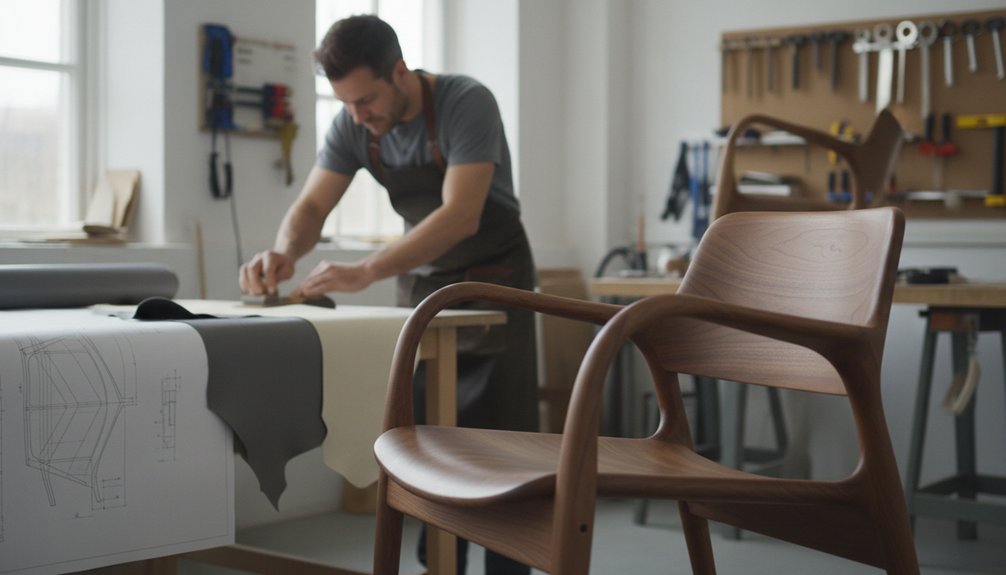
To create a Danish modern dining chair, focus on Danish design principles that prioritize simplicity and functionality. Select sustainable materials, such as responsibly sourced hardwood and eco-friendly upholstery fabrics. Ensure ergonomic design by adjusting seat height, backrest angle, and cushioning for comfort. Apply key craftsmanship techniques like precise joinery and meticulous finishing. Test the chair’s durability with strong, non-toxic finishes to ensure long-lasting quality. Engage in each step of this process to fully understand the craft.
Selecting Sustainable Materials
Use responsibly sourced hardwood and eco-friendly fabrics for your dining chair. Choose wood species like oak or walnut, which offer durability and aesthetic appeal. Opt for fabrics that are certified as environmentally friendly, ensuring your chair is both stylish and sustainable.
Ensuring Ergonomic Design
Adjust seat height, backrest angle, and cushioning to enhance comfort. Aim for a standard seat height of 18 inches from the ground. Design backrests to support natural spine alignment and use cushions that provide adequate support without sacrificing style.
Applying Craftsmanship Techniques
Incorporate joinery techniques such as mortise and tenon for strong connections. Sand surfaces meticulously to prepare for finishing. Use finishes that enhance the wood grain while providing protection against wear, such as water-based polyurethane.
Testing for Durability
Apply strong, non-toxic finishes to ensure the chair maintains its quality over time. Perform stress tests on joints and seat stability to confirm that the chair can withstand regular use without compromising safety.
By following this structured approach, each step contributes to the development of a high-quality Danish modern dining chair.
From Spark to Sketch: Unearthing Inspiration in Danish Design
Danish design emphasizes simplicity and functionality, making it a valuable source for creating modern furniture. This design philosophy focuses on clean lines and minimalism, ensuring each element serves a specific purpose. By prioritizing functionality, you can create pieces that are both practical and aesthetically pleasing. For instance, the principles of wholesale furniture allow for a diverse selection of quality materials that can enhance your designs.
To grasp the evolution of this aesthetic, analyze the work of iconic Danish designers like Arne Jacobsen and Hans Wegner. Their designs blend traditional craftsmanship with contemporary needs, resulting in timeless appeal. When sketching your ideas, examine how these designers achieved comfort while maintaining elegance. Recognizing their foundational principles allows you to draw inspiration and develop a design that embodies Danish virtues.
Exploring Danish Design Principles
Danish design prioritizes functionality by stripping away unnecessary elements. Each piece of furniture should serve a clear purpose, whether it’s a chair, table, or storage unit. This philosophy limits distractions and enhances usability.
For example, the iconic Egg Chair by Arne Jacobsen demonstrates how form can support function without sacrificing style.
Analyzing Influential Designers
Studying designers like Hans Wegner reveals how comfort and aesthetics coexist in Danish design. Wegner’s Wishbone Chair exemplifies ergonomic design, providing support while maintaining a visually appealing silhouette.
Analyzing such works helps you understand how to integrate comfort into your modern furniture designs.
Translating Concepts into Designs
When you sketch your furniture ideas, focus on the elements that contribute to usability. Identify key features that enhance functionality, such as adjustable heights or multi-purpose components.
This targeted approach ensures that your designs reflect the principles of Danish design while meeting contemporary needs.
Implementing Danish Aesthetics in Your Work
To implement Danish aesthetics, prioritize materials that are both durable and sustainable. Use wood, metal, or textiles that enhance the design while providing longevity.
This choice aligns with the Danish commitment to quality craftsmanship and environmental responsibility.
Picking Sustainable Materials for Danish Chairs
When selecting sustainable materials for Danish chairs, prioritize eco-friendly wood sourced from responsibly managed forests. Choose hardwoods like oak or beech, which offer durability and aesthetics while supporting sustainable forestry practices.
Next, select upholstery fabrics that are durable and have a low environmental impact. Look for organic cotton or recycled polyester, which provide longevity and comfort without compromising sustainability.
Finally, use non-toxic finishes that ensure both the safety of the user and the environment. Opt for water-based varnishes or natural oils, which protect the chair’s surface while maintaining a commitment to health and ecological standards. Additionally, consider partnering with wholesale & dropshipping furniture suppliers who emphasize sustainability in their materials and practices.
Eco-Friendly Wood Choices
Choosing Eco-Friendly Materials for Danish Modern Dining Chairs
Select reclaimed wood for crafting Danish modern dining chairs. Reclaimed wood provides a second life to older resources, reducing waste and minimizing the carbon footprint.
Implement bamboo as an alternative material. Bamboo grows rapidly, making it a renewable resource suitable for furniture.
Source timber from suppliers committed to sustainable forestry practices. These suppliers manage forests responsibly, ensuring continuous growth and promoting ecological benefits.
Conduct a lifecycle assessment to analyze the environmental impact of each material. This assessment evaluates sustainability from production to disposal, helping ensure that your material choices align with environmental goals.
Durable Upholstery Fabrics
Selecting durable upholstery fabrics for your Danish modern dining chairs ensures they withstand daily use and promote an eco-friendly home.
Start with performance fabrics that undergo rigorous durability testing; these fabrics resist wear and maintain their appearance over time. Focus on upholstery options that feature various textures; this provides both comfort and enhances the aesthetic appeal of your chairs.
Prioritize stain-resistant materials; these simplify your cleaning routine and protect against spills. Choose colorfast fabrics dyed with eco-friendly methods to ensure vibrant hues last longer without fading.
Texture variety not only enriches the tactile experience but also adds visual interest to your dining space.
Select materials that emphasize both longevity and environmental responsibility. For instance, look for recycled polyester or organic cotton, which offer durability while reducing environmental impact.
Balance aesthetics with functionality to create chairs that meet both design and practical needs.
Non-Toxic Finishing Options
Non-Toxic Finishing Options for Danish Modern Dining Chairs
Choosing non-toxic finishing options for Danish modern dining chairs ensures both health and environmental safety.
Start with natural oils; these oils penetrate wood and provide a rich finish while protecting the surface from moisture and wear.
Next, select plant-based sealants. These sustainable products shield the wood from damage and maintain its integrity over time.
Eco-friendly varnishes offer a durable protective layer without harmful emissions, contributing to a healthier indoor environment.
Incorporate non-toxic paints if you want vibrant colors. These paints don’t release volatile organic compounds (VOCs), making them safer for indoor use.
For a chemical-free approach, consider organic finishes. These finishes enhance the wood’s natural beauty without introducing harmful substances.
Use green adhesives to bond joints securely. These adhesives don’t contain harsh chemicals, ensuring strong connections without toxic side effects.
Safe stains can enhance the wood’s grain while preserving indoor air quality.
Finally, apply chemical-free coatings. These coatings protect the wood without compromising your family’s health or the environment.
Designing With Precision: Ergonomics Meets Aesthetics
When designing a Danish modern dining chair, focus on achieving a balance between ergonomics and aesthetics. Ensure that each chair supports the body while maintaining a minimalist design. The simple shapes must provide comfort and functionality without sacrificing style.
Ensure Proper Support with Specific Measurements
Each dining chair requires precise measurements for seat height and backrest angle. A seat height of 18 inches typically suits most users, while a backrest angle of around 100 to 110 degrees supports spinal alignment.
Design the chair to follow the body’s natural contours, allowing for a comfortable seating experience. Maintain these specifications to ensure that comfort and appearance coexist effectively.
Select Durable Materials for Longevity and Aesthetic Appeal
Choose solid wood for the chair’s frame to provide durability and a timeless aesthetic. For example, hardwoods like oak or walnut offer strength and resistance to wear.
Select upholstery materials that enhance comfort, such as high-quality fabric or leather, without detracting from the overall design. Solid wood paired with thoughtful fabric choices elevates both the ergonomic and visual aspects of the chair.
Maintain a Clear Focus on Ergonomics and Visual Design
Combine ergonomic support with appealing design elements to increase the chair’s overall value. Repeat the focus on ergonomics throughout the design process to ensure that each chair not only looks good but also feels good to use.
Avoid overly complex designs that could compromise comfort; simplicity in form can enhance both usability and aesthetics.
Address Limitations and Edge Cases in Design
Acknowledge that not every design will fit every user. Consider edge cases, such as users with different body types or preferences for seating position.
Design adjustable features, like a height-adjustable seat or a tilt mechanism, to accommodate a wider range of users. This adaptability ensures that the chair remains functional for various needs. Regular dusting and maintenance of wooden furniture also applies to maintaining the chair’s aesthetic over time.
Mastering Craftsmanship: Techniques in Danish Modern Design
Mastering craftsmanship in Danish modern design requires a deep understanding of essential techniques that ensure both quality and aesthetic appeal. Key techniques include joinery methods, shaping processes, finishing practices, and material innovation.
Joinery Techniques Ensure Structural Integrity
Joinery techniques, such as mortise-and-tenon joints, provide the strength necessary for durable furniture. These joints allow for strong connections between components, preventing structural failure over time.
Mortise-and-tenon joints offer robust connections, ensuring durability and preventing structural failures in well-crafted furniture design.
When executed correctly, joinery enhances the longevity of each piece. Avoid shortcuts in joinery, as weak connections lead to instability and reduce the overall quality of the design.
Shaping Methods Achieve Elegant Forms
Shaping methods focus on creating refined curves and lines in furniture. Techniques like steam bending wood enable craftsmen to achieve graceful shapes while maintaining functionality.
Precise shaping not only enhances visual appeal but also supports the ergonomics of the piece. Neglecting this step results in awkward forms that detract from both usability and style.
Finishing Touches Enhance Durability
Finishing touches involve applying protective coatings that preserve the material while enhancing its beauty. Techniques such as sanding, staining, and oiling are essential to achieve a smooth surface and highlight the wood’s natural grain.
Poor finishing can lead to wear and tear, diminishing the piece’s lifespan. Prioritize quality finishes to maintain both aesthetics and functionality.
Material Innovation Provides Sustainable Solutions
Material innovation plays a crucial role in modern Danish design. By selecting sustainable materials and combining traditional craftsmanship with new technologies, designers create environmentally friendly furniture without sacrificing quality.
For example, using reclaimed wood can reduce waste while adding character to a piece. Ignoring material choices can result in unsustainable practices that harm the environment and compromise design integrity.
Incorporating dropship solid wood furniture into your design approach can enhance both durability and aesthetics, aligning with contemporary consumer preferences.
Connecting Techniques for Quality Design
Incorporating these techniques—joinery, shaping, finishing, and material innovation—ensures that each piece of Danish modern furniture reflects functionality, style, and durability.
Focus on mastering each technique to create designs that stand the test of time while honoring the historical context of Danish craftsmanship.
Ensuring Timeless Quality in Danish Design
You ensure timeless quality in Danish design by prioritizing craftsmanship and selecting high-quality materials. You draw from Denmark’s rich cultural heritage, blending traditional elements with contemporary needs. You implement sustainable practices, choosing eco-friendly materials and processes that protect the environment. This approach results in durable furniture pieces that maintain their aesthetic and functional value over time. Additionally, you emphasize the importance of handcrafted furniture, ensuring each piece reflects individual artistry and care.
Focus on Craftsmanship
Craftsmanship defines the quality of each piece. Skilled artisans create furniture by hand, ensuring attention to detail in every curve and joint. This hands-on approach guarantees that each item meets high standards of durability and design.
Select High-Quality Materials
You choose materials that enhance the longevity of your designs. Solid wood, premium textiles, and environmentally friendly finishes contribute to the overall quality. These materials withstand wear and tear, ensuring that furniture remains functional and beautiful for years.
Incorporate Cultural Heritage
You integrate elements from Danish cultural traditions into your designs. This includes using classic shapes and motifs that resonate with Danish history. By doing this, you create pieces that aren’t only modern but also tell a story rooted in tradition.
Implement Sustainable Practices
Sustainability is a core principle in your design process. You source materials from suppliers who follow eco-friendly practices. You also minimize waste during production, ensuring that each piece is crafted responsibly and contributes to a healthier planet.
Create Lasting Furniture
Your focus on craftsmanship, quality materials, cultural heritage, and sustainability results in furniture that lasts. Each piece is designed to be timeless, providing both aesthetic appeal and practical function. This commitment to quality ensures that customers invest in furniture that remains relevant and valuable over time.
Craftsmanship And Material Selection
Craftsmanship and Material Selection for Danish Modern Dining Chairs
Craftsmanship and material selection create the foundation for durable Danish modern dining chairs. High-quality hardwoods, such as oak or teak, provide strength and aesthetic appeal. These woods are chosen for their durability and sustainable properties, ensuring the chair will last for years.
Next, focus on joinery techniques to enhance stability. Using dovetail and mortise-and-tenon joints creates strong connections between chair components. These traditional methods, rooted in skilled craftsmanship, ensure the chair’s longevity.
In addition to materials and joinery, pay attention to finish. A well-applied oil or varnish not only enhances the wood’s natural beauty but also protects it from wear and tear. Proper finishing techniques can extend the life of the chair significantly.
When you combine high-quality materials, meticulous craftsmanship, and effective finishing, you create a dining chair that embodies the principles of Danish modern design. This approach results in a functional piece that showcases timeless elegance and durability.
Cultural Heritage And Influence
Danish modern design combines elegant simplicity with functionality, rooted in Denmark’s cultural heritage. Danish aesthetics derive from the country’s minimalist philosophy, shaped by historical influences and rich cultural symbolism. Craftsmanship plays a crucial role in this design evolution, focusing on quality and timelessness.
| Component | Influence |
|---|---|
| Danish Aesthetics | Minimalist Philosophy |
| Cultural Symbolism | Rich Heritage |
| Historical Influences | Design Evolution |
| Craftsmanship Legacy | Longevity and Quality |
Chairs crafted in this style serve as more than just furniture; they connect past traditions with future innovations. Each piece reflects a balance of heritage and modern design, ensuring relevance across generations. This understanding highlights why Danish design maintains its esteemed position globally.
Danish aesthetics emphasize a minimalist philosophy. Designers prioritize clean lines and functional forms to create visually appealing pieces. Cultural symbolism enriches this design, drawing from Denmark’s history and values. Historical influences guide the evolution of design, integrating lessons learned over time. The craftsmanship legacy ensures that each piece is well-made, emphasizing durability and quality.
Sustainability In Furniture Design
Sustainability is crucial in furniture design today, especially within Danish modern design. Danish designers incorporate eco-friendly practices to create high-quality pieces. They use sustainably harvested wood and recycled metals, which significantly reduce environmental impact.
When you purchase a Danish modern dining chair, you support ethical sourcing and fair labor practices. This commitment to responsible materials ensures that each piece isn’t only stylish but also durable, reducing the need for frequent replacements and minimizing waste.
Danish designers prioritize longevity over short-lived trends. By focusing on timeless designs, they demonstrate that sustainable choices can align with exceptional craftsmanship.
For example, a well-made dining chair can last for decades, offering a lasting solution rather than a temporary fix. This approach contributes to a more sustainable furniture market, where ethical practices and aesthetic appeal coexist.
User Insights: Designing for Comfort and Connection
Designers create Danish modern dining chairs that prioritize comfort and social interaction. A well-designed chair supports users during extended seating, allowing them to feel relaxed and engaged. Ergonomic features, such as appropriate seat height and back support, accommodate various postures and body types, promoting a positive user experience.
The chair’s design should encourage gatherings and conversations. When users feel comfortable, they’re more likely to enjoy their dining experience and connect with others. Designers focus on specific attributes, such as cushioning density and armrest height, to enhance comfort while maintaining aesthetic appeal.
For example, a seat height of 18 inches works well for most dining tables, while a backrest angle of 100 degrees provides optimal lumbar support. Such details matter in creating a chair that invites people to sit together. By balancing comfort and connection, a Danish modern dining chair becomes an essential piece for fostering memorable social interactions around the table. Additionally, using premium materials ensures both durability and an inviting feel, crucial for enhancing the overall dining experience.
Limitations exist, such as the need to balance style with functionality; overly intricate designs may compromise comfort. Designers must also consider materials, ensuring durability without sacrificing the inviting feel of the chair.