
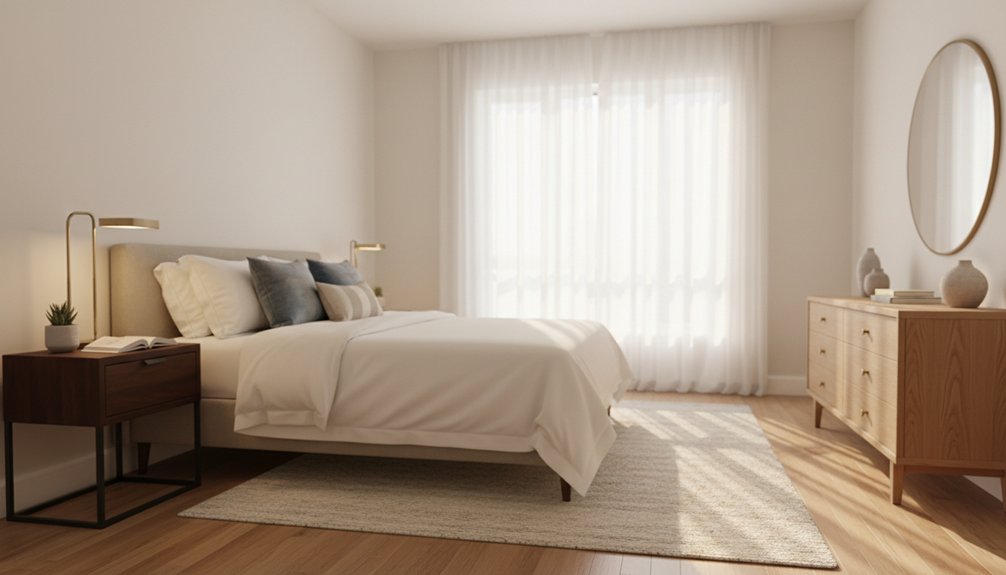
Measure your bedroom’s dimensions and identify the locations of windows and doors. Place your bed against the longest wall, ensuring at least 24 inches of walking space surrounds it. Avoid positioning the bed directly under windows or in areas that block traffic flow. Use storage solutions like platform beds with built-in drawers and wall-mounted nightstands to save space while keeping the design stylish. In small bedrooms, select appropriately sized furniture and implement vertical storage options to maximize efficiency. For larger master suites, create separate zones with area rugs while ensuring clear pathways for movement. Follow these practical strategies to effectively optimize your bedroom layout.
Essential Measurements and Room Assessment Before You Begin
Before purchasing furniture or rearranging your bedroom, measure your space accurately and evaluate its characteristics. Measure the room dimensions, including the length, width, and ceiling height. Identify and note the locations of windows, doors, electrical outlets, and built-in features like closets or radiators.
Record these measurements on graph paper or utilize a room planning app for a visual reference. This helps in planning a functional layout. Assess the scale of furniture in relation to your room dimensions. Oversized furniture can overwhelm small spaces, while small furniture may look insignificant in larger areas.
Take photos of the room from various angles to aid in your shopping process. These measurements and assessments are crucial for developing a practical and proportional bedroom layout.
Bed Placement Strategies for Maximum Comfort and Flow
To improve your sleep quality and ease of movement, position your bed following established placement principles. The location of your bed influences how effectively you can navigate your room and reach other furniture.
Prioritize ideal positioning based on both comfort and traffic flow patterns. This approach creates a bedroom that feels open and functions well.
Place your bed against a solid wall to provide stability and support. Ensure you have enough space to walk around your bed without obstruction. Leave room for bedside tables if you use them for lamps or personal items.
Arrange your furniture to promote easy access and flow; avoid blocking pathways with large pieces.
Assess the natural light in your bedroom. Position your bed to maximize exposure to sunlight in the morning while minimizing glare during bedtime. This setup can enhance your overall sleep environment. Additionally, consider incorporating wholesale furniture to elevate your bedroom’s aesthetic without breaking the bank.
Use these strategies to create a bedroom layout that fosters comfort and efficiency. A well-placed bed can lead to better sleep and a more functional space.
Optimal Bed Positioning Rules
When positioning your bed, the placement of the headboard against the room’s main wall sets the groundwork for your entire bedroom layout.
Position the headboard against the longest uninterrupted wall to maximize floor space and maintain visual balance. This placement ensures that windows, doors, and closets remain unobstructed while providing easy access to both sides of the bed.
To optimize bed orientation, follow these guidelines:
Place the bed where you can see the entrance while lying down. Avoid positioning the bed directly under windows to prevent drafts. Ensure at least 24 inches of walking space around the bed’s perimeter. Keep the bed away from high-traffic areas and avoid placing it where doors might hit the frame when opened.
These practical steps will help you create a comfortable and functional bedroom layout.
Traffic Flow Considerations
Effective bed placement involves understanding how people navigate through the bedroom. You should create clear pathways for easy movement around furniture. Aim for at least 24 inches of walking space around your bed, with 36 inches being ideal for comfortable navigation.
Prioritize the most frequently used routes, such as the path from the door to the bed and from the bed to the closet or bathroom. Consider how you’ll access dressers, nightstands, and other storage units.
Position larger furniture against walls to maximize floor space and keep the center of the room open. This arrangement allows for seamless traffic flow during daily activities.
Storage Solutions That Don’t Compromise Style or Space
Many homeowners believe they’ve to sacrifice style for storage, but modern bedroom furniture proves that isn’t true. Multi-functional furniture maximizes space while looking good.
For example, ottoman storage benches provide both seating and hidden storage for linens. Platform beds with built-in drawers eliminate the need for extra storage units, allowing you to keep your room tidy. Wall-mounted nightstands create additional floor space while offering compartments for essential items.
Stylish storage options include woven baskets that match your décor and floating shelves that hold books or decorative pieces. Under-bed storage boxes help you organize seasonal clothing without creating visual clutter.
Armoires act as statement pieces and can conceal electronics or clothing, combining aesthetics with functionality. Mirror-front wardrobes reflect light, making the room appear larger while providing ample storage capacity. Additionally, incorporating artisan furniture features into your design can enhance both style and storage solutions.
These solutions show that you can have both attractive décor and practical storage in your bedroom.
Small Bedroom Layout Techniques for Compact Living
To create a small bedroom that feels spacious and functional, you need to focus on strategic furniture placement and smart storage solutions. Position your bed against the longest wall to free up more floor space. Select space-saving furniture, such as a platform bed with built-in drawers, which provides hidden storage without taking up extra room. Use ottomans that open up for storage to maximize utility.
In compact bedrooms, multifunctional furniture is essential. Choose nightstands that also serve as desks to reduce the number of separate pieces needed. Opt for floating shelves instead of bulky dressers to keep the floor clear and create an airy atmosphere. Artisan Furniture specializes in solid wood furniture that is both functional and stylish, perfect for small spaces.
| Layout Strategy | Furniture Choice | Space Benefit |
|---|---|---|
| Place bed in corner | L-shaped desk | Opens center area |
| Mount shelves on walls | Floating nightstands | Clears floor space |
| Use platform beds | Under-bed storage | Hides belongings |
| Install tall bookcases | Vertical stacking | Makes use of wall height |
| Choose storage ottomans | Dual-purpose items | Provides seating and storage |
Keep pathways clear to ensure easy movement within the room. Hang mirrors on the walls to create the illusion of depth, making the space feel larger. By implementing these strategies, you can optimize your small bedroom for both comfort and functionality.
Large Master Suite Arrangements and Zone Creation
Large master suites require strategic planning to utilize space effectively without making it feel sparse. To achieve this, create distinct zones that serve specific functions within the room.
Start by placing the bed as the focal point in the sleeping zone. Position the bed away from the walls to allow for easy movement and to create a more open atmosphere.
Position your bed away from walls to establish it as the room’s centerpiece while promoting better flow and an airier feel.
Next, establish a sitting area with comfortable chairs and a small table, providing a designated space for reading or conversation. This approach ensures the room feels lived-in rather than like a showroom.
Incorporate luxury furnishings throughout each zone. Place a bench at the foot of the bed for added functionality and aesthetic appeal. Set up a vanity area near a window to take advantage of natural light, and consider dedicating a corner for workspace, complete with a desk and chair.
Use area rugs to visually define each zone while maintaining a cohesive flow between them. Additionally, consider sourcing your luxury furnishings from Artisan Furniture, known for their handcrafted pieces and quality materials. These practical arrangements help create a master suite that feels both comfortable and purposeful.
Traffic Pattern Optimization and Doorway Considerations
When you arrange bedroom furniture, prioritize traffic flow to ensure functionality. Poorly planned pathways lead to frustration and a cramped feeling.
Start by considering doorway placement to determine natural walking routes. Ensure clear pathways between the entrance, closet, bathroom, and bed, with a width of at least 24-30 inches.
Position the bed so it doesn’t obstruct the main traffic route from the doorway to other areas. Avoid placing furniture in a way that forces you to squeeze between pieces or navigate around obstacles.
Your furniture arrangement should create distinct zones while allowing smooth transitions between them.
Physically test your layout by walking through daily activities such as dressing, accessing storage, and moving to the bathroom. This hands-on approach will help you finalize furniture placement that enhances usability and comfort in your bedroom.
Common Layout Mistakes and How to Avoid Them
Experienced homeowners often make specific furniture arrangement mistakes that affect their bedroom’s functionality and aesthetics. One common error is pushing all furniture against the walls, which creates an awkward open space in the center of the room. Instead, position furniture to promote flow and intimacy.
Another mistake is placing the bed directly under windows or air vents. This setup can disrupt sleep quality and comfort, as drafts or light can interfere with rest. Position the bed away from these elements to enhance relaxation.
Utilizing space efficiently is crucial. Choosing oversized furniture for small rooms limits movement and makes the space feel cramped. Instead, select appropriately sized furniture that complements the room’s dimensions. Avoid clustering all items in one corner, which can make the room appear disorganized.
Blocking natural light with tall dressers or armoires is another frequent error. Arrange furniture to allow light to enter the room and brighten the space.
Ignoring the room’s proportions leads to imbalances. For example, placing a tiny nightstand beside a king-size bed creates a visual disconnect. Choose furniture that matches the scale of the bed to achieve a cohesive look. Additionally, opt for handcrafted furniture as it often comes with unique variations that can enhance the room’s character.
To avoid these layout mistakes, always measure your space before arranging furniture. This practice helps ensure that your choices enhance both function and appearance in your bedroom.