
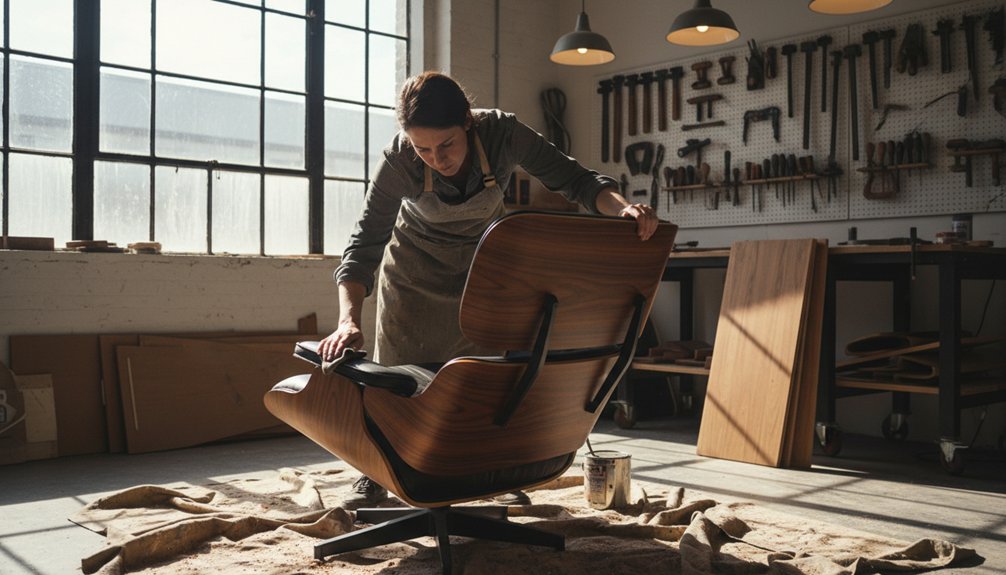
As a mid-century modern restorer, I focus on restoring Eames chairs to their original specifications. I replace worn upholstery with high-quality materials, ensuring that the new fabric matches the chair’s era. I replicate authentic stitching techniques to maintain historical accuracy.
I sand the wooden shells carefully to remove any imperfections and apply protective stains that enhance the wood’s natural beauty. I inspect joints for structural integrity and reinforce them as needed. This process preserves the chair’s durability and functionality.
I prioritize balancing authenticity and practicality. For upholstery, I choose durable fabrics like wool or cotton blends that can withstand daily use while maintaining the original look. My work ensures that each restored Eames chair honors its legacy and remains a functional piece of design.
In this field, attention to detail is crucial. Each restoration project typically takes several weeks, depending on the chair’s condition and the extent of wear. I also encounter challenges, such as sourcing vintage materials that match the original specifications. These efforts contribute to the ongoing appreciation of Eames chairs in today’s market.
Understanding the Eames Chair: Its Legacy in Mid-Century Design
The Eames Chair exemplifies mid-century design by emphasizing functionality and simplicity. Charles and Ray Eames designed this chair to merge comfort with innovative manufacturing techniques. Their approach allows the Eames Chair to adapt to diverse interior spaces while maintaining aesthetic appeal.
The Eames Chair utilizes molded plywood and fiberglass, which were groundbreaking materials at the time of creation. These materials enhance durability and provide ergonomic support. This chair’s design illustrates the principle that form follows function, a core tenet in modern design philosophy.
The Eames Chair transformed furniture design by prioritizing user experience. When people sit in the chair, they experience comfort and support, demonstrating the effectiveness of its design. This focus on the user experience influenced architects and designers across various fields, extending its impact beyond furniture.
The legacy of the Eames Chair continues to shape contemporary design practices. Designers today still reference its clean lines and functional form. Additionally, the evolution of wholesale furniture has allowed for more accessibility to iconic designs like the Eames Chair, enabling a wider audience to appreciate its significance. However, some critics argue that the chair’s popularity can overshadow the complexities of modern design challenges, such as sustainability and material sourcing.
Restoration Techniques for Eames Chairs
Professionals replace worn upholstery on Eames Chairs by removing the old fabric or leather and carefully applying new material. Using original or high-quality matching materials preserves the chair’s classic look. Skilled artisans replicate professional stitching patterns to maintain authenticity and enhance durability.
Wood Refinishing
Craftsmen restore the wooden shells of Eames Chairs by sanding the surface to remove imperfections. After sanding, they apply a stain that enhances the wood grain and protects the surface from future wear. This process revitalizes the chair’s appearance without compromising its original character.
Joint Repair
Inspecting the connections between wooden parts is crucial for ensuring structural integrity. Craftsmen reinforce these joints using appropriate adhesives or joinery methods. This approach maintains the chair’s stability and design while preventing future damage. These restoration techniques are essential for preserving the Eames Chair’s legacy and ensuring these timeless designs continue to be appreciated for years to come. Additionally, the use of artisan furniture features can enhance the overall quality of restored pieces, ensuring longevity and aesthetic appeal.
Challenges in Reviving Vintage Eames Chairs
Reviving vintage Eames chairs involves specific challenges that require expertise and careful execution. The primary challenge is patina preservation. Restorers must maintain the chair’s aged appearance while ensuring structural integrity. This worn look, or patina, is crucial for retaining the chair’s historical value.
Upholstery presents another challenge. Over time, original fabrics and fillings deteriorate. Restorers must select new materials that match the chair’s original style and texture to avoid losing its vintage character.
| Challenge | Explanation |
|---|---|
| Patina Preservation | Maintain the aged look while ensuring stability. |
| Upholstery Selection | Replace materials without sacrificing vintage feel. |
Successfully addressing patina preservation and upholstery challenges allows vintage Eames chairs to retain their mid-century appeal. Restorers must balance authenticity and practicality throughout the process.
Patina preservation requires specific techniques. For example, using gentle cleaners can help reveal the original finish without damaging the wood. Additionally, applying appropriate oils can protect the surface while enhancing its character.
When selecting upholstery, restorers should consider fabric types that align with the original design. For instance, choosing wool or cotton blends can provide durability while maintaining the chair’s aesthetic.
Historical Insights: The Genesis and Evolution of Eames Chairs
The history of Eames chairs centers on the design work of Charles and Ray Eames, who significantly advanced modern furniture design. Their focus on simplicity, functionality, and innovative materials redefined everyday seating into both practical and artistic items.
Charles and Ray Eames transformed seating into practical art through simplicity, functionality, and innovative materials.
Their approach prioritized comfort while maintaining visual appeal.
Key Points in Eames Chair Evolution
- Plywood Breakthrough: In the 1940s, Charles and Ray Eames developed a technique for molding plywood, which enabled the creation of curved furniture forms. This method allowed for ergonomic shapes that enhance user comfort.
- Eames Lounge Chair and Ottoman: Launched in 1956, the Eames Lounge Chair and Ottoman combined comfort with elegant design. This piece set a standard for luxury in seating, appealing to both aesthetics and functionality.
- Material Exploration: Charles and Ray Eames used various materials, including fiberglass and leather, to ensure durability while enhancing visual appeal. Their choices reflected a balance between practical use and artistic expression.
This summary illustrates how Charles and Ray Eames transformed furniture design, creating iconic pieces that continue to influence modern seating solutions. Their work highlights the importance of innovative materials and ergonomic design in furniture manufacturing, similar to the bespoke solid wood and leather furniture offered by Artisan Furniture.
Why Mid-Century Modern Design Still Matters
Mid-century modern design influences contemporary living spaces by effectively combining form and function. This design style features clean lines and minimalistic aesthetics, which enhance versatility in various environments. Homeowners can easily integrate mid-century modern elements into their decor, creating open and inviting spaces.
Mid-century modern furniture, such as the Eames Chair, exemplifies practical design that prioritizes comfort and visual appeal. Designers aimed to produce functional pieces that also served as artistic statements. This focus on both comfort and style demonstrates that effective design doesn’t sacrifice usability for aesthetics.
Understanding mid-century modern design provides insights into furniture and architecture choices from that era. Recognizing these principles helps modern designers create durable and functional pieces that resonate with today’s needs. The legacy of mid-century modern design serves as a practical guide for crafting enduring designs that fulfill both practical and aesthetic requirements. Additionally, the handcrafted nature of furniture, as seen in wholesale upholstered furniture, emphasizes the importance of artisanal craftsmanship in creating unique pieces.
Cultural Significance and Practical Application
Mid-century modern design reflects post-war optimism and innovation in American culture. Designers responded to a societal need for practical living solutions during a time of rapid change. By studying this historical context, contemporary designers can draw inspiration to address current challenges in functionality and aesthetics.
For example, many modern furniture pieces borrow from mid-century principles, such as simplicity and efficiency. Designers today can apply these principles by selecting materials that are both sustainable and visually appealing. This approach not only respects the past but also meets contemporary demands for eco-friendly products.
Limitations and Constraints
While mid-century modern design offers valuable insights, it does have limitations. Some pieces may not suit all modern lifestyles, particularly in smaller living spaces where bulkier designs can feel overwhelming.
Designers must adapt mid-century principles to contemporary needs, such as incorporating modular elements that allow for flexibility in usage.