
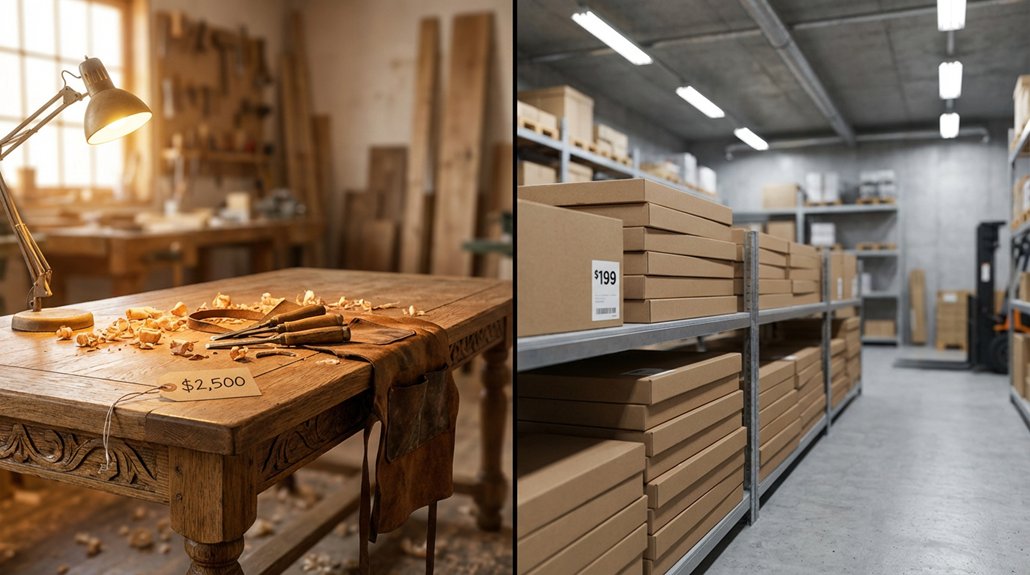
Handmade furniture is more profitable to dropship than mass-produced furniture. Handmade pieces usually sell for $800 to $2,500, while mass-produced items typically range from $150 to $600. Selling handmade furniture means facing less competition and avoiding price wars with large retailers like Wayfair. Handmade items also have lower return rates and foster stronger customer loyalty.
To maximize your profit margins, focus on unique selling points of handmade furniture. Highlight craftsmanship, customization options, and the story behind each piece. Use targeted marketing strategies to reach customers who appreciate quality over quantity.
Understand your costs carefully. Factor in materials, labor, and shipping when calculating your pricing. Ensure your profit margin remains healthy without undercutting yourself.
Track your sales data. Analyze which handmade items perform best to refine your inventory. Adjust your marketing tactics based on customer feedback to enhance engagement and retention.
Explore partnerships with local artisans. Collaborating with skilled craftsmen can expand your product range while maintaining quality. This approach allows you to offer exclusive items that set your store apart.
In summary, dropshipping handmade furniture presents a lucrative opportunity. Focus on high-quality products, effective marketing, and strategic partnerships to succeed in this niche market.
Why Dropshipping Furniture on Wayfair’s Turf Is a Losing Game
Dropshipping furniture against Wayfair is a challenging venture. Wayfair controls a significant portion of the market through strong supplier relationships, aggressive pricing strategies, and a well-established brand. Competing with these factors requires unique sourcing; otherwise, you end up selling the same products at inflated prices.
Dropshipping furniture against Wayfair means competing with superior pricing, established supplier ties, and a dominant brand presence.
Wayfair’s quality assurance systems ensure consistent product standards, while their logistics infrastructure allows for efficient delivery. New dropshippers struggle to match these advantages.
Building customer loyalty becomes difficult when buyers can find identical items for less on Wayfair. Instead of attempting to compete in the crowded space of mass-produced furniture, focus on niche markets. Identify specialized areas where Wayfair has less dominance. For example, consider handmade or eco-friendly furniture options that appeal to specific customer segments.
Research market trends to find gaps in the offerings and position your brand around these specialized products. This strategy creates a more sustainable business model and opens avenues for growth. Additionally, partnering with dropship & wholesale suppliers can provide access to unique products that differentiate your offerings.
To succeed, you must understand the limitations of dropshipping furniture in a competitive landscape. Recognize that competing directly with an established leader like Wayfair can lead to diminished profit margins and limited customer retention.
A targeted approach toward niche markets offers a realistic pathway to success. Focus on building a brand known for quality and uniqueness, where you can create real value for customers.
Handmade vs Mass-Produced Furniture: The Dropship Profit Gap
When you compare handmade furniture and mass-produced furniture, the profit margins reveal significant differences. Mass-produced furniture faces market saturation, which forces sellers to adopt aggressive pricing strategies. These strategies often lead to rapidly shrinking profits.
Sellers compete against large manufacturers that benefit from superior production scalability and established supply chains. Competing with these giants usually results in reduced profit margins.
In contrast, handmade furniture allows sellers to focus on strong branding and niche targeting. Sellers can command premium prices because consumers increasingly value authenticity. This trend fosters customer loyalty, which translates into repeat business and higher lifetime customer value.
Handmade furniture often delivers unique designs that resonate with buyers looking for something distinct. Additionally, Artisan Furniture’s focus on bespoke solid wood enhances the appeal of handmade options, attracting consumers willing to invest in quality.
The dropship profit gap between handmade and mass-produced furniture is substantial. Handmade furniture typically generates stronger profit margins because sellers market uniqueness rather than engaging in price competition.
For example, a handmade dining table might sell for $1,500, while a comparable mass-produced table sells for $600. The handmade seller retains a larger portion of the sale, reinforcing the value of craftsmanship.
Understanding these dynamics can help you navigate the furniture market effectively. If you focus on creating unique, high-quality items and build a strong brand, you can capture a loyal customer base.
In this way, you can thrive in a competitive market while ensuring sustainable profits.
Why Handmade Furniture Wins on Margins and Average Order Value
Selling handmade furniture allows artisans to command higher prices. Customers value one-of-a-kind, artisan-crafted pieces. This higher perceived value enables artisans to protect their profit margins. Unlike mass-produced furniture, handmade pieces emphasize craftsmanship, uniqueness, and quality. This focus justifies a premium price point.
Artisans leverage their skills to create unique furniture that stands out in the market. Each piece reflects personal craftsmanship, which customers appreciate. This appreciation leads customers to pay more, enhancing average order values. For example, a handmade dining table may sell for $2,000 compared to a $500 mass-produced option.
Artisans don’t compete on price; they compete on quality and uniqueness. Customers understand that handmade furniture involves more time and effort. For instance, crafting a custom bookshelf may take several weeks, while mass production can yield a similar item in days. This investment in time reinforces the value of handmade products.
Additionally, artisans can offer customization options, allowing customers to tailor furniture to their preferences. This approach not only increases customer satisfaction but also encourages higher spending. A customer may choose to upgrade materials or specify unique dimensions, resulting in a final price that reflects their individual choices. The customization options available for handmade furniture often lead to enhanced customer loyalty and repeat business.
Limitations exist in the handmade furniture market. Artisans face challenges such as longer production times and limited scalability. These factors can restrict the number of orders an artisan can fulfill. However, the ability to maintain higher margins and average order values often outweighs these limitations.
Premium Pricing Power
Handmade furniture allows you to leverage premium pricing effectively. You can charge significantly more for handcrafted pieces than for mass-produced items. Customers associate higher prices with craftsmanship, unique designs, and quality materials. This expectation benefits you as a dropshipper.
Market positioning directly influences your pricing strategy. When you present handmade furniture as an exclusive, high-quality product, customers are willing to pay the premium. This approach enhances your profit margins, even after accounting for supplier costs and shipping fees.
Mass-produced furniture relies on low prices to attract customers, which compresses profit margins. In contrast, handmade furniture enables you to avoid competing on price alone. This gives you greater control over your earnings and allows you to maintain a sustainable business model.
Higher Perceived Value
Perceived value directly influences customer pricing decisions. When customers encounter handmade furniture, they associate craftsmanship with quality and exclusivity. This association leads customers to believe that these products require skill and time to create. Consequently, this belief results in customers being willing to pay more.
| Factor | Handmade | Mass-Produced |
|---|---|---|
| Perceived Quality | High | Moderate |
| Customer Willingness to Pay | Higher | Lower |
| Average Order Value | $800–$2,500+ | $150–$600 |
Dropshippers can leverage this pricing gap without manufacturing products. Positioning handmade furniture effectively allows customers to rationalize the higher price. This strategy increases your average order value and enhances profit margins.
Understanding the perceived value of handmade items is essential for optimizing sales. Customers recognize craftsmanship, which increases their willingness to pay. This recognition translates into a higher average order value for dropshippers selling these products.
In contrast, mass-produced furniture lacks the same perceived value. Customers often see it as lower quality and are less willing to invest significant amounts. Dropshippers should focus on highlighting the unique attributes of handmade furniture to attract buyers and justify higher price points.
Fewer Returns, Higher Repeat Purchases: The Dropship Case for Handmade Quality
Returns significantly increase costs in dropshipping. Handmade furniture addresses this issue effectively. Mass-produced furniture often arrives with defects or differs from online images. These discrepancies lead to refund requests and chargebacks.
In contrast, handmade furniture undergoes rigorous quality checks before shipping, minimizing defects and ensuring customer satisfaction. This unparalleled quality and craftsmanship is a hallmark of handmade offerings, making them more appealing to discerning customers.
When customers receive precisely what they expect, they’re more likely to return for future purchases. This repeat business fosters customer loyalty in a competitive marketplace. Satisfied customers contribute to positive reviews, recommend your store to friends, and make additional purchases, directly enhancing your long-term revenue.
Selling handmade furniture means building a solid reputation. Fewer returns lead to lower operational costs, while increased repeat purchases create a more stable income stream.
This stability reduces the need for constant investment in new customer acquisition, allowing your business to flourish.
Why Your Maker’s Story Is Your Strongest Dropship Conversion Asset
The story behind your handmade furniture significantly impacts sales. Shoppers prefer authentic makers because authenticity builds trust. By effectively telling your maker’s story, you can persuade buyers to select your products over cheaper alternatives.
Share the Maker’s Background
Provide details about the maker’s training and experience. Explain where the maker learned their craft and how long they’ve been working in the field.
Highlight what motivates the maker to create furniture. This personal connection fosters buyer trust.
Describe the Production Process
Clearly outline how you create each piece of furniture. Break down the steps from selecting raw materials to assembling the final product.
Explain the techniques used in crafting each item. This transparency helps buyers understand the value of your work.
Use Real Photos
Include authentic images of the workshop and the tools you use. Show the maker actively working on projects.
These visuals create a deeper connection and reinforce the story you tell.
By sharing the maker’s background, detailing the production process, and using real photos, you convert casual browsers into committed buyers. Additionally, collaborating with trade only suppliers can enhance your product offerings and credibility in the marketplace.
Sharing your background, process, and real photos turns casual browsers into committed buyers.
Each of these elements enhances the perceived value of your handmade furniture and encourages customers to choose your products over mass-produced options.
Which Furniture Type Should You Actually Dropship?
**
Now that you understand how a maker’s story drives conversions, you need to decide which furniture type to dropship. Handmade furniture offers higher profit margins, typically ranging from 30% to 50% per unit. However, handmade furniture attracts a smaller, selective buyer who values craftsmanship over price.
In contrast, mass-produced furniture sells faster and appeals to a broader market. While mass-produced furniture may generate lower profit margins of 10% to 20%, it faces stronger competition from established retailers.
To succeed in dropshipping, consider your target market. If your audience prioritizes quality and uniqueness, focus on handmade furniture. This approach may require more effort in branding and storytelling to connect with buyers. Additionally, regular polishing can enhance the longevity and appeal of handmade pieces.
Alternatively, if your goal is to reach a wider audience and increase sales volume, mass-produced furniture may be the better option, despite tighter margins.
Evaluate your resources and capabilities. If you have access to skilled artisans or a reliable source for handmade items, you can capitalize on the higher profit margins.
If not, sourcing mass-produced furniture from established manufacturers can streamline your operations and reduce risks.
Consider limitations as well. Handmade furniture may require longer lead times for production and shipping, which could deter some customers.
Mass-produced furniture, while faster to deliver, may lack the unique appeal that attracts certain buyers.
Profit Margins Compared
When running a dropshipping furniture business, understanding profit margins is crucial. Analyzing these margins reveals clear differences between handmade and mass-produced furniture.
- Mass-produced furniture generally offers profit margins between 15% and 30%. However, intense competition in this market often leads to price reductions, which can squeeze these margins further.
- Handmade furniture provides higher profit margins, ranging from 40% to 60%. The uniqueness and perceived value of handmade items allow sellers to charge premium prices.
- Cost breakdown analysis shows that while handmade furniture has higher production costs, consumers are willing to pay for quality and craftsmanship. This willingness to pay supports higher margins.
Mass-produced furniture sells faster but yields lower profits per transaction. In contrast, handmade furniture may take longer to sell, but it generates significantly higher returns.
Your overall profitability hinges on balancing sales volume with profit margins. If you aim to attract niche customers who value craftsmanship, focusing on handmade furniture can lead to more sustainable dropshipping income.
Keep these factors in mind as you decide which type of furniture to prioritize in your dropshipping strategy.
Target Market Fit
Understand Your Target Market for Furniture Dropshipping
Identify your target customers to choose the right furniture type for dropshipping. Analyze your target demographics thoroughly before selecting a niche. Mass-produced furniture appeals to buyers focused on affordability and quick delivery. This preference is common among budget-conscious households and first-time renters.
In contrast, handmade furniture attracts buyers who value uniqueness, craftsmanship, and sustainability. Recognizing buyer motivations allows you to position your store effectively.
Match Product Selection to Buyer Preferences
Mass-produced furniture serves younger shoppers who prioritize budget. These customers typically seek lower prices and fast shipping.
Handmade furniture aligns with design-conscious professionals willing to invest more for quality. Understanding these distinctions helps you tailor your product selection to your audience.
Adapt to Market Trends
Current market trends reveal rising demand for both mass-produced and handmade furniture. However, the appeal varies by demographic.
For example, college students often gravitate toward affordable options, while established professionals may prefer distinctive pieces. By aligning your inventory with these trends, you enhance your chances of success.
Focus on Customer Needs
Prioritize the specific needs of your target market. If you cater to first-time renters, emphasize affordability and convenience in your offerings.
Conversely, if your audience consists of design enthusiasts, highlight craftsmanship and sustainability. This focus ensures that your dropshipping business meets customer expectations effectively.
Evaluate Limitations and Constraints
Recognize the limitations of each furniture type. Mass-produced furniture may lack uniqueness, which can deter some customers.
Handmade furniture can have longer lead times, which may not appeal to buyers seeking immediate availability. Understanding these constraints allows you to manage customer expectations and optimize your strategy.
Analyze and Adjust Your Strategy
Regularly assess your product offerings and customer feedback. Use this information to make informed decisions about inventory and marketing strategies.
For instance, if you notice a growing interest in eco-friendly products, consider expanding your selection of sustainable handmade furniture. Staying responsive to market changes increases your business’s resilience.