
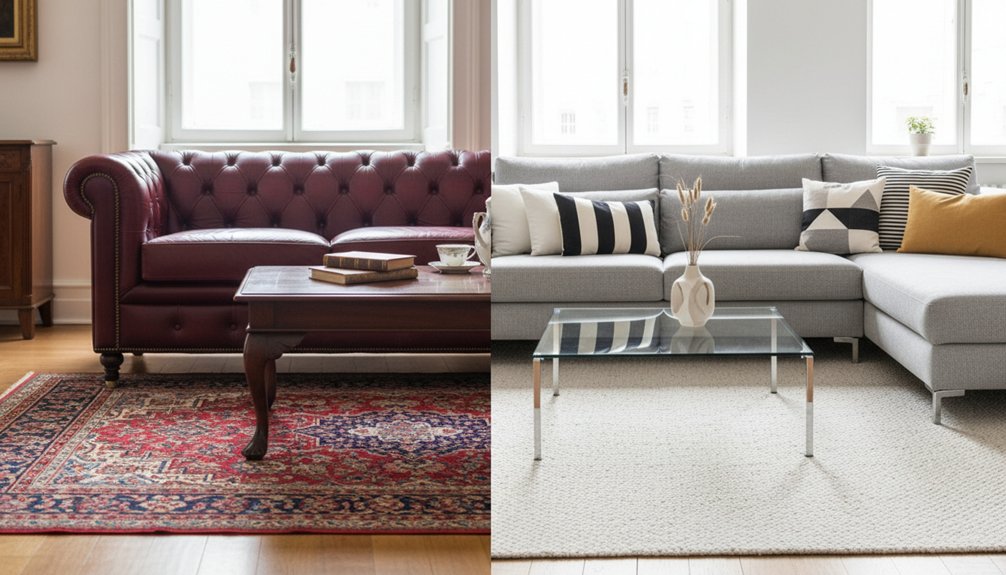
Living room furniture trends have changed significantly. Traditional solid wood furniture, known for its durability, is now often replaced by contemporary upholstered pieces that offer comfort and design flexibility. Modern homeowners prefer fabric seating because it provides better cushioning, is more cost-effective, and features easier maintenance through removable covers.
While solid wood furniture can last between 20 to 50 years, quality upholstered pieces deliver versatility. Modular designs allow homeowners to adapt their seating arrangements to fit various spaces and lifestyles. Diverse fabric options enable customization that meets the aesthetic needs of different living environments.
This shift highlights a growing desire to blend heritage craftsmanship with the comfort demands of modern living. As a result, the choice of furniture influences how people create functional and inviting spaces in their homes.
The Historical Dominance of Solid Wood Furniture in Home Design
Solid wood furniture has been a fundamental part of American home design for centuries. This furniture type is practical and prestigious, making it the preferred choice for living rooms. Early American settlers valued solid wood furniture because its durability meant it could last for generations. Skilled craftsmen created these pieces, showcasing their expertise.
Solid wood furniture remains the cornerstone of American home design, combining enduring practicality with timeless prestige.
European cultural influences further cemented wood’s status, with affluent families using ornate wooden furniture to display their wealth. You can observe this preference throughout various historical periods, such as the Colonial Windsor chairs and the Victorian mahogany sets.
Frontier families relied on solid wood furniture because they couldn’t afford to replace items frequently. Today, antique wooden furniture continues to hold significant value, with high prices reflecting its quality and the traditional American values associated with it. This enduring appeal of solid wood furniture highlights its importance in home design, making it a sought-after choice in the dropship & wholesale furniture market.
Why Contemporary Homeowners Are Choosing Upholstered Furniture
Contemporary homeowners increasingly choose upholstered furniture for their living rooms instead of solid wood pieces. This trend reflects a shift toward prioritizing comfort, practicality, and modern design.
Upholstered furniture provides several key benefits:
- Enhanced comfort: Upholstered pieces feature soft cushioning that offers better support for relaxation.
- Design flexibility: Homeowners can select from a wide range of fabric options to match their existing decor and color schemes.
- Easy maintenance: Many upholstered items come with removable covers or stain-resistant treatments, making them easier to clean and maintain.
- Cost effectiveness: Quality upholstered furniture often costs less than solid wood alternatives, making it a more budget-friendly option.
Upholstered furniture also suits modern living spaces, especially in smaller homes and apartments. Additionally, the handcrafted process of upholstered furniture ensures that every piece is unique, adding a personal touch to any living room. These pieces maximize comfort while fitting seamlessly into diverse layouts. This shift highlights a fundamental change in how homeowners balance functionality and style in their choices.
Comfort vs. Craftsmanship: Comparing Wood and Fabric Seating Options
When you choose between wood and fabric seating for your living room, you must consider comfort and craftsmanship. Solid wood frames provide durability and typically last for decades. On the other hand, high-quality upholstery can also endure for years if maintained correctly.
Your style preferences will guide your choice; wooden furniture offers a classic look, while fabric seating gives you a wide variety of colors and textures to fit your décor.
If you prioritize long-lasting furniture, focus on solid wood options. These pieces can withstand wear and tear better than most fabric alternatives over time. However, if comfort is your main concern, opt for well-padded fabric seating that can provide a cozy feel.
Consider your living space’s overall aesthetic as well. Wooden furniture can enhance a traditional or rustic look, while fabric seating can brighten a modern or eclectic room. This clear distinction helps you align your choice with your desired interior style. Additionally, customizable dimensions and finishes can further tailor your selections to match your unique preferences and space requirements.
Durability and Longevity
When you choose seating options, consider the balance between immediate comfort and long-term durability.
Wood seating generally lasts longer than fabric seating, which affects the overall value of your investment.
Solid hardwood frames provide better longevity compared to particle board or metal frames. With proper care, wood seating can last for decades.
In contrast, the lifespan of fabric upholstery relies on the quality of the fabric and how often it’s used.
Here are key factors to evaluate durability:
- Frame construction: Solid wood frames resist wear and can be refinished multiple times, enhancing their lifespan.
- Fabric quality: Fabrics with higher thread counts and made from natural fibers tend to resist pilling and fading more effectively.
- Cushion materials: High-density foam cushions maintain their shape longer than lower-quality options, providing better support over time.
- Maintenance requirements: Wood seating requires periodic refinishing, while fabric seating needs regular cleaning to maintain appearance.
Your decision should reflect your lifestyle and your long-term furniture goals.
Prioritize durability to ensure your investment serves you well for years.
Style and Aesthetics
When selecting seating for your living room, consider how your choice will impact the overall atmosphere. Wood seating brings durability and a classic look with its rich grain patterns and natural warmth. This type of furniture works well with traditional and rustic décor styles, enhancing the space with a timeless elegance.
On the other hand, fabric seating offers more versatility in color and pattern. You can easily match these pieces to your existing room themes or use them to create bold focal points.
| Feature | Wood Seating | Fabric Seating |
|---|---|---|
| Visual Weight | Wood seating has a heavy, substantial presence that adds depth to the room. | Fabric seating presents a light, airy appearance that can open up the space. |
| Color Options | Wood chairs and sofas come in natural wood tones that emphasize organic beauty. | Fabric options provide unlimited choices in colors and patterns, allowing for personal expression. |
| Texture Combinations | Wood seating features smooth, polished surfaces that offer a refined look. | Fabric seating includes soft, varied textures that enhance comfort and coziness. |
| Style Flexibility | Wood fits well into classic and formal settings, providing a sophisticated feel. | Fabric adapts easily to modern or casual styles, making it suitable for relaxed environments. |
Your decision between wood and fabric seating should reflect your preference for structured sophistication versus cozy comfort. Consider how each option supports your vision for the living space.
Design Flexibility and Style Adaptability in Modern Living Spaces
Modern lifestyles require living room furniture that adapts to different functions and design preferences. Modular furniture provides the flexibility needed for these dynamic spaces. Modular pieces enable users to change layouts easily, whether for hosting guests or creating areas for work and relaxation.
Manufacturers focus on creating adaptable furniture. For example, sectional sofas come with removable components that allow for easy rearrangement. Ottomans serve multiple purposes; they provide storage, seating, and surface areas for various activities. Expandable dining tables adjust to accommodate different group sizes, making them practical for different occasions.
Wall-mounted shelving systems offer adjustable configurations, maximizing vertical space. This flexibility in design ensures that your living room can transform throughout the day without extensive renovations.
Durability and Maintenance Considerations for Different Furniture Materials
When you select living room furniture, you must assess how different materials perform over time and what maintenance they require.
Wood furniture withstands the test of time and can last for decades with proper care. You should clean wood surfaces regularly by dusting and polishing to maintain their appearance. Regular dusting and maintenance is essential to prevent buildup and preserve the wood’s finish.
In contrast, fabric furniture may show signs of wear more quickly, but you can easily replace these pieces when needed. Upholstered items require specific maintenance, such as professional cleaning or spot treatments. Regularly checking fabric for stains and addressing them promptly will help extend the life of your furniture.
Each material type has distinct requirements, so understanding these needs will help you make informed choices.
Wood Vs Fabric Longevity
Wood and fabric furniture each play important roles in modern living rooms, but their longevity varies significantly due to different material properties and maintenance needs. Solid wood furniture typically lasts longer than upholstered options when maintained properly, often enduring for decades or even generations.
To maintain wood furniture, regularly dust surfaces, occasionally apply polish, and protect against moisture and direct sunlight. High-quality hardwoods such as oak, maple, and walnut resist wear and damage effectively.
On the other hand, fabric furniture lifespan depends on the fiber type, weave density, and usage patterns, which can lead to varied longevity.
Here’s a breakdown of expected longevity for different furniture types:
- Wood furniture can last between 20 to 50 years or more with proper care.
- High-quality fabrics generally last around 7 to 15 years.
- Leather upholstery typically endures for 15 to 25 years.
- Regular professional cleaning can extend the durability of fabric furniture.
Investing in quality materials yields significant returns in longevity and performance. When choosing furniture, consider these factors to ensure your selection aligns with your needs for durability and long-term use.
Care Requirements by Material
Different furniture materials require specific care routines that affect their lifespan and appearance. Adjust your maintenance approach based on the material of your furniture.
| Material | Weekly Care | Deep Cleaning | Special Notes |
|---|---|---|---|
| Leather | Dust with a soft cloth | Condition every 3-6 months | Avoid direct sunlight |
| Fabric | Vacuum cushions | Professional cleaning yearly | Treat stains immediately |
For leather, use gentle cleaning products designed for leather care. Harsh chemicals can damage the surface, leading to cracks or discoloration. For fabric furniture, vacuum the cushions regularly to prevent dirt from building up in the fibers. Rotate cushions frequently to ensure even wear. Both leather and fabric benefit from maintaining proper humidity levels in your living space to enhance durability.
Creating the Perfect Balance: Mixing Traditional and Contemporary Elements
Homeowners often feel pressured to choose between traditional and contemporary styles when designing their spaces. However, blending these two design approaches can create living areas that are both inviting and visually engaging. To achieve this balance, focus on how each piece interacts with others in the room.
Start with specific pairing strategies:
- Place a classic leather Chesterfield sofa next to sleek glass coffee tables. This combination highlights the elegance of the sofa while allowing the coffee table’s modern lines to stand out.
- Set ornate wooden armchairs alongside minimalist metal side tables. The warmth of the wood contrasts nicely with the coolness of the metal, enhancing the overall aesthetic.
- Use rich fabric textures on contemporary furniture frames and mix in traditional patterns. This layering adds depth and interest to the design.
- Balance warm wood tones with cool metal finishes throughout the room. This contrast creates a cohesive yet dynamic space.
Maintain a consistent color palette to unify the design, while also varying textures and materials. Traditional elements, like carved wood details, can work seamlessly with modern features such as geometric lighting fixtures. Additionally, consider incorporating unique handcrafted furniture to elevate the overall aesthetic and ensure a personal touch.
This approach results in spaces that feel both timeless and current.