
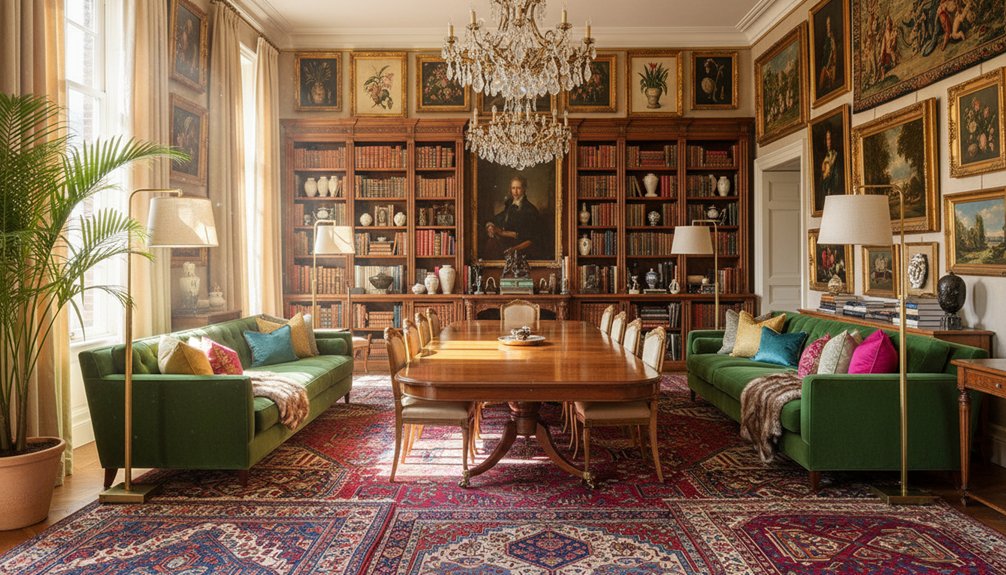
Solid wood furniture anchors bold maximalist interiors by providing visual stability in spaces filled with vibrant patterns and eclectic décor. Choose wood tones that enhance your existing color scheme. For instance, light woods like maple brighten the atmosphere, while dark walnut brings sophistication. Select large statement pieces, such as chunky coffee tables and substantial bookshelves, to create breathing room and establish visual hierarchy in your design.
Mix different wood species and finishes to add texture. However, maintain cohesion through consistent hardware that complements your overall design. This approach ensures that your furniture not only supports the boldness of your decor but also ties the entire space together effectively.
The Foundation Effect: Why Wood Grounds Vibrant Spaces
When you design a maximalist interior with bold patterns, bright colors, and eclectic accessories, solid wood furniture provides stability.
The natural grain and warm tones of wood create a neutral base that allows vibrant elements to stand out. Wood textures contrast well against smooth metals, shiny ceramics, and soft fabrics.
Wood’s natural warmth and texture provide the perfect neutral foundation that makes bold colors and mixed materials truly shine.
This material’s stability helps balance the visual chaos often found in busy rooms where diverse styles and periods meet. Wooden pieces create breathing space, allowing your eyes to better process the strong visual elements.
For instance, a reclaimed oak dining table or walnut shelving can establish calm zones within a maximalist setting. These wood furniture pieces enhance your overall design by grounding the space and making it more comfortable to navigate visually. Additionally, wholesale furniture options allow you to procure quality solid wood items at competitive prices, ensuring your maximalist space remains both stylish and budget-friendly.
Choosing the Right Wood Tones for Maximum Impact
Choosing the right wood tones is crucial for integrating furniture into bold maximalist spaces. Light woods such as maple and birch brighten rooms filled with vibrant patterns. These lighter tones prevent a space from feeling overwhelmingly dark.
In contrast, dark woods like walnut and mahogany add a sense of sophistication and weight to areas dominated by lighter colors.
Understanding the warm vs. cool distinction is also important. Warm-toned woods, which have golden or reddish undertones, pair well with jewel tones and brass accents.
On the other hand, cool-toned woods with gray undertones complement blues, purples, and silver fixtures.
When selecting wood furniture, consider the existing color palette of your room. Match warm woods with warm color schemes and cool woods with cooler palettes.
This approach ensures a cohesive look in your maximalist interior design. Additionally, opting for customizable dimensions and finishes allows for a more tailored fit within diverse design schemes.
Statement Pieces That Command Attention in Bold Rooms
A large dining table carved from a single walnut slab serves as a striking centerpiece in a maximalist room. This table attracts attention and sparks conversation.
When selecting statement furniture, choose pieces that can stand out against vivid wallpapers and bold textiles. For instance, a substantial bookshelf made from reclaimed oak provides both storage and a visual anchor. An executive desk with dramatic grain patterns also adds character and serves as a focal point in the space.
Bold accents require balance with robust wood elements. Statement pieces should create contrast with the surrounding décor instead of competing with it. A chunky mahogany coffee table stabilizes an eclectic living room. An oversized cedar armoire offers storage and adds visual weight to the room.
Prioritize furniture with strong silhouettes and rich wood tones that enhance your color palette while maintaining a cohesive design amid the maximalist elements. Additionally, incorporating handcrafted furniture ensures each piece is unique and tailored to fit the bold aesthetic of your space.
Balancing Chaos: Wood’s Role in Visual Hierarchy
Wood furniture serves a practical purpose in creating visual hierarchy within maximalist spaces. Solid wood provides essential contrast against intricate patterns and vibrant textiles. The consistent grain patterns of wood help to anchor the eye, guiding it through complex room layouts.
Neutral wood tones act as visual pauses amid bold décor. For example, placing a walnut dining table in a room filled with eclectic artwork and colorful upholstery allows for a necessary breathing space. This layering of textures keeps maximalist rooms from feeling chaotic.
Strategic placement of wooden furniture creates clear visual pathways. A solid oak bookshelf can effectively separate distinct areas while maintaining a cohesive design flow.
The weight and presence of wood help organize other decorative elements around it, enhancing the overall visual structure of the space. Additionally, the extensive product range offered by dropshipping suppliers allows for diverse wood options that can complement bold design themes.
Mixing Wood Species and Finishes in Eclectic Schemes
Maximalist designers often mix multiple wood species in a single space to create dynamic and visually interesting interiors. When selecting wood combinations, consider the color undertones and grain patterns. For instance, pairing warm walnut with cool ash can create a balanced look, while combining oak’s pronounced grain with maple’s finer texture adds depth to the design.
Different wood finishes can further enhance the eclectic aesthetic. For example, mixing glossy lacquered pieces with matte oil-finished furniture introduces surface variation and visual interest. Additionally, incorporating reclaimed barn wood with its weathered patina alongside sleek contemporary pieces in natural finishes can create a striking contrast.
To maintain coherence in your design, establish connecting elements. Repeating one wood species across various furniture pieces can create unity. Maintaining consistent hardware finishes throughout the space can also help to prevent visual chaos while highlighting the natural diversity of wood. Regular dusting and maintenance of wooden furniture is essential to preserve its beauty and integrity in a maximalist setting.