
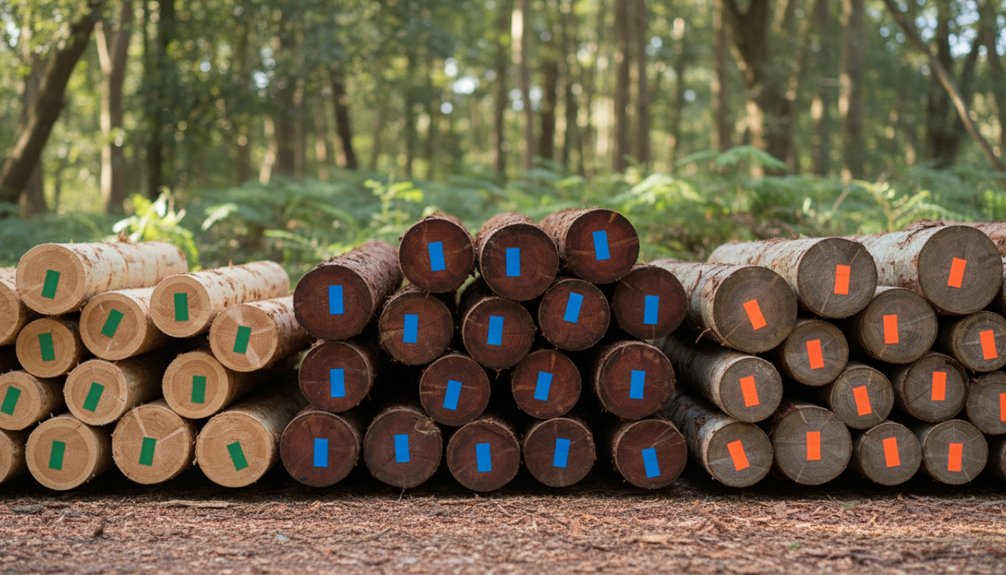
When sourcing sustainable wood products, you will come across three main timber certification systems: FSC, PEFC, and VRIKSH.
FSC (Forest Stewardship Council) establishes rigorous environmental standards. It involves multiple stakeholders in over 80 countries to ensure sustainable forestry practices. Companies that meet FSC standards demonstrate commitment to responsible sourcing.
PEFC (Programme for the Endorsement of Forest Certification) endorses national certification systems. This approach provides flexibility for smaller operations by connecting with over 50 certification programs. Companies can adapt their practices to local conditions while still achieving certification.
VRIKSH focuses on India’s specific forestry needs. This system promotes community-based management and incorporates traditional practices. It enables local communities to manage their forests sustainably.
Each certification system has unique strengths and weaknesses. These differences influence implementation costs and market acceptance. Understanding these distinctions allows businesses to make informed decisions when sourcing timber.
The Evolution and Purpose of Timber Certification Systems
In the 1980s, high global deforestation rates prompted environmental groups and industry professionals to establish standardized forest management practices. This led to the creation of timber certification systems aimed at verifying sustainable forestry operations worldwide.
Growing concerns over widespread forest loss in the 1980s drove collaboration between environmental advocates and forestry professionals to develop sustainable management standards.
These certification programs function as market-based solutions that protect forests while ensuring economic viability. They set specific criteria for responsible forest management, which include biodiversity conservation, soil protection, and the safeguarding of workers’ rights.
The introduction of these certification systems has created accountability throughout the supply chain, from the forest to the final product.
Today, consumers can identify certified timber through recognized labels that confirm adherence to environmental and social standards. These systems connect conservation objectives with commercial forestry, providing consumers with confidence in their purchasing choices.
Forest Stewardship Council (FSC): Global Standards and Implementation
The Forest Stewardship Council (FSC) was established in 1993 to create a reliable timber certification system. Today, it operates in over 80 countries. The FSC builds its credibility through collaboration among environmental groups, social organizations, and industry representatives. This multi-stakeholder approach ensures diverse perspectives inform the certification process.
FSC principles guide responsible forest management. These ten principles address critical areas such as legal compliance, workers’ rights, indigenous peoples’ rights, community relations, forest benefits, environmental values, management planning, monitoring, high conservation values, and plantation management. Certified forests adhere to these standards, ensuring they’re managed sustainably.
The certification process includes thorough third-party audits by accredited certification bodies. Forest managers undergo initial assessments to evaluate compliance with FSC standards. They then participate in annual surveillance audits to ensure ongoing adherence.
Every five years, they face re-evaluation to confirm continued compliance. This process guarantees that certified timber products maintain high standards throughout their lifecycle.
Programme for the Endorsement of Forest Certification (PEFC): Multi-National Framework
The Programme for the Endorsement of Forest Certification (PEFC) endorses existing national and regional certification systems rather than creating its own global standard. PEFC evaluates these systems to ensure they meet international sustainability criteria.
PEFC endorses national forest certification systems worldwide, evaluating them against international sustainability standards rather than imposing a single global framework.
This approach allows countries to develop certification systems that address their specific forest conditions and management practices. Through collaboration, PEFC connects over 50 national certification systems worldwide.
However, this diversity can lead to challenges in certification, as interpretations of sustainability may vary between countries.
PEFC’s flexibility benefits diverse forest types and ownership structures. Small forest owners gain access to certification processes that might otherwise be too rigid for them.
VRIKSH Certification: India’s Regional Approach to Sustainable Forestry
India’s forests are under pressure from development and climate change. To tackle this, professionals in the field created VRIKSH Certification, which directly addresses the forestry challenges unique to India. VRIKSH specifically focuses on India’s diverse forest ecosystems and aligns with local community needs. This certification system supports traditional forest management practices and integrates modern sustainability standards.
VRIKSH Certification supports rural livelihoods by promoting community-based forest management. This approach helps preserve India’s rich biodiversity and enables small-scale forest enterprises to access international markets while honoring cultural forest practices.
However, implementing VRIKSH faces challenges. Limited awareness among forest communities hampers the certification process. Additionally, insufficient funding restricts access to certification. Coordination between state governments and local communities also presents difficulties, which slows down the widespread adoption of VRIKSH across India’s extensive forest regions.
Comparative Analysis: Strengths and Limitations of Each System
Timber certification systems present a diverse landscape, with each system catering to specific market needs and regional priorities.
Strengths:
- FSC sets high environmental standards. Its rigorous criteria are backed by strong support from non-governmental organizations (NGOs), making it a trusted choice for environmentally-conscious buyers.
- PEFC provides a flexible framework that suits smaller forest operations. This flexibility allows small-scale producers to obtain certification without incurring prohibitive costs.
- VRIKSH focuses on India. It addresses the country’s unique ecological and social forestry challenges, making it relevant for producers operating in that region.
Limitations:
- All certification systems struggle with verification in remote areas. This makes it difficult to ensure compliance with standards.
- High certification costs create barriers for small-scale producers, limiting their access to the market.
- Consumer awareness about different certification systems is inconsistent. This affects market demand and can impact producers’ choices.
Selecting the right timber certification depends on your operational goals, market conditions, and capacity.
No single certification system is universally superior; each has its strengths and weaknesses that must align with your specific needs.
Choosing the Right Certification for Your Supply Chain Needs
To determine the best timber certification for your supply chain needs, evaluate your specific certification criteria alongside your sustainability goals. Start by analyzing your market demands and customer expectations, and assess your operational capacity.
| Factor | Key Consideration |
|---|---|
| Geographic Scope | Ensure the certification covers your sourcing regions. |
| Market Acceptance | Confirm if customers recognize this certification. |
| Implementation Cost | Calculate whether you can afford certification and maintenance fees. |
| Audit Requirements | Determine if you have the resources for regular assessments. |
Your decision hinges on these practical factors. For example, if you manage a consumer-facing brand, pursuing FSC certification aligns well with your environmental messaging. If you oversee large-scale operations across multiple countries, PEFC certification might be more suitable. For regional suppliers focused on community impact, VRIKSH certification could be the right fit.
Balance your certification costs with the market benefits you expect to gain. Consider initiating your certification journey with one standard, then expand to others as your supply chain sustainability program develops. This approach allows for manageable growth while ensuring compliance with market expectations.