
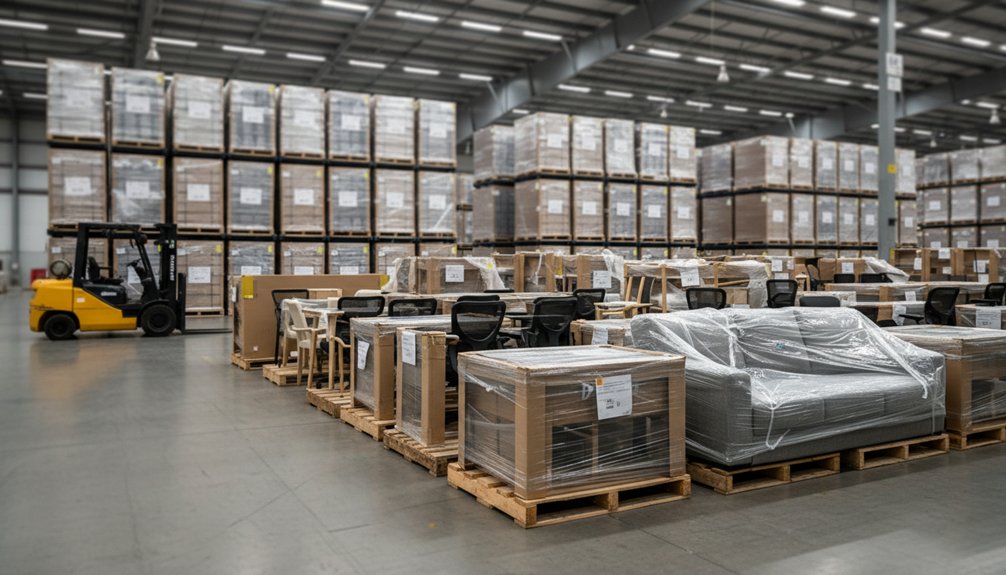
Purchasing furniture in bulk through container loads can reduce your costs by 15-30% per unit. However, this approach requires a significant upfront investment and sufficient warehouse space to store the inventory. You face considerable risks when it comes to managing inventory, particularly if you struggle to predict demand or if you don’t have reliable relationships with suppliers. Additionally, maintaining quality control becomes difficult when you buy products without inspecting them first. Your cash flow must also accommodate ongoing expenses, such as storage fees and insurance costs.
To succeed with container load purchasing, your business should be established and have consistent sales patterns. You need strong inventory management systems to help determine the best timing for your purchases. Ensure you consider these factors before committing to bulk buying, as they directly impact your profitability and operational efficiency.
Understanding Container Load Economics: Cost Savings vs. Financial Commitment
When you evaluate bulk furniture purchases, container load economics play a crucial role in determining your costs. Ordering a full container can lower your per-unit costs by 15-30% compared to smaller orders. However, this cost reduction requires a significant upfront investment.
Full container orders can slash per-unit furniture costs by 15-30%, but demand substantial upfront capital investment.
Therefore, you must conduct a detailed cost analysis to see if the savings justify the capital you’ll tie up for a longer duration.
The financial commitment doesn’t stop with the initial purchase. You’ll incur additional costs, such as storage fees, insurance, and potential cash flow issues as you manage your inventory.
To mitigate these challenges, fostering strong relationships with your suppliers can help. Some suppliers offer payment terms of 30-60 days or volume discounts that can significantly enhance your profit margins. Additionally, exploring dropshipping services can provide flexibility in managing inventory without upfront costs.
To make informed decisions, calculate your break-even point. Compare your total container costs to your expected sales velocity. This analysis will help you understand whether ordering in bulk aligns with your business goals.
Storage and Space Requirements: Calculating Your Warehouse Capacity Needs
Three main factors determine your warehouse’s ability to handle bulk furniture orders: square footage, ceiling height, and loading dock access. You need approximately 15-20 square feet per larger item, such as sofas and dining sets.
Calculate your inventory turnover rate to find out how long items will occupy space before selling.
Your warehouse layout affects both efficiency and storage capacity. Use vertical storage systems for smaller items. Create designated zones for different furniture categories to streamline organization.
When storing 40-foot container loads, space optimization becomes crucial. Plan your storage allocation based on seasonal demand patterns.
Carefully measure your ceiling height; many furniture items require 10-12 feet of clearance for safe stacking. Additionally, consider the benefits of dropshipping partnerships to reduce the need for excessive storage space and inventory risks.
Include space for walkways, staging areas, and equipment access in your calculations to determine your actual storage capacity.
Inventory Risk Management: Balancing Bulk Purchasing With Market Demand
Bulk purchasing reduces costs, but it also increases the financial risks associated with excess inventory. To mitigate these risks, implement smart inventory forecasting when buying container loads. You must predict sales velocity and avoid locking up capital in slow-moving items.
Conduct a thorough demand analysis using historical sales data and relevant market trends. Identify which furniture styles, colors, and price points sell best in your specific market. Account for seasonal variations; for example, outdoor furniture typically sells faster in spring, while storage solutions see a surge during back-to-school periods.
Diversify your bulk purchases across various furniture types and price ranges. This strategy minimizes risks associated with underperforming categories while allowing you to cater to a broader range of customer preferences. Additionally, consider leveraging free delivery options to enhance your competitive edge when offering bulk furniture to your customer base.
Quality Control Challenges When Buying Sight Unseen
Buying furniture in bulk without seeing it first presents clear quality control challenges. You can’t inspect each piece before placing large orders, which complicates quality assurance.
Photos and samples often fail to show manufacturing defects, material inconsistencies, or finish problems that only appear after delivery.
To address these challenges, prioritize supplier reliability. Research manufacturers thoroughly. Check their track records and ask for detailed specifications.
Consider requiring third-party inspections at the factory before shipment to ensure quality. Establish clear quality standards in your contracts. Include provisions for returns or replacements if products don’t meet your expectations. Additionally, understanding the importance of proper care can help you maintain the quality of the furniture once it arrives.
Strategic Timing: When Your Business Is Ready for Container Load Purchases
When your retail business achieves specific financial and operational milestones, you can start considering container load purchases as a way to save on costs.
You need enough warehouse space to store large quantities of products. You also need sufficient cash flow to manage upfront costs associated with bulk buying. Your sales patterns should show consistency, which justifies the investment in bulk inventory.
Building strong relationships with suppliers is crucial before committing to container loads. Establish clear communication channels with manufacturers and verify their reliability through past performance.
Analyze factors like seasonal demand changes and storage costs to ensure the potential savings outweigh the risks. Accurate sales forecasting is essential to avoid overstocking inventory.
Container loads are most effective when you have a robust inventory management system in place that allows you to predict customer preferences accurately. Additionally, sourcing from wholesale upholstered furniture can provide unique and exclusive product offerings that appeal to your customer base.
Wait until your operations can effectively handle the added complexity of bulk purchasing before making this transition.