
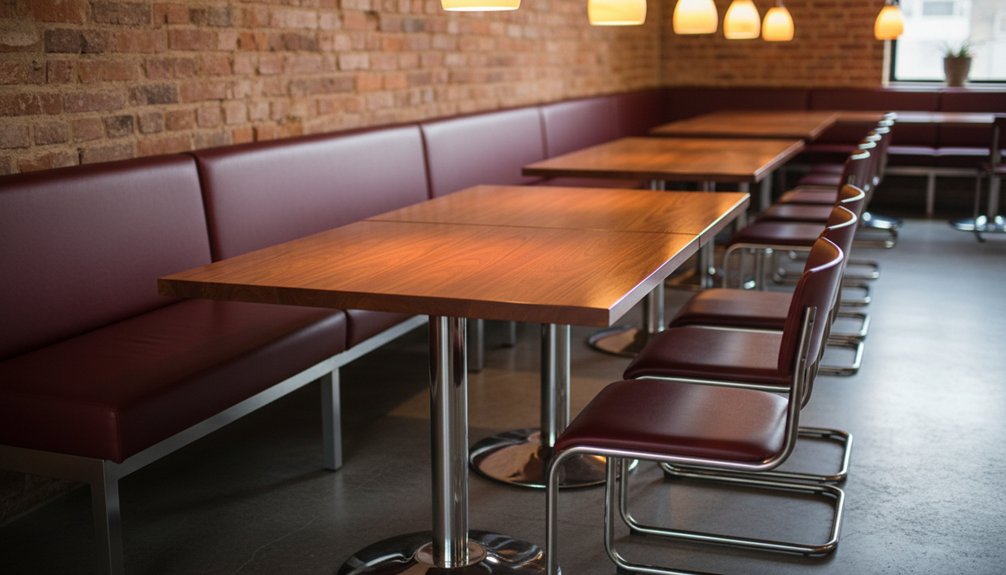
You need commercial-grade dining furniture that can endure heavy use while ensuring guest comfort in hotels and restaurants. Choose hardwoods like oak or opt for metal frames with reinforced joints for durability. Select stain-resistant upholstery, such as vinyl, to make cleaning easier and maintain a polished appearance. Purchasing wholesale can save you 30-50% compared to retail prices, especially when buying in bulk or partnering with other businesses.
Consider modular seating systems that allow quick reconfigurations for different group sizes and busy dining periods. This flexibility helps you accommodate various guest needs without needing to invest in multiple furniture styles. By focusing on these practical strategies, you can effectively maximize your furniture investment and enhance the overall dining experience for your guests.
Essential Durability Standards for High-Traffic Dining Environments
When choosing dining room furniture for commercial hospitality settings, focus on durability as your main priority. Durable furniture withstands daily use and maintains guest comfort and visual appeal.
High-traffic environments require furniture that resists wear from constant cleaning, heavy usage, and frequent movement. Pay attention to load capacity specifications in restaurant and hotel dining areas. Chairs must support various body types safely, while tables should handle heavy dishware and multiple place settings.
Commercial dining furniture must withstand rigorous daily demands while safely supporting diverse guests and heavy table loads in restaurant environments.
Look for furniture with reinforced joints, commercial-grade materials, and tested weight limits that exceed standard residential requirements. Quality manufacturers provide durability ratings and warranty information. Additionally, partnering with reputable dropship & wholesale suppliers ensures access to high-quality products tailored for your needs.
Verify that each piece meets commercial hospitality standards before making bulk purchases for your establishment. This ensures that your investment in dining room furniture will last and perform as needed in a busy environment.
Material Selection Guide for Commercial Dining Furniture
Durability is crucial when selecting commercial dining furniture. The materials you choose will influence both the longevity of the furniture and the maintenance costs.
Wood is a popular choice because it offers warmth and versatility. Hardwoods such as oak and maple resist scratches and dents effectively, ensuring your furniture lasts longer in a busy dining environment.
Metal frames provide strength and support under heavy use. They can accommodate various designs, from industrial to contemporary, making them a suitable option for diverse settings.
When it comes to upholstery, you need to consider how often you’ll need to clean the materials and their resistance to stains. Vinyl and polyurethane are practical choices for easy maintenance. On the other hand, commercial-grade fabrics offer comfort while enhancing durability.
Selecting the right finishes is important as well. Color combinations can help hide wear patterns and complement your establishment’s aesthetic. Laminate surfaces are excellent for high-turnover environments; they resist moisture and heat, maintaining a consistent appearance over time. Additionally, dropshipping suppliers can provide unique, handcrafted furniture that caters to various styles and preferences, ensuring you have options to suit your dining space.
Space Planning and Layout Optimization Strategies
After choosing durable materials for your dining furniture, focus on optimizing space with effective planning and layout.
Start by analyzing guest and staff movement patterns in your dining area. Identify how people navigate through your establishment to find potential bottlenecks. Place tables strategically to enable easy movement while maximizing seating capacity.
Use different table sizes to accommodate various group sizes efficiently. Square tables suit small groups, while rectangular tables fit linear spaces better. Round tables foster conversation, but they need more space per guest.
Furniture placement affects guest experience directly. Ensure adequate space between tables to provide privacy and facilitate easy service access.
Position larger tables away from high-traffic areas to reduce service disruptions. Additionally, consider partnering with wholesale furniture suppliers to access a diverse range of high-quality options that align with your design vision.
Maintenance Requirements and Easy-Care Solutions
Selecting the right furniture for hospitality environments is crucial. Hospitality furniture faces constant use and requires frequent cleaning. You need furniture that withstands wear and is easy to maintain. Your cleaning protocols directly affect furniture longevity, making it essential to choose materials that can handle daily sanitization.
When selecting dining furniture, focus on these maintenance features:
- Choose non-porous surfaces that resist stains, moisture, and bacterial growth. These surfaces will stay cleaner and last longer.
- Look for reinforced joints and heavy-duty hardware. These components ensure the furniture can handle the demands of a busy commercial setting.
- Opt for scratch-resistant finishes. These finishes maintain their appearance, even with frequent cleaning.
Investing in well-designed furniture pays off in the long run. Select pieces with removable cushions and replaceable parts. These features make repairs easier and reduce downtime.
Additionally, surfaces that clean easily with standard disinfectants save time and effort during cleaning. Regular dusting and maintenance is essential to preserve the beauty and longevity of wooden furniture in hospitality settings.
Cost-Effective Wholesale Purchasing Approaches
When you buy dining room furniture for your hospitality business, purchasing wholesale saves you a significant amount of money. You can save 30-50% compared to retail prices when you order in larger quantities.
Bulk purchasing enables you to negotiate better rates and receive volume discounts from manufacturers.
Building strong relationships with suppliers is crucial for long-term success. A solid partnership gives you priority access to new furniture lines, exclusive pricing, and flexible payment options.
Many suppliers provide additional services like design consultation and delivery coordination when you establish a reliable working relationship with them.
To manage cash flow while still benefiting from wholesale pricing, consider purchasing your furniture in phases. This strategy allows you to spread out your expenses over time.
Additionally, you can collaborate with other businesses to combine orders, helping you meet minimum quantity requirements and maximize your savings. Furthermore, partnering with suppliers like Artisan Furniture allows you to take advantage of their free delivery across all 50 states, enhancing cost efficiency in your purchasing strategy.
Design Trends Shaping Modern Hospitality Dining Spaces
Today’s hospitality dining spaces emphasize two key design trends that affect furniture purchasing decisions.
First, flexible modular seating systems allow restaurant owners to adapt their layouts easily. These systems enable quick reconfiguration for varying group sizes and different events throughout the day.
Second, the choice of sustainable materials has become essential. Guests increasingly seek dining establishments that prioritize environmentally responsible design. As a result, incorporating sustainable materials in furniture selection is no longer optional; it’s a necessity to meet customer expectations. Additionally, furniture crafted from environmentally friendly materials aligns with the growing demand for sustainability in hospitality design.
These trends highlight the importance of adaptability and sustainability in modern hospitality dining design.
Flexible Modular Seating Systems
Flexible modular seating systems are rising in popularity within hospitality dining spaces for three main reasons: operational efficiency, guest comfort, and design versatility.
Modular seating configurations enable restaurants to adjust quickly to different party sizes and dining patterns throughout the day.
These adaptive arrangements provide tangible benefits for restaurant operations:
- Staff can quickly reconfigure seating layouts to accommodate varying group sizes within minutes.
- Restaurants can maximize revenue potential by optimizing table turnover rates through adjustable seating configurations during both peak and off-peak hours.
- Diners experience enhanced comfort as they enjoy seating arrangements tailored to their specific needs and preferences.
Modern modular seating systems feature lightweight yet durable materials, allowing staff to make changes seamlessly.
These systems maintain the sophisticated look that guests expect, ensuring that both function and aesthetics work in harmony.
Sustainable Material Choices
Restaurant owners prioritize environmental responsibility when selecting furniture. Sustainable materials provide ecological benefits and long-term cost savings for your establishment.
Using recycled materials supports eco-friendly dining furniture. Choose tables made from reclaimed wood or chairs constructed from recycled aluminum and plastic composites. These options minimize waste while meeting the durability requirements for busy restaurants.
Applying eco-friendly finishes helps protect your investment without introducing harmful chemicals. Water-based stains and low-VOC sealers improve indoor air quality for guests and staff.
Additionally, bamboo and rapidly renewable wood species serve as attractive alternatives to traditional hardwoods.
These sustainable choices help you achieve environmental goals and attract eco-conscious diners who appreciate responsible business practices.