
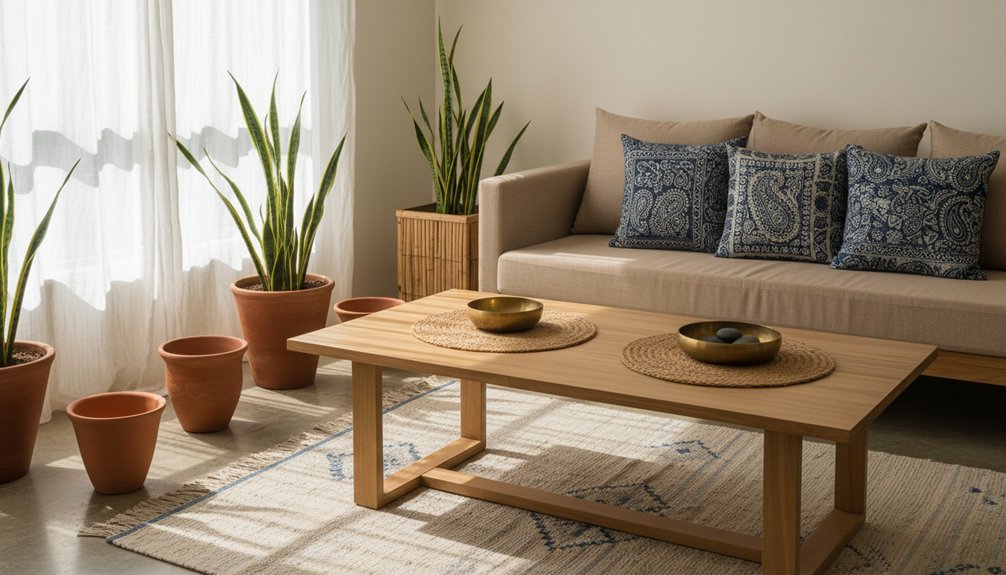
Japanese minimalism meets Indian artisan craftsmanship to create a unique furniture style for UK homes. This fusion emphasizes clean lines and rich materials, such as teak wood and handwoven textiles. The design incorporates brass accents while adhering to the Japanese principle of “ma,” which focuses on negative space.
Key furniture pieces in this trend include low-profile sofas upholstered with Indian fabrics, intricately carved dining tables, and practical bamboo storage solutions. These items combine functionality with cultural significance, ensuring that each piece serves a purpose while telling a story.
This trend values authentic sourcing and a mindful design philosophy. By choosing furniture that reflects these principles, homeowners can create balanced and serene living spaces that celebrate both Japanese and Indian aesthetics.
The Philosophy Behind Japandi-Indian Fusion Design
When you combine minimalist Japanese design with lively Indian aesthetics, you create a design approach that balances calmness and vibrancy. This fusion merges Japan’s emphasis on simplicity and functionality with India’s rich use of color and texture.
In practice, this cultural blend allows you to design spaces that feel both serene and invigorating. The Japanese principle of “ma,” or negative space, helps ensure that Indian textiles and intricately carved wood features stand out without overwhelming the overall atmosphere.
The strategic use of negative space allows vibrant cultural elements to breathe and shine without creating visual chaos.
This approach honors both cultures while producing a fresh, cohesive style. The focus here is on quality over quantity. You select items that serve multiple functions and tell a story. Additionally, sourcing pieces from dropship & wholesale suppliers can enhance the accessibility of unique furniture that embodies this blend.
Each piece contributes to an experience that respects the legacies of Japanese and Indian design. By doing this, you create environments that aren’t just visually appealing but also meaningful and practical.
Essential Materials That Define This Cross-Cultural Aesthetic
As you work on Japandi-Indian fusion design, focus on selecting materials that embody the essence of both cultures. Sustainable materials should serve as your foundation, showcasing respect for nature and craftsmanship.
First, use natural wood combinations. Combine light oak or bamboo with rich teak or rosewood. This pairing creates a striking visual contrast that enhances the aesthetic.
Next, incorporate handwoven textiles. Choose linen and cotton, then mix these with traditional Indian fabrics like khadi and handloom silk. This blend balances Japandi’s neutral tones with the vibrancy of Indian heritage.
In addition, integrate stone and ceramic elements. Use smooth river stones alongside terracotta and hand-thrown pottery. These materials add texture and organic appeal to your design.
Finally, include metal accents. Use brushed brass details in combination with oxidized copper. This mix introduces warmth while maintaining a clean and simple look.
By carefully selecting these materials, you’ll create a harmonious Japandi-Indian fusion that respects both cultures and emphasizes sustainability. Additionally, consider incorporating drop ship solid wood furniture to enhance the durability and style of your fusion design.
Focus on natural fibers and traditional weaving techniques to achieve that balance in your textile choices.
Statement Dining Furniture Blending Clean Lines With Handcraft Heritage
Today’s statement dining tables blend modern design with traditional craftsmanship.
These tables feature minimalist shapes paired with detailed carvings, showcasing the beauty of handcrafting. The natural wood grains highlight the quality of the materials, while warm brass accents add a contemporary touch.
When you select dining furniture that balances these elements, you support artisanal skills and meet the needs of modern UK homes. This approach ensures that your dining space remains stylish and rooted in heritage, while also promoting ethical manufacturing practices that enhance the overall value of your furnishings.
Minimalist Tables, Carved Details
Contemporary dining tables showcase a blend of minimalism and craftsmanship that stands out in today’s market. Skilled artisans create these pieces by combining clean Scandinavian designs with traditional Indian woodworking methods.
These tables feature solid surfaces supported by bases that display intricate carvings. Each carving adds value by conveying stories and cultural significance through wood.
For example, solid teak tops often include hand-carved geometric patterns along their edges, enhancing their visual appeal. Clean-lined pedestals incorporate traditional paisley motifs in raised relief, giving a nod to heritage while maintaining a modern look.
Smooth walnut surfaces can contrast beautifully with elaborate mandala designs on the legs, providing a striking balance of simplicity and detail. Simple rectangular forms gain character from delicate floral carvings on support beams, showcasing fine craftsmanship.
Natural Wood Meets Brass
Contemporary designers are combining natural wood with brass accents to create dining furniture that stands out. They use materials like walnut and oak to craft tables, incorporating brass inlays that reflect traditional Indian geometric designs while adhering to the clean lines of Japandi style.
This approach allows the natural finish of the wood to highlight its grain texture, showcasing the material’s beauty. Brass accents provide focal points in the furniture without overwhelming the overall design.
Designers integrate these metallic elements into table legs, drawer pulls, and corner details. This combination of wood and brass adds visual warmth while maintaining a minimalist aesthetic.
British homeowners appreciate these statement pieces because they effectively merge different cultural design philosophies. The outcome is dining furniture that remains contemporary yet timeless.
Living Room Pieces That Transform Modern British Homes
The living room is central to British homes, and modern design embraces a fusion of traditional and contemporary elements. Each furniture piece serves a purpose to enhance both aesthetics and functionality.
- Low-profile sofas provide comfortable seating while incorporating rich Indian textiles. These sofas blend Japandi minimalism with vibrant block-printed cushions and throws, creating a visually appealing contrast.
- Handcrafted coffee tables feature solid oak bases that support tops adorned with brass inlays. These designs draw inspiration from traditional Indian metalwork, adding a unique touch to the living room.
- Storage ottomans offer practical solutions with clean geometric shapes. They’re upholstered in naturally-dyed fabrics sourced from Indian artisans, combining style with sustainability.
- Floor cushions create flexible seating options in meditation corners. These cushions use organic cotton covers filled with buckwheat hulls, allowing for comfort and adaptability in space usage.
These furniture pieces do more than fill a room; they serve as conversation starters. Each item reflects the evolving multicultural design aesthetic in Britain, showcasing how diverse influences can come together in modern living spaces. Additionally, the use of handcrafted furniture ensures that each piece is unique, echoing the artistry of traditional craftsmanship.
Bedroom Storage Solutions Marrying Minimalism With Artisan Details
Bedroom storage solutions evolve to meet both practical needs and aesthetic desires. Designers create wardrobes that feature clean lines inspired by Japanese minimalism. Artisans then add hand-carved drawer pulls from India and detailed metalwork. These wardrobes provide organized space while acting as sculptural elements in the room.
Minimalist shelving units also reflect this blend of functionality and artistry. Manufacturers build these shelves with bamboo or light wood frames. They incorporate brass accents and woven basket inserts for added storage. These units efficiently hold books and clothing while contributing to a calm visual environment.
Under-bed storage solutions now include sliding drawers. Craftsmen design these drawers with rope handles and geometric carvings. These functional storage pieces help transform cluttered areas into serene retreats, honoring both minimalist and artisan design philosophies. Additionally, exclusive access to bespoke furniture lines ensures that designers can find unique pieces that elevate their interior projects.
Home Office Furniture for the New Era of Mindful Working
Home office furniture must cater to both mental clarity and physical wellness in today’s mindful working environment. The goal is to create a workspace that supports focus while ensuring comfort.
Modern workspaces demand furniture that nurtures both mind and body, creating harmony between productivity and personal well-being.
By blending Japandi’s clean lines with the warmth of Indian craftsmanship, we can design pieces that enhance this experience.
Here are essential components to consider for your mindful home office:
- Hand-carved teak desks with minimalist steel legs provide stability and visual lightness. These desks create a grounding workspace that helps maintain focus.
- Ergonomic desk chairs with integrated meditation cushions offer flexible seating solutions. This combination allows you to shift positions throughout the day, promoting comfort and mindfulness.
- Bamboo storage towers featuring brass inlay details organize documents effectively. These storage solutions add a touch of artistry while keeping your workspace tidy.
- Low wooden platforms that function as printer stands and yoga surfaces encourage movement breaks. Using these platforms allows you to stretch and reset between meetings, enhancing overall productivity.
Incorporating regular dusting into your cleaning routine will help maintain the beauty and longevity of your furniture, ensuring your workspace remains inspiring and functional.
Where to Source Authentic Fusion Pieces in the UK Market
Where can you find authentic fusion furniture pieces that reflect cross-cultural design? Start with established retailers like West Elm and Made.com.
These stores offer curated collections that merge Japanese minimalism with global influences. For unique items, visit Heal’s flagship store in London. Heal’s showcases emerging designers who effectively blend Eastern and Western aesthetics.
Explore independent boutiques in Shoreditch and Marylebone. These shops often feature one-off treasures crafted by local artisans.
Use online platforms like Etsy UK to connect directly with makers who practice sustainable sourcing and ethical craftsmanship. Visit antique markets in Camden and Portobello for vintage Asian pieces that can serve as focal points in your fusion decor.
Always verify authenticity by researching each maker’s background and their adherence to traditional techniques. This ensures that the pieces you choose genuinely represent the fusion style you seek.