
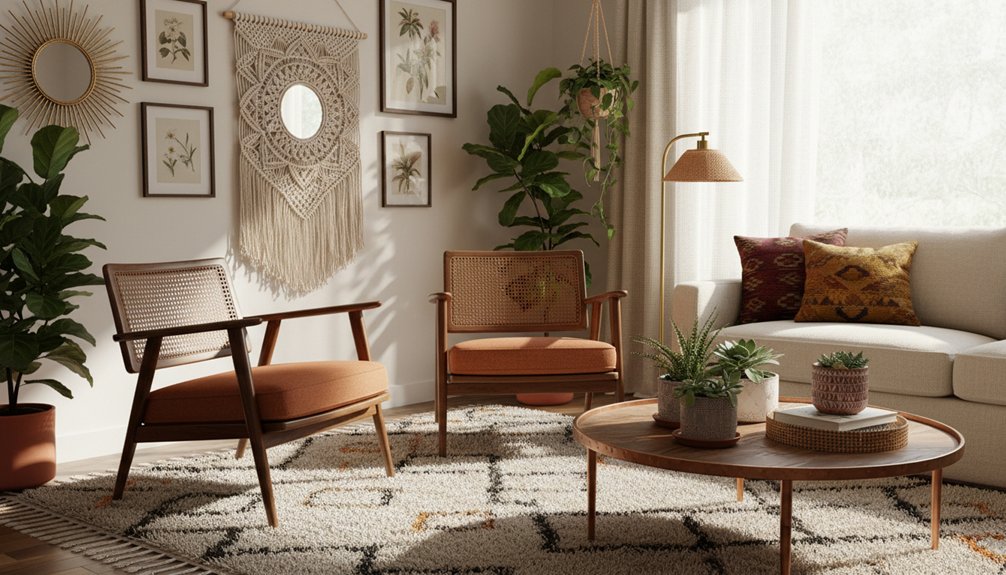
To integrate mid-century wooden armchairs with a bohemian style, focus on using natural materials and earthy tones consistently throughout the design. Select armchairs crafted from durable woods like teak or walnut, ensuring they can withstand daily use. Complement these armchairs with bohemian textiles, such as patterned cushions and vibrant throws, that feature rich colors against earthy backgrounds.
Layer textures effectively. For example, drape a soft throw over the smooth wood of the armchair to create visual interest. Mix patterns thoughtfully; combine geometric designs with floral motifs to maintain a cohesive look. Keep the color palette balanced by choosing a few key colors that repeat throughout the space.
Avoid overwhelming the design with too many competing textures or colors. Focus on a few standout pieces, ensuring they work harmoniously together. This method will help you create a cohesive and inviting interior that reflects both the mid-century and bohemian styles.
Embracing the Mid-Century Magic: Defining Wooden Armchairs
Mid-century wooden armchairs blend form and function effectively. These chairs showcase timeless design with clean lines and simple silhouettes. Wooden armchairs prioritize ergonomic features, supporting the natural curves of the human body. This design promotes good posture while ensuring comfort.
Timeless design and ergonomic comfort define mid-century wooden armchairs, offering clean lines and natural support.
Quality materials, such as teak, walnut, and oak, enhance the durability of wooden armchairs. These materials also add warmth and texture to various interiors. When selecting a mid-century wooden armchair, evaluate its construction and finish.
Consider how the armchair complements your existing décor. This careful consideration allows for a seamless integration of classic charm and practical functionality. Additionally, sourcing from wholesale furniture suppliers ensures access to high-quality pieces that fit your design vision and budget.
Wooden armchairs work best in spaces that value both aesthetics and comfort. Avoid overly ornate designs, as they can detract from the clean lines typical of mid-century style.
Focus on simple, robust constructions to ensure longevity. By choosing mid-century wooden armchairs that align with these guidelines, you can enhance your living space with style and practicality.
Getting to Know Bohemian Style Decor
Bohemian style decor creates a warm and inviting atmosphere by mixing textures, colors, and cultural elements. To achieve this look effectively, focus on specific components:
Layer Textiles for Depth
Layer textiles by using various rugs, throws, and cushions that showcase diverse patterns and colors.
For example, place a vibrant kilim rug beneath a neutral sofa and add patterned cushions to create visual interest.
Integrate Cultural Influences
Incorporate decor items from different cultures to enhance the bohemian aesthetic.
For instance, use Moroccan lanterns to add warmth and Indian tapestries to introduce rich colors and intricate designs.
Use Natural Materials
Select furniture and accessories made from natural materials like wood, wicker, and rattan.
For example, a reclaimed wood coffee table pairs well with wicker chairs, grounding the space in organic textures. This can be complemented by dropship solid wood furniture that adds both style and durability to your decor.
Add Botanical Elements
Introduce potted plants and hanging greenery to bring life into the decor.
Choose easy-care plants like pothos or succulents that thrive indoors and add a pop of green to your space.
Focusing on these specific elements will help you create a cohesive bohemian style decor that expresses individuality and creativity.
Shared Features of Bohemian and Mid-Century
When you examine the shared features of Bohemian and Mid-Century styles, you’ll find a clear focus on natural materials. Both styles use wood, rattan, and linen to create a tactile environment.
Bohemian style often incorporates colorful textiles and eclectic patterns, while Mid-Century focuses on clean lines and functional design. However, both prioritize vibrant and earthy tones, which contribute to a warm and inviting atmosphere.
Craftsmanship plays a crucial role in both styles. Bohemian design favors handmade, unique pieces, while Mid-Century design values well-crafted furniture that emphasizes functionality and form. In fact, handcrafted furniture often showcases natural variations that enhance its uniqueness and charm.
Both styles reject mass-produced items, opting instead for quality over quantity.
In practical terms, if you’re looking to blend these styles in your space, prioritize high-quality materials and unique designs. Choose furniture that highlights natural textures and colors.
For example, select a rattan chair paired with a handcrafted wooden table. This combination will create a cohesive aesthetic that honors both Bohemian and Mid-Century principles.
Limitations may arise when trying to merge these styles. Too many patterns from Bohemian design can clash with the simplicity of Mid-Century.
Therefore, maintain balance by integrating solid colors and minimalistic shapes to achieve harmony in your space.
Emphasis On Natural Materials
Both Bohemian and Mid-Century styles prioritize natural materials, making them ideal for cohesive interior design. Designers often use wood, rattan, and leather to create warmth and authenticity. These materials establish a strong foundation for a unified aesthetic.
Natural Materials Create a Cohesive Design****
Raw, unfinished wood provides simplicity and elegance. Designers choose this material for furniture and accents to highlight its organic beauty. Woven textiles enhance tactile experiences and add visual interest. Incorporating rugs or throws can create inviting spaces.
Natural stone surfaces ground the design with an earthy touch. Using materials like granite or slate for countertops or floors adds durability and a connection to nature. Linen and cotton fabrics promote comfort and breathability in furnishings. Upholstering sofas or curtains with these materials enhances overall comfort.
Limitations of Natural Materials
Natural materials require maintenance. Wood may need regular sealing or oiling to prevent damage. Woven textiles can wear over time, requiring careful selection for high-traffic areas. Natural stone surfaces may require sealing to resist stains.
Specific Application of Materials
Select raw wood for dining tables to showcase its grain. Use rattan for chair backs to introduce texture. Choose natural stone for kitchen countertops to ensure durability while maintaining an organic feel. Opt for linen curtains to allow light while enhancing comfort.
Utilizing these natural materials provides a strong foundation for merging Bohemian and Mid-Century styles, resulting in a harmonious and inviting interior.
Vibrant And Earthy Tones
Vibrant and Earthy Tones in Bohemian and Mid-Century Styles
People who enjoy both Bohemian and Mid-Century styles recognize their shared emphasis on vibrant and earthy tones. These two styles effectively combine through the use of warm earth tones paired with lively accent colors.
Mid-Century interiors utilize deep browns and rich greens to create a grounded ambiance. Bohemian aesthetics incorporate these earthy hues while introducing vibrant colors like reds and oranges. This combination of colors cultivates a lively atmosphere that remains connected to nature.
For example, adding vivid textiles or patterned cushions to a Mid-Century armchair enhances its appeal with Bohemian flair without overwhelming the overall design.
Maintaining consistent earthy tones in the background allows vibrant accents to stand out. This approach creates a harmonious blend where both styles complement each other.
When planning your space, prioritize earthy palettes for larger surfaces and reserve the bold colors for smaller decorative elements. This ensures effective integration of both design styles while achieving a cohesive look.
Focus On Craftsmanship
Craftsmanship Unites Bohemian and Mid-Century Styles
Craftsmanship defines both Bohemian and Mid-Century styles. This focus ensures that each piece reflects skilled artisanship, resulting in unique and durable items for any space.
- Attention to Detail: Skilled craftspeople create intricate details in both styles. These details enhance the overall aesthetic and elevate the quality of each piece.
- Material Choice: Natural materials, such as hardwoods, are commonly used in both styles. The choice of material highlights the artisan’s skill and adds warmth to interiors.
- Creative Expression: Both styles encourage innovative designs. Artisans bring their creativity to life through functional and artistic pieces.
- Timeless Appeal: Well-crafted items endure beyond trends. These pieces maintain their value and relevance over time, making them worthwhile investments.
By prioritizing craftsmanship, Bohemian and Mid-Century styles create cohesive and inviting interiors.
Each element builds on the last, ensuring a rich, textured environment that reflects quality and artistry.
Selecting Mid-Century Armchairs That Blend Well
When selecting mid-century armchairs that complement a bohemian style, focus on three key characteristics: durability, versatility, and functionality.
Durability: Choose armchairs made from solid wood or high-quality veneers. These materials ensure the armchairs withstand daily use and maintain their appearance over time. For instance, a sturdy walnut frame can provide longevity while enhancing the overall aesthetic of your space. Regular dusting and maintenance is essential to keep the wood in optimal condition.
Versatility: Look for armchairs in various shapes and sizes. Mid-century designs offer options ranging from sleek, low-profile chairs to slightly more rounded forms. Select pieces that fit seamlessly into your room layout. For example, a pair of accent chairs can define a cozy reading nook, while a single larger chair can serve as a statement piece in an open living area.
Functionality: Prioritize comfort and support in your armchair choice. Mid-century armchairs should provide a cozy seating experience, making them essential in your bohemian-inspired living space. Opt for chairs with ample cushioning and ergonomic design. A chair with a deep seat and supportive backrest, for instance, will invite relaxation and enhance the overall comfort of your home.
Harmonizing Patterns, Colors, and Textures
When mixing mid-century wooden armchairs with bohemian style, balance bold patterns with complementary color palettes to achieve harmony. Select vibrant colors, then pair them with softer shades for a cohesive design. Blend textures like smooth wood, woven fabrics, and plush cushions to add depth and interest to the space.
Focus on choosing specific colors that enhance the mid-century aesthetic while still embracing bohemian flair. For instance, a deep teal can complement natural wood tones while a light beige can soften the overall look. Aim for a mix where no color overpowers another; instead, create a visual dialogue between them.
Incorporate textures strategically. Pair the smooth finish of wooden armchairs with woven throws or macramé wall hangings. Use plush cushions in various fabrics, such as velvet or cotton, to invite comfort and tactile variety. Ensure that each texture interacts positively with the others, enhancing the overall aesthetic without causing visual clutter.
Limit patterns to two or three to maintain focus. For example, if you have a bold geometric print on a rug, keep the cushions in solid colors or subtle textures. This approach prevents overwhelming the space and keeps the design cohesive.
Finally, consider the layout. Position mid-century armchairs in a way that encourages conversation, using a coffee table that mirrors the wood tones and textures present in the chairs. Arrange accessories, like plants or art pieces, to draw the eye across the room, creating a unified and inviting atmosphere. Additionally, explore dropshipping options to source unique pieces that enhance your design vision.
Balancing Bold Patterns Harmoniously
Balancing Bold Patterns in a Space
To balance bold patterns effectively, focus on color harmony and texture selection. Achieving visual balance requires careful layering of patterns.
Begin by choosing patterns that complement mid-century wooden armchairs. This selection enhances their timeless appeal without creating visual chaos.
Use Contrast to Add Depth
Combine complex designs with simpler patterns. For example, pair a bold geometric print with a subtle stripe. This contrast adds depth and keeps the design engaging.
Implement Repetition to Create Cohesion
Repeat a pattern or color throughout the space. Use the same color in throw pillows, artwork, and rugs.
This repetition ties different elements together, making the room feel unified.
Vary Scale for Dynamic Visuals
Incorporate patterns of varying sizes. For instance, use a large floral print on the curtains and a smaller print on the cushions.
This variation creates a dynamic visual interest without overwhelming the eye.
Introduce Texture for Enhanced Contrast
Integrate different textures alongside patterns. Combine a soft velvet with a rough linen.
This texture mix provides contrast and enhances the overall interest in the space.
Practical Application
When balancing bold patterns, remember to avoid overwhelming the design. Limit the number of bold patterns to three to maintain clarity.
The goal is to integrate bohemian charm with mid-century elegance, creating a cohesive and inviting design.
Stay consistent with the color palette and texture choices to achieve this balance effectively.
Complementary Color Palettes
Use Complementary Color Palettes for Effective Design
Complementary color palettes enhance the visual appeal of mid-century wooden armchairs and bohemian decor. These color combinations create balance and draw the eye in a purposeful way.
Select soft blues or earthy tones to promote calm and comfort. Color psychology indicates that these hues encourage relaxation, making them ideal for living spaces.
Understand Seasonal Trends for Color Inspiration
Spring trends suggest using pastel palettes, while autumn encourages rich, warm shades. By aligning your color choices with seasonal trends, you can refresh your space and maintain relevance throughout the year.
Use seasonal colors to emphasize different aspects of your design, ensuring that your mid-century wooden armchairs blend seamlessly into your bohemian theme.
Create Harmony Through Color Selection
Choosing colors that complement each element in your room fosters a sense of harmony. For instance, if your armchairs are a warm wood tone, pair them with cooler shades to create contrast.
Use a color wheel to identify specific combinations that enhance the overall design. Ensure that each color choice supports the goal of creating a visually appealing, soothing space.
Practical Steps for Effective Color Pairing
- Identify the Main Elements: Focus on the key features in your room, such as armchairs and decor items.
- Select Complementary Colors: Use the color wheel to pick colors that work well together.
- Test Color Combinations: Apply paint samples or fabric swatches to see how the colors interact in your space.
- Adjust Based on Lighting: Consider how natural and artificial light affects color perception throughout the day.
Mixing Textural Elements Effortlessly
Blending Different Textures to Enhance Your Space
Blending various textures effectively transforms your space into a visually engaging environment. Layering textures creates depth and interest in your decor.
Begin with tactile contrasts that highlight mid-century wooden armchairs against a bohemian backdrop. Mix multiple textiles to enhance the overall atmosphere.
Layer Rugs for Warmth
Layer a plush, textured rug beneath your armchairs to introduce warmth. This adds a soft surface and enhances the comfort of your seating area.
Choose rugs with contrasting textures to create visual appeal.
Add Soft Throws for Coziness
Drape knitted throws over the backs of your armchairs to create a cozy and inviting atmosphere.
Use throws in complementary colors to tie together the room’s color scheme and add tactile contrast.
Use a Variety of Cushions for Complexity
Combine cushions made from different fabrics, such as velvet and linen, to add complexity to your seating.
Select cushions in various sizes and shapes to create a dynamic look.
Ensure that the fabrics and colors work together to maintain a cohesive design.
Incorporate Natural Elements for an Organic Feel
Incorporate bamboo or wicker elements into your decor to enhance the organic feel of the space.
These materials bring a natural texture that complements both mid-century and bohemian styles.
Use baskets or furniture pieces made from these materials to tie the room together.
Achieve Cohesion with Patterns and Colors
Focus on harmonizing patterns, colors, and textures to enhance the eclectic charm of your room.
Ensure that each element supports the overall theme.
Avoid overly contrasting elements that may disrupt the visual flow.
Design Spaces That Balance Structure and Spirit
Creating a space that balances structure and spirit requires practical design strategies. To achieve this, arrange furniture to facilitate movement and accessibility. Position mid-century wooden armchairs with clean lines to provide a structured feel. Pair these chairs with Bohemian accents, adding a spontaneous touch. Ensure pathways remain clear to maintain order and flow.
Select materials with intention. Use wood, rattan, and soft textiles to create visual cohesion. Hang textured wall art to draw the eye upward, adding height and interest to the room. Choose neutral colors as a foundation, while incorporating vibrant patterns and accessories to inject energy and personality. Incorporating bespoke solid wood pieces can also enhance the overall aesthetic and durability of your space.
This design approach ensures every element serves a purpose. Each piece should contribute to an organized yet lively atmosphere.
Focus on how structure enhances functionality and spirit encourages creativity. By systematically blending these elements, you create a cohesive space that feels both inviting and efficient.
Real-Life Examples of Eclectic Interiors
To explore how to balance structure and spirit in design, examine real-world examples of eclectic interiors. These spaces effectively blend contrasting styles, demonstrating how to mix different design elements in your own home.
- Living Room Design: A living room combines a mid-century armchair with a colorful, patterned Bohemian rug. This pairing creates a warm and inviting atmosphere, showcasing individual style and comfort.
- Dining Area Setup: A dining area features industrial metal chairs alongside a rustic wooden table. This arrangement provides an engaging contrast between materials, enhancing the visual interest and functionality of the space.
- Bedroom Composition: A bedroom incorporates vintage wooden bed frames with vibrant textiles. This combination achieves a layered, textured aesthetic that invites relaxation while reflecting personal taste.
- Chic Kitchen Layout: A kitchen merges sleek modern countertops with ornate Bohemian lighting fixtures. This mix results in a charming yet practical environment, balancing style with everyday use.
Additionally, consider including sustainable solid wood timber pieces from the Recession Collection to enhance both durability and style in your eclectic designs.
These examples illustrate how to create engaging interiors that reflect personal style while maintaining functional design.