
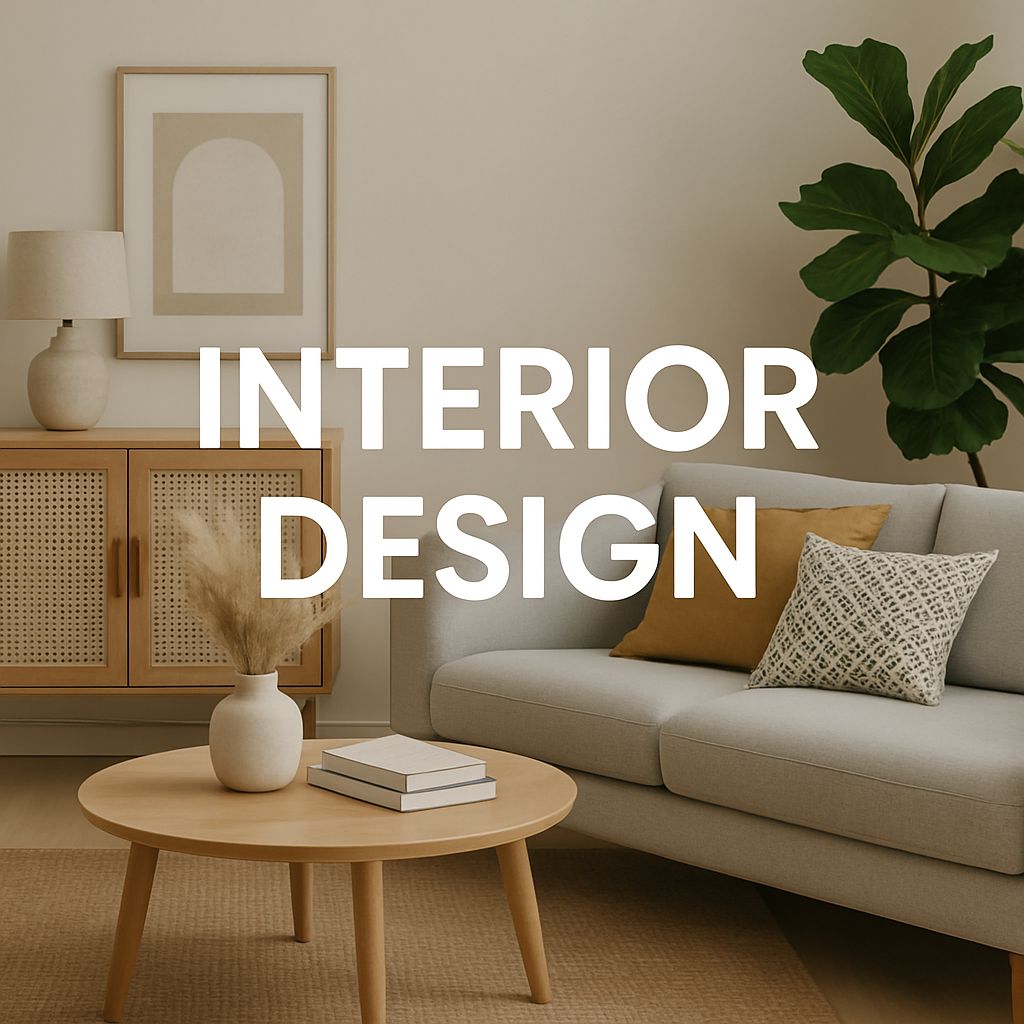
- Modern minimalist furniture design is defined by simplicity, function, and intentional material choices — not emptiness or a lack of personality.
- The most enduring furniture designs share three traits: strong proportions, honest materials, and a clear purpose for every element.
- Scandinavian, Bauhaus, and Mid-Century Modern movements are the invisible hands behind most of what you see in furniture stores today — understanding them changes how you shop and design.
- Sustainability is no longer optional in good furniture design — reclaimed wood, recycled metals, and longevity-focused construction are now baseline expectations for quality pieces.
- You can train your eye for great furniture design — and the method most designers use might surprise you.
Great furniture design is never an accident — every line, joint, and material choice is a deliberate decision that shapes how a room feels and how a piece performs over decades.
Whether you’re furnishing a first apartment or refining a long-term space, understanding what makes furniture truly well-designed gives you a permanent advantage. Design-forward resources can sharpen that instinct quickly, but the foundation starts with principles that have held up across centuries of craft and innovation.
Furniture Design Is More Than How Things Look
Most people judge furniture by appearance first. That’s natural — but it’s also why so many beautifully styled rooms feel uncomfortable to live in. A sofa that photographs well but sinks after six months, a dining chair that looks elegant but digs into the back of your thighs — these are failures of design, not just quality. Good furniture solves a problem while looking like it wasn’t trying too hard.
The Core Principles Behind Great Furniture Design
Every piece of furniture that has stood the test of time — from the Eames Lounge Chair to a centuries-old Windsor chair — succeeded because it got the fundamentals right. These aren’t trends. They’re structural truths about how humans interact with objects in space.
Form vs. Function: Why You Need Both
The old debate between form and function is a false one. The best furniture designers — Charles and Ray Eames, Alvar Aalto, Hans Wegner — never separated the two. A chair that is only beautiful is a sculpture. A chair that is only functional is equipment. What you want in your home is furniture that earns its place on both counts. Form should follow function, but it should follow it gracefully.
Proportion and Scale in a Room
Proportion is one of the most overlooked elements in furniture design, and it’s often what separates a room that feels “off” from one that feels effortless. A sofa that’s too large makes a room feel cramped. A coffee table that sits too low relative to the seat height creates awkward reach. Scale isn’t just about size — it’s about the relationship between every object in the space. Getting it right requires looking at the room as a whole composition, not as individual purchases.
Material Choice and What It Communicates
Materials carry weight — literally and emotionally. Solid oak communicates warmth, permanence, and craft. Polished chrome reads as industrial and precise. Linen upholstery feels relaxed and tactile. Marble is formal and cool. Before selecting a material for any piece, it helps to ask what you want that piece to say and how long you want it to last. These two questions usually align.
Material honesty — using materials for what they do best rather than mimicking other materials — is a hallmark of strong furniture design. Veneer over solid wood isn’t inherently bad, but laminate pretending to be marble usually reads as exactly what it is.
The Design Movements That Still Shape Furniture Today
You don’t need a design degree to appreciate how deeply historical movements influence what’s sitting in furniture showrooms right now. Three movements in particular have shaped the vocabulary of modern furniture more than any others.
Bauhaus: Where Art Met Industry
Founded in Germany in 1919, the Bauhaus school operated for just 14 years before being shut down by the Nazi regime — but its impact on furniture design is permanent. The core philosophy was radical for its time: art and industry should work together, not against each other. Furniture should be designed for mass production without sacrificing beauty. Marcel Breuer’s Wassily Chair (1925), made from tubular steel and canvas, is a direct product of that thinking — stripped of ornament, structurally transparent, and still in production today.
Scandinavian Design and the Power of Simplicity
Scandinavian design emerged in the 1930s and reached its peak influence in the 1950s and 60s. What made it distinct wasn’t minimalism for minimalism’s sake — it was a democratic design philosophy. The goal was to create beautiful, functional objects that ordinary people could afford and live with daily. Designers like Arne Jacobsen, Finn Juhl, and Hans Wegner worked primarily in wood, prioritizing warmth, human scale, and craftsmanship over ornamentation.
The Danish concept of hygge — a feeling of coziness and contentment — quietly runs through much of Scandinavian furniture design. Rounded edges, natural materials, and furniture that invites you to sit and stay rather than just look are all expressions of that cultural value.
This influence is everywhere today. IKEA, despite its mass-market positioning, is a direct descendant of Scandinavian democratic design principles. So are the clean oak frames and linen upholstery that dominate contemporary interiors across North America and Europe.
Mid-Century Modern and Why It Never Goes Away
Mid-Century Modern (roughly 1945–1969) is the most commercially persistent design movement in furniture history. After World War II, new materials — molded plywood, fiberglass, plastic — combined with optimistic postwar energy to produce furniture that felt genuinely new. The Eames Molded Plastic Chair, the Saarinen Tulip Table, the Noguchi Coffee Table — these weren’t just products. They were expressions of a belief that design could improve everyday life.
What keeps Mid-Century Modern relevant isn’t nostalgia — it’s that the pieces actually work. Organic shapes, low profiles, tapered legs, and a balance between natural and synthetic materials translate cleanly into contemporary interiors without requiring a period-specific room to support them. For more insights on furniture styles, explore the impact of handmade furniture in artisan communities.
Why Mid-Century Modern Stays Relevant: Unlike purely ornamental historical styles, MCM furniture was designed around human proportion, new materials, and post-industrial production — making it compatible with how people actually live today. Its silhouettes are simple enough to layer with modern or traditional elements without visual conflict.
How Materials Define a Piece
The material a piece of furniture is made from isn’t just a practical decision — it’s a design statement. Walk into any well-designed room and the materials tell you immediately what the space values: warmth, precision, softness, edge. Getting material choices right is one of the fastest ways to elevate a room from assembled to intentional.
What makes material selection complex is that it’s never just about one piece in isolation. A solid walnut dining table reads completely differently when paired with leather chairs versus upholstered linen ones. Context determines meaning, and the best furniture designers think about materials as part of a larger conversation happening across the entire room.
Solid Wood vs. Engineered Wood
Solid wood — oak, walnut, maple, ash — brings authenticity and longevity that engineered alternatives genuinely can’t replicate. It can be sanded back, refinished, and repaired. It ages with character. That said, solid wood moves with humidity and temperature changes, which means poorly constructed solid wood pieces can warp or crack over time. Engineered wood products like cross-laminated timber or high-quality plywood are actually more dimensionally stable in certain applications, which is why skilled furniture makers often use them strategically rather than avoiding them entirely. The key distinction isn’t solid vs. engineered — it’s quality construction vs. shortcuts.
Metal, Glass, and Mixed Materials
Steel, brass, and aluminum bring structural precision and a visual sharpness that wood alone can’t achieve. Powder-coated steel frames add durability without weight. Brushed brass hardware on a matte oak cabinet creates tension between warm and cool that feels considered rather than accidental. These combinations work because contrast — when intentional — creates visual interest without clutter.
Glass in furniture design is one of the most misunderstood materials. Used well — as a tabletop over a sculptural base, or as a shelf that lets a wall breathe — it adds lightness and openness to a space. Used poorly, it becomes a fingerprint magnet that makes a room feel cold and impersonal. The difference is almost always about proportion and what surrounds it.
Upholstery and Textile Choices
Upholstery is where furniture design gets tactile. Performance fabrics like Crypton or Sunbrella-grade textiles now offer durability without sacrificing texture, which has changed what’s possible in high-use spaces. Bouclé, velvet, linen, and leather each carry distinct emotional registers — bouclé reads cozy and contemporary, leather reads structured and permanent. The best choice depends on how the room is used and how long you want the fabric to perform before showing wear.
The Role of Ergonomics in Furniture Design
Ergonomics is the science of designing objects around how the human body actually works — and in furniture, it separates pieces that feel good from pieces that just look good. A dining chair might be visually perfect and completely miserable to sit in for longer than twenty minutes. A desk that sits two inches too high will cause shoulder tension within weeks. These aren’t minor complaints — they’re design failures with real physical consequences.
- Seat height: Standard chair seat height is 17–19 inches from the floor, designed to keep thighs parallel and feet flat.
- Seat depth: 16–18 inches allows most adults to sit fully back without pressure behind the knees.
- Back support angle: A slight recline of 100–110 degrees reduces spinal compression more effectively than a fully upright 90-degree back.
- Armrest height: Should allow shoulders to rest naturally — armrests set too high force shoulder elevation and upper back tension over time.
- Table-to-seat clearance: A minimum of 12 inches between the seat surface and the underside of the table prevents uncomfortable compression against the thighs.
The challenge with ergonomics in residential design is that it’s easy to overlook until something starts hurting. Unlike office furniture — where ergonomic standards are well-documented — home furniture is still largely selected on visual criteria first. Increasingly, furniture brands are embedding ergonomic thinking into residential lines without advertising it, simply because informed buyers have started asking better questions.
When evaluating any seating piece, sit in it for at least ten minutes before committing. Test where the lumbar support hits your lower back, whether your feet rest naturally on the floor, and whether the armrests — if present — allow your shoulders to drop fully. Your body will tell you what your eyes can’t.
Sustainable Furniture Design Is Now a Standard, Not a Trend
The Shift in Sustainable Furniture: A decade ago, “sustainable furniture” meant sacrificing aesthetics for ethics. Today, the most design-forward furniture brands — from HAY in Denmark to Emeco in the United States — have made sustainability a core part of their design process, not an afterthought. Reclaimed materials, low-VOC finishes, and longevity-focused construction are now baseline expectations in serious furniture design.
The environmental case for investing in well-made furniture is straightforward: a solid oak dining table that lasts fifty years has a fraction of the environmental footprint of five cheap replacements over the same period. Fast furniture — the flat-pack category built for a three-to-five year lifespan — generates significant landfill waste globally. Choosing quality isn’t just an aesthetic preference anymore. It’s a more responsible way to furnish a home.
Certifications worth looking for include FSC (Forest Stewardship Council) certification for wood products, GREENGUARD Gold for low chemical emissions, and OEKO-TEX certification for textiles. These aren’t marketing labels — they’re verified third-party standards that indicate genuine accountability in the supply chain.
Beyond materials, manufacturing processes matter. Water-based finishes vs. solvent-based, local production vs. intercontinental shipping, and packaging choices all contribute to the full environmental picture of a piece of furniture. The most transparent brands publish this information clearly — which itself is a signal of design integrity.
Reclaimed and Recycled Materials
Reclaimed wood — timber salvaged from old barns, factories, and demolished structures — brings genuine history into a space. The grain is tighter, the character is richer, and the provenance is real. Brands like Restoration Hardware have commercialized the look to the point of cliché, but authentic reclaimed wood furniture — sourced from independent makers who document their material origins — remains one of the most honest expressions of sustainable design.
Recycled metal and plastic are increasingly common in contemporary furniture. Emeco’s Navy Chair, originally designed for the U.S. Navy in 1944, is now made with 80% recycled aluminum. The brand’s collaboration with Coca-Cola produced chairs made from 111 recycled plastic bottles — without any compromise to the design’s clean lines or structural integrity. This is what responsible innovation in furniture looks like.
The distinction to understand is between post-consumer recycled content (materials that have already been used by consumers and diverted from landfill) and post-industrial recycled content (manufacturing offcuts that never reached a consumer). Both have value, but post-consumer is the higher bar — and the more meaningful sustainability claim.
Designing for Longevity
The most sustainable piece of furniture is the one you never have to replace. Longevity-focused design means mortise-and-tenon joinery over staple guns, solid frames over particleboard cores, and replaceable components — like removable cushion covers and re-glue-able joints — over sealed, disposable construction. Brands that offer replacement parts and repair services are signaling something important: they built the piece to last long enough for repairs to be worth doing.
How to Train Your Eye for Good Furniture Design
Taste isn’t innate — it’s built through exposure, comparison, and deliberate attention. The designers who seem to have effortless instincts for furniture selection have almost always spent years looking at great work, studying why it succeeds, and applying those lessons to their own choices. The good news is that this is a learnable skill, and it compounds quickly once you start.
Start by slowing down how you look at furniture. Most people glance at a piece and form an impression in seconds. Instead, spend time examining the joinery where wood meets wood, how upholstery is pulled and tufted at the corners, whether legs are tapered or straight and why that choice was made. These details are where design quality lives — and once you start seeing them, you can’t stop.
Comparison is one of the fastest teachers. Place a well-made piece next to a budget alternative and the differences become impossible to ignore — the depth of the finish, the weight of the hardware, the precision of the seams. This kind of side-by-side observation is more instructive than any amount of reading about quality. Furniture showrooms that carry multiple price points in the same style category are ideal for this exercise.
Understanding design history accelerates your eye significantly. When you know that a tapered leg is a Scandinavian midcentury signature, or that a cantilevered base references Bauhaus engineering principles, you stop seeing furniture as random objects and start seeing it as a conversation across time. That context makes you a more confident and deliberate selector of pieces for your own space.
- Examine joinery details up close — dovetail and mortise-and-tenon joints indicate craftsmanship that staples and brackets cannot match.
- Flip pieces over — the underside of a well-made chair or table reveals the same care as the top surface.
- Test weight — quality materials and solid construction have heft; lightweight often signals shortcuts in the frame or fill.
- Look at how fabric is attached — hand-applied webbing and tied springs are signs of traditional upholstery craft; sinuous wire springs are a budget indicator.
- Check symmetry and finish consistency — gaps in joinery, uneven stain, and misaligned hardware are red flags regardless of price point.
1. Study Iconic Pieces and Why They Work
Pick five pieces of furniture that are widely recognized as design classics — the Eames Lounge Chair, Wegner’s Wishbone Chair, the Barcelona Chair by Mies van der Rohe, the Arco Floor Lamp by Achille Castiglioni, the Noguchi Coffee Table — and study each one in depth. Not just what they look like, but when they were designed, what problem they were solving, what materials made them possible, and why they’re still in production decades later. This exercise builds a mental reference library that informs every furniture decision you make afterward.
2. Visit Design Museums and Showrooms
There is no substitute for standing in front of the real thing. Photographs flatten furniture — they remove scale, texture, weight, and the subtle quality of how light moves across a surface. Design museums like the Vitra Design Museum in Weil am Rhein, Germany, the Cooper Hewitt Smithsonian Design Museum in New York, and the Design Museum in London hold permanent collections of furniture that you can study in person. These aren’t dusty historical artifacts — they’re active lessons in why certain decisions work and others don’t.
Showrooms serve a different but equally valuable purpose. A museum shows you what has already proven itself. A showroom shows you what designers are betting on right now. Visiting high-quality furniture showrooms — Herman Miller, Knoll, Cassina, Muuto, HAY — and spending real time with the pieces rather than glancing and moving on trains your sensory memory for quality. You begin to carry a physical library of what good construction, good proportion, and good material selection actually feel like.
3. Sketch and Prototype Your Own Ideas
You don’t need to be a trained designer to sketch furniture ideas. The act of drawing a piece — even roughly — forces you to make decisions that browsing never requires. Where does the leg attach? How thick is the tabletop relative to the base? What happens at the corner joint? These questions have answers that either work or don’t, and working through them on paper builds the kind of spatial intelligence that makes you a sharper critic of furniture you encounter in stores and showrooms.
A Simple Sketching Exercise: Choose a piece of furniture you own and draw it from three angles — front, side, and three-quarter view. Then redesign one element: change the leg profile, adjust the proportions, or substitute the material. This single exercise, done with ten different pieces over time, will develop your design eye faster than almost any other method.
Prototyping doesn’t require a woodshop. Cardboard, foam, and basic hand tools are enough to build rough scale models that test proportion and form before committing to material. Many professional furniture designers still use this method at the early concept stage — it’s faster than digital modeling for spatial decisions and more honest than a rendering about what something will actually feel like in a room.
The goal of sketching and prototyping isn’t to become a furniture maker — it’s to develop empathy for the decisions that furniture designers make. Once you’ve wrestled with a joinery problem on paper or realized that your proportions are off when you build a cardboard model, you look at finished furniture differently. You see the solutions, not just the surfaces.
4. Follow Working Designers, Not Just Trends
Trend accounts on social media show you what’s popular right now. Following working designers — Faye Toogood, Ronan and Erwan Bouroullec, Patricia Urquiola, Jasper Morrison, Ilse Crawford — shows you how design thinking actually develops over time. These designers publish interviews, process documentation, and commentary on their own work that reveals the reasoning behind decisions that might otherwise look purely aesthetic. That reasoning is where the real education lives. Trends tell you what to buy. Designers teach you how to think.
Good Furniture Design Stands the Test of Time
The pieces that endure — the ones still in production fifty years after they were designed, the ones that move from home to home across generations — share a quality that’s hard to name but easy to feel. They don’t demand attention. They reward it. Every time you look closely, there’s something considered in the detail, something resolved in the proportion, something honest in the material. That quality isn’t accidental, and it isn’t expensive in the way that ornamentation is expensive. It’s the result of designers who asked the right questions and had the discipline to keep editing until nothing unnecessary remained.
Building a home around furniture like that is a different experience than decorating with whatever is trending. The room doesn’t need to be updated every few years. The pieces don’t compete with each other for attention. Instead, the space accumulates meaning slowly — a chair that holds fifteen years of reading, a table that has hosted hundreds of meals, a lamp whose shadow you’ve stopped noticing because it’s become part of how the room feels at night. That’s what great furniture design makes possible. Not a perfect room. A lived-in one.
Frequently Asked Questions
These are the questions that come up most often when people start paying serious attention to furniture design — and the answers that cut through the noise.
What makes a piece of furniture well-designed?
A well-designed piece of furniture is one where form and function are inseparable — where the visual decisions and the structural decisions reinforce each other. Proportion feels right relative to the human body and the space it occupies. Materials are chosen for what they genuinely do well, not for what they simulate. Construction is honest — joints are strong, surfaces are finished consistently, and the piece will hold up to the use it was built for.
The simplest test: remove one element and ask whether the piece gets better or worse. If removing a decorative detail improves the design, that detail wasn’t earning its place. If removing a structural element makes the piece fall apart visually or physically, it was doing essential work. Good design has no waste — every element is load-bearing in some sense, whether structurally or aesthetically.
What is the most influential furniture design movement in history?
The Bauhaus movement (1919–1933) has the strongest claim to being the most influential furniture design movement in history — not because its aesthetic is the most widespread, but because its philosophy fundamentally changed how furniture was conceived and produced. The idea that design should be democratic, that beauty and industrial production could coexist, and that ornament for its own sake was a failure of design — these principles flow through nearly every serious design movement that followed.
Mid-Century Modern has broader consumer recognition, and Scandinavian design has had more sustained commercial impact. But the Bauhaus is where the intellectual framework for modern furniture design was built. Marcel Breuer’s tubular steel furniture, Ludwig Mies van der Rohe’s Barcelona Chair, and the school’s emphasis on materials-led design are still direct references in contemporary work across every price point.
How does ergonomics affect furniture design?
Ergonomics determines whether furniture actually works for the human body using it — and in residential design, it’s one of the most under-evaluated factors. Standard seat height of 17–19 inches, lumbar support positioned at the natural curve of the lower spine, table-to-seat clearance of at least 12 inches, and armrests that allow shoulders to drop fully are not arbitrary specifications. They come from decades of research into how sustained posture affects the body. A chair that ignores these parameters may look perfect and cause real physical problems over time. For those interested in different types of wood used in furniture, this comparison of Sheesham, Mango, Teak, and Acacia wood might provide additional insights.
What materials are most commonly used in modern furniture design?
Modern furniture design draws from a wide material palette, but the most common combinations include solid wood (particularly oak, walnut, and ash) for frames and tabletops, powder-coated or brushed steel and brass for legs and hardware, performance-grade upholstery textiles like bouclé, linen, and velvet for seating, and tempered glass for tabletops and shelving. Engineered wood products — high-quality plywood and cross-laminated timber — are used strategically for dimensional stability in applications where solid wood would be prone to movement. Increasingly, recycled and reclaimed materials appear in premium lines where provenance and sustainability are part of the design story.
How can a beginner start learning about furniture design?
Start by looking more carefully at what already exists — in your own home, in stores, in museums, and in design publications. Most design education begins with observation, not production. The goal early on is to build a mental library of what works, what doesn’t, and why. For insights into how furniture impacts communities, explore the handmade furniture artisan communities in Jaipur.
Study five to ten iconic furniture pieces in depth. The Eames Lounge Chair, the Wegner Wishbone Chair, the Barcelona Chair by Mies van der Rohe, and the Noguchi Coffee Table are good starting points. Understand when each was designed, what problem it solved, what materials made it possible, and why it remains in production today. This context transforms furniture from objects into arguments — and once you can read those arguments, your own choices become more confident. For those interested in material comparisons, check out this wood furniture comparison to deepen your understanding.
Visit physical spaces where quality furniture is displayed. Showrooms for brands like Herman Miller, Knoll, HAY, and Muuto allow you to handle pieces, test their ergonomics, and develop tactile memory for what good construction actually feels like. Design museums go further — they provide historical context that makes contemporary work legible.
Follow designers whose work you respond to, not just aesthetics accounts that curate trends. Reading interviews with working designers like Ilse Crawford, Jasper Morrison, or the Bouroullec brothers reveals design thinking in process — which is far more instructive than looking at finished work in isolation.
- Study iconic pieces and understand the reasoning behind them, not just the aesthetics.
- Visit showrooms and design museums to build tactile and visual memory for quality.
- Sketch furniture you admire — even rough drawings force design decisions that sharpen your eye.
- Follow working designers on platforms where they share process, not just finished work.
- Read design history — understanding movements like Bauhaus, Scandinavian Design, and Mid-Century Modern gives you a framework that makes everything else faster to learn.
The most important thing a beginner can do is slow down. Most people move through furniture stores and design content quickly, forming instant impressions and moving on. The designers with the sharpest instincts are the ones who stop, look closely, and ask why — consistently, over years. That habit is available to anyone, and it compounds into something that looks a lot like talent.