
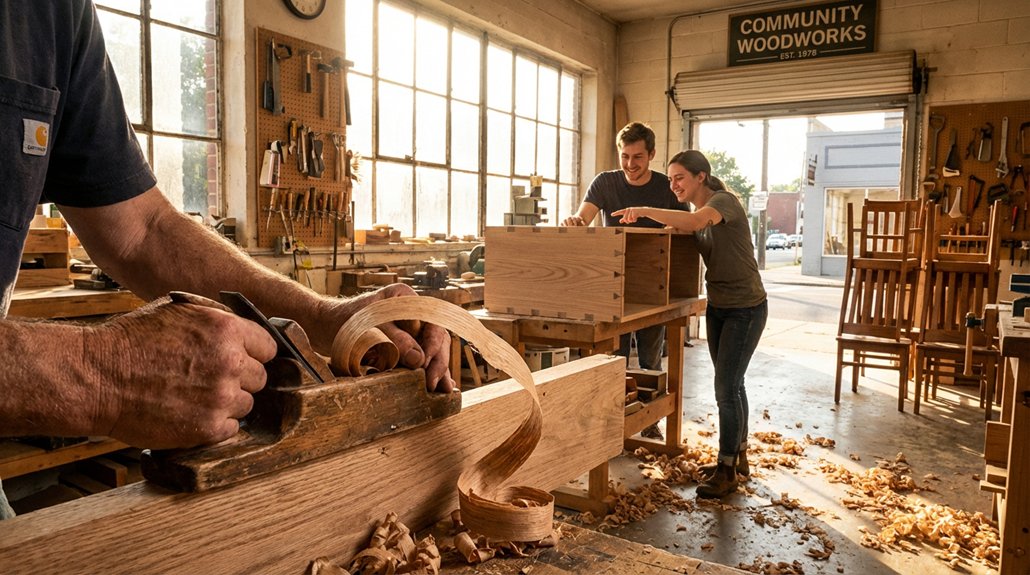
When you purchase handmade furniture from Jaipur’s artisan communities, you support fair wages and help preserve traditional craftsmanship. Artisans earn more by selling directly to consumers, without middlemen taking a cut. This increased income allows artisans to invest in skill-training programs, which improves craftsmanship and strengthens local economies. Each piece of furniture showcases the artisan’s skills and cultural heritage, making it unique. Ethical certifications, such as Fair Trade, ensure that artisans receive fair treatment and wages. Understanding this process clarifies the impact of your purchase on artisan communities.
Handmade Furniture Supports Artisan Communities
Buying handmade furniture directly benefits artisan communities. This support allows artisans to earn fair wages and maintain traditional skills. Fair wages enable artisans to invest in local economies and improve their livelihoods.
Fair Wages Empower Artisans
Artisans earn a higher percentage of sales when they sell directly to consumers. Without middlemen, artisans retain more profits. These profits can fund training programs, enhancing skill levels and preserving cultural heritage.
Unique Craftsmanship Reflects Cultural Heritage
Each piece of handmade furniture reflects the artisan’s craftsmanship and culture. Artisans incorporate traditional techniques and local materials, creating distinctive products. Customers receive not just furniture but a piece of history and identity.
Ethical Certifications Ensure Accountability
Ethical certifications like Fair Trade provide transparency in the supply chain. These certifications verify that artisans receive fair treatment and wages. Buyers can trust that their purchases contribute positively to artisan communities.
Understanding the Supply Chain
Understanding the supply chain helps buyers recognize the impact of their purchases. Consumers can see how their support influences artisan livelihoods and community development. This awareness encourages more responsible buying decisions.
How Jaipur’s Artisan Communities Built a Furniture Legacy?
Jaipur’s furniture-making tradition spans centuries. Artisan communities in Jaipur have transferred their skills from generation to generation. These communities focus on traditional craftsmanship, utilizing techniques refined over hundreds of years.
They source local materials, such as sheesham wood, and use natural dyes, promoting sustainable practices in furniture production. Their designs feature elements of Rajasthan’s cultural heritage, combining historical motifs with modern design to cater to contemporary needs.
Artisans in Jaipur adapt their methods to changing market demands, which fosters economic resilience. This adaptability allows communities to sustain their livelihoods even as consumer preferences shift.
Cooperatives empower artisans by ensuring fair wages and better work opportunities, enhancing their quality of life. Today, Jaipur’s furniture legacy reflects the balance between preserving tradition and embracing innovation, benefiting both craftspeople and buyers alike. Additionally, the use of sustainable practices in furniture production helps support not only the artisans but also the environment.
Why Direct Manufacturing Keeps More Money in Artisan Hands?
**
When artisans sell furniture directly to buyers, they retain a larger portion of the profits. Traditional retail chains involve multiple intermediaries who each take a share. Direct manufacturing eliminates these intermediaries, leading to significantly higher artisan profits. Buyers pay the maker directly rather than funding a chain of distributors.
Direct sales allow artisans to establish fair prices. Here’s how direct manufacturing benefits artisan communities:
- Artisans determine prices based on actual labor and material costs. This ensures that pricing reflects the true value of their work.
- Buyers enjoy better value since they avoid inflated retail markups. This creates a transparent pricing structure.
- Communities benefit as artisans reinvest profits into training programs for new craftspeople. This fosters skill development within the community.
- Artisan profits enable the purchase of better tools and improvements in working conditions. Enhanced tools lead to higher-quality products.
- When artisans sell through trade-only wholesale channels, they can reach a broader market while keeping more profits within their communities.
When you purchase directly from artisans, your money stays within the community. This model bolsters local economies and ensures artisans receive fair compensation for their skills and efforts.
What Subcontracting Actually Costs the Artisans?
When you work as a subcontractor in the furniture industry, you typically earn less money because middlemen take a portion of the sale price before you receive your payment. For example, if a piece sells for $1,000, you might only see $600 after the middleman takes their cut. This arrangement decreases your earnings and limits your financial stability.
In addition to reduced pay, subcontractors lose control over design decisions. Someone else dictates the aesthetics and functionality of your work. For instance, if a client wants a specific finish or design element, the middleman often makes that decision without consulting you. As a result, you may feel disconnected from your creations and receive no credit for the design.
These financial and creative challenges accumulate quickly. Subcontracting can lead to frustration, as you might spend hours on a project only to receive a fraction of what it’s worth. The lack of ownership over your designs can diminish your passion for the craft and impact your long-term career satisfaction. Furthermore, understanding the dropshipping process helps artisans explore alternative models that can enhance their creativity and financial outcomes.
Understanding these costs helps artisans make informed choices. Before accepting a subcontracting role, consider the pay structure and the level of creative control you’ll have.
Weigh the benefits against the limitations to determine if subcontracting aligns with your professional goals.
Hidden Financial Burdens
Subcontracting presents hidden financial costs that significantly impact artisans. When consumers purchase furniture from large retailers, artisans often receive inadequate compensation. These unacknowledged expenses diminish their income and jeopardize their financial stability.
Artisans manage several costs that retailers often overlook:
- Material costs increase without any corresponding pay adjustments. For instance, if wood prices rise by 20%, artisans absorb this cost without any price increase for their work.
- Tool maintenance and replacement expenses come directly from artisans’ earnings. If a craftsman spends $500 on new tools, this amount reduces their profit margin.
- Unpaid revision work occurs when retailers reject furniture for minor flaws. If a retailer sends back a piece, artisans lose both time and income on that item.
- Delayed payments disrupt artisans’ cash flow. If a retailer takes 60 days to pay an artisan, this delay can cause significant budgeting issues.
These financial strains hinder artisans from expanding their businesses or investing in high-quality materials. Understanding where your money goes allows you to make informed purchasing choices that truly benefit the artisans who create your furniture.
Lost Creative Ownership
Creative Ownership in Artisan Craftsmanship
Subcontracting negatively impacts artisan craftsmanship by stripping away creative ownership. When artisans are excluded from the design process, their identities become lost in the final product. This loss means that traditional techniques and cultural heritage fade when corporations impose their styles instead of allowing artisans to guide the creative direction.
Each piece of furniture represents not just a design but also generations of knowledge embedded in its construction.
Artisan empowerment relies on maintaining this creative autonomy. When artisans control their narratives and make crafting decisions, community resilience strengthens. The revival of craftsmanship becomes unattainable if subcontracting continues to silence original voices.
Ethical storytelling requires acknowledging the true creators of each piece and honestly honoring their contributions.
Choosing handmade furniture from independent artisans actively preserves creative ownership and supports authentic craftsmanship. This decision ensures that the skills and traditions of artisans are passed down to future generations, maintaining the integrity and quality of the craft.
How to Tell Verified Supply Chains From Ethical-Sounding Marketing?
When shopping for handmade furniture, watch for claims like “ethically sourced,” “artisan-made,” or “community-supported.” These phrases often lack substance and can lead to confusion.
Verify ethical claims by looking for recognized certification labels such as Fair Trade Certified or the Rainforest Alliance seal. These organizations conduct audits of supply chains and ensure companies meet specific ethical standards.
Without third-party verification, brands’ ethical claims remain unverified. Relying solely on marketing language can mislead consumers.
Focus on certifications that indicate a commitment to ethical practices. Look for companies that transparently share their certification status and supply chain details. Prioritize brands that openly disclose their sourcing processes and the communities they support.
Understand that not all ethical claims involve rigorous standards. Some brands may use appealing language without actual accountability.
Aim to support companies that prioritize transparency through verified certifications. This approach helps ensure that your purchases contribute positively to the communities and environments involved in manufacturing the furniture, particularly those involved in handcrafted furniture production.
Spotting Vague Ethical Claims
Identifying Genuine Ethical Brands
To identify a brand that’s genuinely ethical, focus on specific indicators rather than vague marketing claims. Ethical brands provide clear, verifiable information about their practices. Here are key factors to consider:
- Look for Certifications: Verify claims like “sustainably sourced” or “ethically made” by checking for recognized certifications. Brands without certifications mightn’t meet established ethical standards.
- Recognize Artisan Partnerships: Ethical brands often highlight specific artisan communities or partner organizations. If a brand doesn’t mention where their products come from or who makes them, question their authenticity.
- Examine Transparency: Assess the details brands provide about wages and working conditions. Legitimate ethical brands share information about their supply chain and the treatment of workers.
- Prioritize Facts Over Feelings: Evaluate website language. Brands should provide data and facts rather than just emotional storytelling. Look for documentation or reports that substantiate their claims.
- Demand Clarity on Compensation: Ask brands to clarify who made your furniture and how those individuals are compensated. If a brand struggles to provide this information, it likely prioritizes marketing over ethical practices.
Conclusion
You deserve straightforward answers regarding ethical claims. Genuine brands offer documentation, third-party audits, and direct links to their artisan partners.
When companies can’t clearly explain their practices, their ethical claims may serve their marketing goals more than the rights of workers.
Verified Certification Labels Matter
Certification Labels Provide Clear Proof of Ethical Standards
Certification labels deliver concrete evidence that a brand meets established ethical standards. When purchasing handmade furniture, prioritize recognized certifications that confirm authenticity and ethical craftsmanship throughout the entire supply chain.
| Certification | What It Verifies |
|---|---|
| Fair Trade Certified | Ensures fair wages and safe working conditions for artisans |
| FSC (Forest Stewardship Council) | Confirms that wood materials are responsibly sourced from sustainable forests |
| SA8000 | Verifies ethical labor practices and upholds worker rights |
| B Corp Certification | Assesses overall social and environmental accountability of the brand |
These labels are not mere decorations; they undergo independent audits and adhere to measurable criteria. You can verify each certification’s governing body by researching online, ensuring its legitimacy. Brands that display unverified logos or self-created badges require careful examination before making a purchase.
Understanding Certification Benefits
Certification labels serve as clear indicators of ethical practices. Fair Trade Certified labels guarantee fair wages and safe working conditions for the artisans who create handmade furniture. FSC labels ensure that wood materials come from sustainable sources, protecting forests and promoting responsible harvesting. SA8000 certification verifies that the brand follows ethical labor practices, safeguarding worker rights. B Corp Certification assesses a brand’s overall commitment to social and environmental accountability.
Researching Certification Legitimacy
To confirm the legitimacy of certification labels, research their governing bodies online. This step helps ensure that the brand you are considering adheres to the claimed ethical standards. Avoid brands that use unverified logos, as these may indicate a lack of genuine commitment to ethical practices. Prioritize brands that provide clear information about their certifications.
Why Forbes and Goldman Sachs Keep Citing Jaipur’s Supply Chain?
Jaipur’s furniture supply chain attracts attention from institutions like Forbes and Goldman Sachs because it effectively merges traditional craftsmanship with modern business practices. This model scales artisan skills into a competitive industry while promoting sustainability.
Jaipur’s supply chain merges traditional craftsmanship with modern practices, scaling artisan skills into a competitive, sustainable industry.
Transparent Sourcing: Jaipur connects buyers to skilled craftspeople, ensuring that each piece of furniture has a clear origin and supports local artisans.
Fair Wage Structures: This supply chain implements fair wage policies that distribute profits among community members, ensuring that artisans benefit directly from their work.
Eco-Friendly Materials: Jaipur uses sustainable materials that meet global environmental standards, reducing waste and promoting responsible sourcing.
Scalable Production: The production process allows for increased output without compromising the quality of handmade furniture. This balance maintains craftsmanship while meeting market demand.
These elements make Jaipur’s supply chain a robust model for both ethical practices and economic viability.
Analysts recognize that ethical supply chains can drive profitability alongside social responsibility, making them worthy of attention from major financial players.
Why Trade Buyers Can Sell This Story With Confidence?
Three key factors make Jaipur’s handmade furniture a straightforward choice for trade buyers. First, trade buyers can reference verified data from Forbes and Goldman Sachs, which adds credibility to their sales narratives.
Second, Jaipur’s artisans work within established fair-trade frameworks, providing clear proof that each product contributes to community welfare.
Third, consumer demand for ethically sourced products continues to rise, aligning with the offerings of Jaipur’s handmade furniture.
Trade buyers can confidently present specific facts about the artisans. Skilled craftspeople earn fair wages, traditional techniques are preserved, and local economies benefit from these practices. Additionally, the affordable yet durable handmade quality furniture from Artisan Furniture enhances the appeal of ethical offerings.
Buyers don’t need to oversell this narrative; the data speaks for itself. By showcasing supply chain transparency and sharing detailed artisan profiles, trade buyers can let verified social impact statistics do the convincing. Clients will respond positively to these honest, well-supported claims.
In summary, Jaipur’s handmade furniture stands out due to its verified credibility, fair-trade practices, and alignment with ethical consumer demand.
Trade buyers can leverage these elements to foster trust and drive sales.
What the ‘Handmade’ Label Really Means to End Buyers?
When trade buyers grasp what influences their clients’ purchasing decisions, they can close deals more effectively. Consumer awareness of handmade authenticity has surged, meaning today’s buyers invest in more than just furniture; they invest in significance.
Today’s buyers don’t just purchase furniture — they invest in meaning, craftsmanship, and significance.
Handmade Label Attributes
Skill and Craftsmanship: Handmade furniture showcases the trained expertise of artisans. Each piece reflects meticulous attention to detail, demonstrating the maker’s skill.
Unique Character: Handmade items possess distinct characteristics. No two pieces are identical, allowing buyers to appreciate their uniqueness and personal value.
Ethical Sourcing: Buyers prefer handmade furniture because it often supports artisan communities. They trust that their purchases contribute directly to the livelihoods of these makers.
Lasting Quality: Handmade furniture typically lasts longer than mass-produced alternatives. Buyers recognize that quality craftsmanship leads to durability.
Positioning Products Effectively
To position products effectively with retail clients, emphasize the handmade authenticity that aligns with buyer values. Highlight the craftsmanship, uniqueness, ethical sourcing, and quality. Additionally, consider the value of trade only supply in showcasing exclusive collections that elevate the artisanal experience.
This connection strengthens your sales pitch and builds long-term trust with clients.