
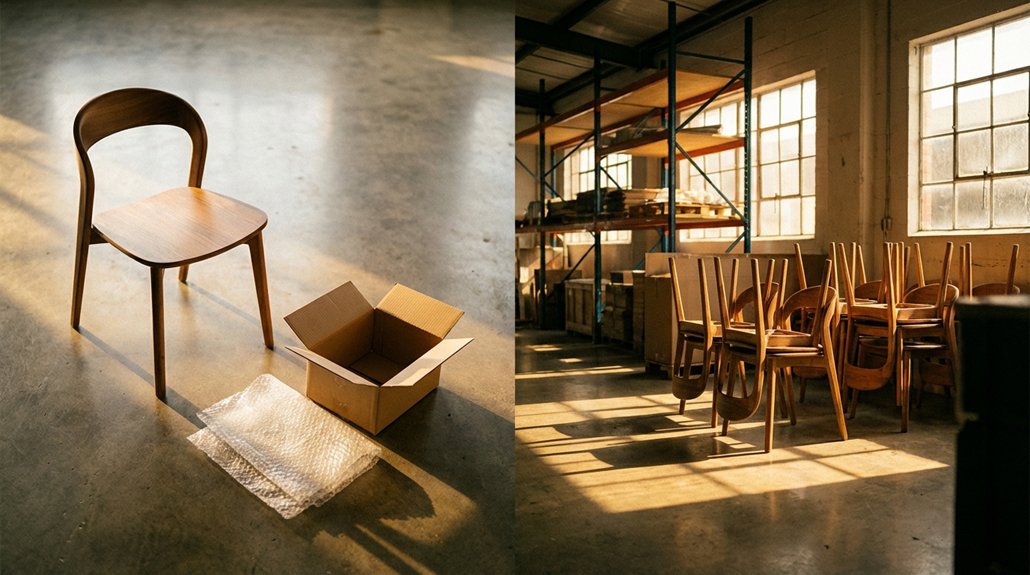
Choosing between furniture dropshipping and wholesale directly impacts your business’s budget and growth trajectory. Furniture dropshipping allows you to start with an investment as low as $500. You can bypass storage costs and eliminate the risk of holding unsold inventory. In contrast, the wholesale model requires an upfront investment of $5,000 or more. This model provides higher profit margins due to bulk pricing, which can significantly increase your revenue.
A hybrid approach that combines dropshipping and wholesale strategies offers flexibility in managing cash flow. For example, you can use dropshipping to test new furniture styles without the risk of unsold stock while purchasing popular items wholesale to maximize profit margins.
Consider your financial capacity and growth objectives when deciding. If you aim for low initial risk, opt for dropshipping. If you’re ready for a larger upfront investment in exchange for potentially higher returns, wholesale might be the better choice. Keep assessing which model aligns with your business goals.
Furniture Dropshipping vs. Wholesale: What Each Model Actually Means
Before deciding on a business model, clarify what furniture dropshipping and wholesale mean.
Before diving into furniture dropshipping or wholesale, you must first understand what each business model truly means.
Dropshipping Model
In dropshipping, you list furniture products on your website without holding any inventory. When a customer places an order, your supplier ships the product directly to the customer.
This model requires you to build strong relationships with reliable suppliers and ensure effective shipping logistics. For example, you might partner with a supplier who can ship within 48 hours of receiving an order, which helps maintain customer satisfaction. Additionally, many dropshipping suppliers offer white-label experience to enhance your brand identity.
Wholesale Model
In wholesale, you purchase furniture in bulk at discounted rates. You store the inventory and resell it at a markup.
This method requires significant upfront capital for bulk purchases. For instance, if you buy a set of chairs at $50 each and sell them for $80, your profit margin is $30 per chair. With wholesale, you gain control over inventory management and can respond directly to customer preferences and delivery schedules.
Market Adaptation
Dropshipping allows you to adapt quickly to market trends without financial risk. You can test new products without worrying about unsold inventory.
In contrast, wholesale provides higher profit margins per unit, but you carry the risk of unsold stock. For example, if you invest $5,000 in a wholesale order and only sell half of it, you face a loss.
Choosing the Right Model
Understanding these differences helps you decide whether dropshipping or wholesale fits your business goals.
If you want low risk and flexibility, dropshipping may be best. If you prefer higher margins and control, consider wholesale.
Capital, Storage, and Risk: How the Two Models Compare
When choosing between furniture dropshipping and wholesale, consider three factors: capital requirements, storage needs, and risk exposure. Dropshipping typically requires a startup cost of around $500 to $1,000. In contrast, wholesale demands significant upfront investment, often exceeding $5,000 due to bulk purchasing and inventory management.
Capital Requirements
Dropshipping minimizes capital needs. You pay suppliers only after customers place orders. This model allows for cash flow flexibility. Additionally, dropshipping offers real-time inventory updates, ensuring you only sell what’s available.
Wholesale ties up significant capital in inventory. You need funds to purchase large quantities upfront, which limits financial liquidity.
Storage Needs
Dropshipping eliminates storage requirements. You don’t handle inventory, reducing overhead costs.
Wholesale requires substantial storage space for inventory. You must manage and organize stock, which increases operational complexity.
Risk Exposure
Dropshipping carries minimal risk. You avoid unsold inventory since you only purchase items after a sale. However, your reliance on suppliers can affect delivery times and product quality.
Wholesale increases risk due to potential overstock and inventory loss. If products don’t sell, you face losses tied to unsold inventory.
In summary, dropshipping offers low startup costs and minimal risk but limits control over pricing and stock.
Wholesale provides greater control but demands higher capital investment and involves more risk.
Evaluate your resources and business goals to choose the best model for your furniture business.
When Dropshipping Wins for Furniture Retailers
Dropshipping allows furniture retailers to launch businesses without significant upfront costs. Retailers can offer a wide variety of products without the need for warehouse space or inventory management. This approach enhances the customer experience by enabling retailers to list numerous options and test market demand without financial commitment.
Furniture retailers focusing on online sales and niche markets benefit significantly from dropshipping. Retailers can quickly switch suppliers to adapt to changing trends, ensuring their catalogs remain up-to-date. Additionally, the customization options available for upholstered furniture can enhance product appeal and attract diverse customer preferences.
Dropshipping alleviates concerns related to storage costs and cash flow, as retailers don’t need to maintain large inventories. Retailers gain the most from dropshipping when they prioritize speed to market, aim to minimize overhead, and want to expand their product offerings without incurring financial risk.
Effective dropshipping strategies allow retailers to remain agile in a competitive market while maintaining a diverse product range.
Limitations of Dropshipping in Furniture Retail
While dropshipping offers clear advantages, it has limitations. Retailers may face challenges with shipping times, as reliance on suppliers can lead to longer delivery periods.
Additionally, product quality can vary, leading to potential issues with customer satisfaction. Retailers must carefully choose reliable suppliers to mitigate these risks.
Retailers should also be aware that dropshipping may limit control over branding and customer experience. Since suppliers handle fulfillment, retailers may miss opportunities to create a cohesive brand image during the packaging and shipping process.
Conclusion
Dropshipping presents furniture retailers with an efficient way to enter the market and expand their offerings. By understanding both its benefits and limitations, retailers can effectively leverage dropshipping to optimize their operations and enhance customer satisfaction.
When Wholesale Delivers Better Margins on Furniture Volume Lines
Wholesale purchasing enhances profit margins for furniture retailers who sell high volumes of specific product lines. When retailers consistently sell the same sofa model or bedroom set, bulk buying significantly reduces the per-unit cost. Retailers benefit from tiered pricing offered by suppliers; as order quantities increase, the cost per piece decreases. This strategy allows retailers to set competitive prices while maintaining healthy margins.
Retailers optimize margins by managing inventory, determining their pricing strategies, and avoiding the per-order fees associated with dropshipping. While the upfront investment for wholesale purchasing is higher, the long-term profitability shows significant improvement.
Wholesale purchasing is most effective when sales data indicates a steady demand for specific furniture pieces, ensuring that retailers can effectively manage their stock and meet customer needs. Additionally, partnering with trade only suppliers can provide exclusive access to unique and commercially appealing products that enhance retail offerings.
To illustrate, if a retailer orders 100 units of a popular sofa instead of 10, they might reduce the cost per unit from $500 to $400, saving $10,000 on the total order. This clear cost advantage supports the decision to purchase wholesale.
Retailers should analyze their sales trends and focus on products with consistent demand to maximize the benefits of wholesale purchasing.
How to Work With Furniture Suppliers Who Offer Both Dropshipping and Wholesale
Certainly! Here’s the revised content incorporating the changes:
—
Many furniture suppliers offer both dropshipping and wholesale options, which allows you to choose the best method for stocking and selling their products. Start by discussing your expected sales volume with each supplier. Good communication with suppliers helps you negotiate better terms as your business scales. The Recession Collection offers affordable yet durable handmade quality furniture, making it a great option for businesses targeting budget-conscious customers.
| Option | Inventory Management | Best For |
|---|---|---|
| Dropshipping | Supplier manages stock | New sellers or low-volume sellers |
| Wholesale | You manage inventory | High-volume, repeat items |
| Hybrid | Combination of both | Growing businesses |
Using a hybrid approach allows you to dropship new styles while purchasing bestsellers wholesale. Maintain regular communication with your supplier to stay updated on stock levels. Effective inventory management prevents overselling items that are out of stock, which protects your reputation with customers and keeps your operations running smoothly.
Understand the limitations of each option. Dropshipping may lead to longer shipping times, while wholesale requires upfront investment in inventory. Evaluate your business needs to determine the best approach. For instance, if you expect to sell 100 units of a popular sofa monthly, consider buying that item wholesale while dropshipping less popular items. This strategy will enhance your cash flow and reduce the risk of stockouts.