
When you choose Jaipur artisan furniture, you acquire pieces that follow a precise journey from Indian forests to your showroom floor. Craftsmen harvest sheesham, teak, and mango wood from sustainably managed forests. They use traditional hand tools and generational skills to shape each piece. Artisans hand-fit every joint and hand-finish every surface, ensuring quality through multiple checks. If you want to grasp how each stage impacts the furniture you offer, keep reading for a detailed breakdown.
Sourcing Wood
Artisans select sheesham, teak, and mango wood from sustainable sources. Each type of wood has unique properties that influence the final product. Sheesham provides durability, teak offers weather resistance, and mango wood adds character. This careful selection process shapes the quality and appeal of the finished furniture.
Crafting the Furniture
Artisans use traditional hand tools to sculpt wood into furniture pieces. Each artisan has years of experience, allowing them to create intricate designs. They employ techniques passed down through generations, ensuring that each piece reflects cultural craftsmanship. This process guarantees that the furniture stands out in quality and design.
Fitting Joints
Artisans hand-fit every joint in the furniture, which enhances stability and longevity. This meticulous approach prevents issues like wobbling or misalignment. The focus on joint fitting ensures that each piece can withstand daily use while maintaining its aesthetic appeal.
Finishing Surfaces
Artisans hand-finish every surface, applying natural oils and finishes to enhance the wood’s beauty. This finishing process not only highlights the grain but also protects the wood from wear and tear. A well-finished surface contributes significantly to the overall quality and durability of the furniture.
Quality Checks
Each piece undergoes multiple quality checks before reaching the showroom. Artisans inspect joints, finishes, and overall craftsmanship to ensure high standards. This rigorous process minimizes defects and ensures that each piece meets customer expectations.
By understanding these steps, you can appreciate the craftsmanship behind Jaipur artisan furniture. Each stage contributes to the quality and uniqueness of the final product.
How Indian Forests Supply the Raw Timber We Use
India’s forests supply the raw timber that Jaipur’s furniture makers need. Artisans rely on specific types of wood, including sheesham, teak, and mango, sourced from managed forests in Rajasthan and nearby states. These forests follow strict sustainable harvesting guidelines. Workers cut only mature trees, ensuring the forest remains healthy and productive over time.
Jaipur’s artisans depend on sustainably harvested sheesham, teak, and mango wood from Rajasthan’s carefully managed forests.
Government agencies oversee logging to ensure compliance with conservation efforts. They monitor logging activities and mandate replanting after each harvest cycle. This structured approach creates a supply chain that balances timber production with environmental responsibility.
Artisan Furniture’s commitment to sustainable principles enhances the value of their products while supporting conservation. Sustainably sourced Jaipur furniture is valuable not only for its quality craftsmanship but also for its role in supporting conservation. Understanding these practices is crucial for recognizing the worth of sustainably sourced timber.
The relationship between forest management and furniture production highlights the importance of responsible sourcing. Each step in the supply chain—harvesting, monitoring, replanting—contributes to the overall health of India’s forests and the quality of the furniture produced.
The Craftsmen Who Shape Every Joint by Hand
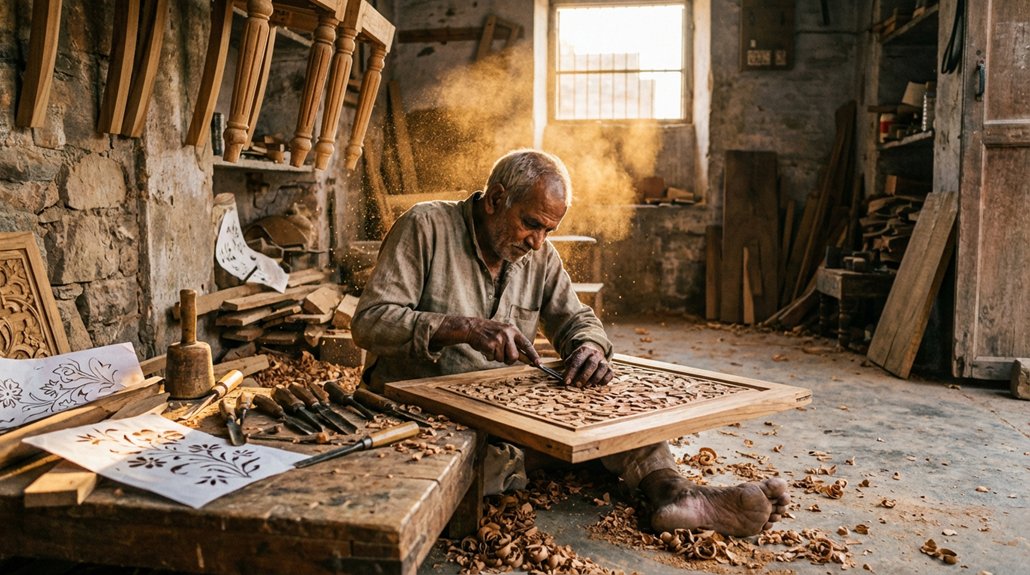
When you observe Jaipur’s furniture craftsmen at work, you’ll see their skills are rooted in family tradition rather than formal education. Craftsmen use traditional hand tools such as chisels, mallets, and hand saws. These tools, passed down from fathers and grandfathers, allow craftsmen to cut, fit, and finish each joint with precision that machines can’t match.
Craftsmen select specific chisels for detailed carving. They use mallets to strike chisels accurately, ensuring clean cuts. Hand saws provide control for straight and angled cuts, allowing craftsmen to shape wood precisely. Each joint requires careful fitting, which often takes several adjustments to achieve the desired fit.
The craftsmanship process spans multiple steps, from selecting quality wood to applying the final finish. Craftsmen choose hardwoods like teak or mango for durability. They sand surfaces thoroughly before applying finishes, ensuring a smooth texture. Each step demands attention to detail, as even minor errors can affect the joint’s strength. Regular dusting and maintenance is crucial to preserving the beauty and longevity of the finished pieces.
Craftsmen face limitations when working with certain hardwoods, as some are more difficult to shape. For example, teak can be tough to cut due to its density. Additionally, humidity levels can affect wood behavior, making it swell or shrink.
Hand Skills Passed Down
Skilled Craftsmanship in Jaipur Furniture
Every piece of Jaipur furniture reflects the expertise of a craftsman who’s honed their skills over many years. These artisans learn woodworking not in classrooms, but through hands-on experience alongside seasoned professionals, often within their families. This method preserves traditional techniques, as knowledge transfers from father to son or from master to apprentice.
Craftsmen develop the ability to analyze wood grain and assess joint fits without relying on measuring tools. Each of these hand skills requires years of practice to master. When you buy Jaipur furniture, you’re acquiring a product shaped by generations of refined skills and knowledge.
Importance of Traditional Techniques
Traditional techniques define the uniqueness of Jaipur furniture. Craftsmen use specific tools and methods passed down through family lines. They understand how to treat different types of wood based on their characteristics. This deep-rooted knowledge ensures quality and durability in every piece.
Real-World Applications of Skills
Artisans apply their skills daily to create furniture that meets customer needs. They select appropriate wood types for specific designs and ensure precision in every cut and joint. For example, a craftsman might spend hours perfecting a single cabinet, ensuring that every aspect aligns with traditional standards.
Limitations of Modern Methods
Modern mass production methods often overlook the nuances of handcrafted furniture. These methods can lead to inconsistencies in quality and design. While factory-produced items may be cheaper, they lack the personalized touch that comes from skilled craftsmanship.
Conclusion: Value of Handcrafted Furniture
Tools of the Trade
Jaipur furniture relies on hand skills developed over generations, and these skills depend on specific tools. In a Jaipur workshop, artisans use hand saws, chisels, mallets, and marking gauges daily. Each tool has a defined purpose in woodworking techniques.
Artisans use chisels to create precise joints. Mallets help drive wood pieces together without causing cracks. Marking gauges assist craftsmen in measuring cuts accurately before making any saw cuts.
Most tasks don’t involve electric machinery, so every cut requires focus and steady hands. These tools are more than just equipment; they’re integral to the craft.
Each tool reflects the artisan’s knowledge and skill, linking traditional methods directly to the finished pieces. This connection is evident in the quality of furniture found in showrooms today.
Inside the Workshop: From Rough Cut to Finished Piece
In a Jaipur furniture workshop, the environment is filled with sawdust and the smell of fresh-cut wood. Workers select wood by inspecting its knots, grain patterns, and structural integrity. They reject timber that fails to meet quality standards.
Once the wood is approved, craftsmen cut it into rough shapes using hand saws and chisels. These workers refine each component by planing and sanding, gradually achieving a smooth surface.
They fit joints precisely to ensure the furniture assembles without relying on excessive glue or fasteners.
In the final stages, craftsmen apply finishing techniques such as staining, lacquering, or hand-painting traditional Rajasthani motifs. Workers apply multiple coats of finish, sanding between each layer for a smooth result. This meticulous process transforms rough timber into polished, market-ready furniture that showcases Jaipur’s craftsmanship and aligns with the extensive product range available for diverse styles.
Wood Selection Process
Workers inspect wood for quality before use. They focus on identifying knots, grain patterns, and overall structural integrity.
Any timber that doesn’t meet these criteria is discarded to maintain high standards.
Cutting and Shaping Wood
Craftsmen cut approved wood using hand saws and chisels. They create rough shapes that serve as the foundation for the furniture.
After cutting, these craftsmen refine the shapes through planing and sanding, ensuring a smooth finish.
Fitting Joints
Craftsmen fit joints with precision to enhance structural integrity.
They ensure that each joint holds without excessive glue or fasteners. This technique promotes durability and ease of assembly.
Applying Finishes
Workers apply various finishing techniques to enhance the furniture’s appearance.
They use stains, lacquers, and hand-painted motifs to create unique designs. Each finish involves multiple coats, with sanding between layers to achieve a polished look.
Outcome of the Process
The entire process transforms rough timber into finished pieces of furniture.
Each step requires attention to detail, ensuring that the final product reflects the quality of Jaipur’s craftsmanship.
Why Trade Buyers Source Direct From Indian Artisan Manufacturers
Trade buyers source furniture directly from Indian artisan manufacturers to eliminate middlemen and lower costs. This direct relationship allows buyers to manage quality, set prices, and establish production timelines effectively.
By engaging with workshops in Jaipur, buyers support skilled artisans and help preserve traditional craftsmanship.
Sustainable sourcing drives many buyers to work directly with artisans. Buyers verify the origins of materials and confirm ethical labor practices. This alignment with responsible sourcing values responds to growing consumer demand for transparency and sustainability.
Direct sourcing enables access to custom designs and smaller production runs. Buyers collaborate with artisans to adjust specifications and create unique pieces that meet market needs. This approach allows for faster delivery compared to traditional wholesale distributors.
Key Benefits of Direct Sourcing
- Cost Reduction: Eliminating middlemen reduces expenses. Buyers pay artisans directly, which lowers the overall cost of goods.
- Quality Control: Buyers gain direct oversight of production. This oversight ensures that the final product meets their standards and specifications.
- Sustainable Practices: Buyers can trace materials back to their sources. This practice supports ethical labor and environmentally friendly methods.
- Customization: Buyers work directly with artisans to create tailored products. This flexibility leads to unique offerings that stand out in the market.
Limitations of Direct Sourcing
- Scalability: Artisan workshops may have limited production capacity. Buyers should assess whether the workshop can meet their volume needs.
- Lead Times: Direct sourcing may involve longer lead times compared to mass-produced furniture. Buyers must plan for potential delays in production.
- Complex Logistics: Coordinating shipments directly from India can present logistical challenges. Buyers should prepare for potential customs and importation issues.
Conclusion
Trade buyers benefit by sourcing directly from Indian artisan manufacturers. This approach reduces costs, enhances quality control, and promotes sustainable practices. Additionally, the fulfillment program offered by suppliers ensures efficient logistics and customer satisfaction.
However, buyers must navigate challenges related to scalability and logistics. By understanding these dynamics, buyers can make informed decisions that support both their business and the artisans they work with.
How Custom Orders Are Built Into Every Production Run
When you place a custom order with a Jaipur furniture workshop, you seamlessly integrate into their existing production system. Artisans organize production runs into flexible batches, allowing them to modify dimensions, finishes, or inlay patterns without disrupting overall workflow. This process enables you to receive a made-to-order piece while the workshop upholds its craft standards and maintains output efficiency.
Artisans adjust production runs to accommodate custom orders. They analyze your specifications and implement changes directly into their current batch. This approach minimizes downtime and ensures that your unique piece is crafted alongside standard orders.
The workshop limits disruptions by using batch processing. Each production run consists of multiple orders, so artisans can switch between different customizations efficiently. This method supports consistent quality control, ensuring that each piece meets high craftsmanship standards.
For example, if you request a coffee table with specific dimensions and a unique inlay pattern, artisans can modify a current batch to include your specifications. They can complete this adjustment within a few hours, keeping production timelines on track.
However, there are constraints to this system. If a requested customization requires materials that are currently out of stock, the workshop may need to delay production until those materials arrive. Additionally, highly complex designs might require more time than simpler modifications, which could extend the delivery timeline. Wholesale upholstered furniture is also crafted with attention to detail, ensuring that each piece reflects the highest standards of craftsmanship.
Custom Orders Within Production
Custom Orders Integrated into Production
Jaipur’s artisan workshops efficiently handle custom orders by integrating them into regular production runs. When you submit a custom design request, the workshop assigns it to an active production batch. This method maintains high order fulfillment rates without disrupting ongoing work.
Workers allocate specific materials and time slots for custom pieces during their regular shifts. Supervisors monitor each custom request alongside standard items to ensure accurate processing. If you specify a unique finish or adjusted dimensions, craftsmen make those modifications within the scheduled production window. This approach enables workshops to fulfill personalized demands while preserving the efficiency and speed of overall operations.
Handling Custom Orders within Active Production
Artisans integrate custom orders into active production batches. This integration allows for real-time adjustments without creating separate workflows. By assigning custom orders to existing batches, the workshop maximizes resource utilization and minimizes delays.
Tracking and Managing Custom Requests
Supervisors track custom requests alongside standard production items. This tracking ensures that no order is overlooked. Each custom piece is monitored for material selection and production timing, allowing for efficient management of both standard and custom orders.
Making Adjustments During Production
Craftsmen adjust specifications like finishes and dimensions during regular production hours. This direct handling of custom requests within existing workflows reduces wait times and enhances customer satisfaction. The integrated approach allows for personalized orders without sacrificing production speed.
Limitations of the Integrated Approach
While this system is efficient, it may not accommodate highly complex custom requests that require extensive redesign. Workshops may face constraints in production capacity during peak periods, impacting the speed of fulfilling custom orders. Understanding these limitations helps manage customer expectations effectively.
Flexibility Meets Craft Standards
Flexibility in Custom Production
Jaipur’s workshops manage custom production by integrating flexibility into each production run. Artisans implement design innovations and sustainable practices while maintaining high output. Each production run includes options that allow quick adaptation to custom requests, such as:
- Modular component systems that allow for different finishes and dimensions.
- Pre-selected sustainable wood stocks that can be customized for size.
- Standardized joinery methods that support various design innovations.
- Flexible upholstery options included in standard production templates.
- Pre-approved carving patterns that can be tailored to individual specifications.
This method ensures that you don’t have to choose between quality and customization. Workshops uphold craft standards while responding to your specific needs, demonstrating that flexibility and tradition can work together effectively.
Modular Systems Enable Customization
Workshops use modular component systems to facilitate customization. These systems allow artisans to easily swap finishes or dimensions based on customer preferences.
For instance, a client can choose between multiple wood finishes without affecting the overall production timeline.
Sustainable Materials Support Custom Sizing
Workshops select sustainable wood stocks to ensure environmental responsibility. By keeping pre-selected materials on hand, artisans can quickly adjust the size to meet client specifications.
This practice minimizes waste and supports sustainable sourcing.
Standardized Joinery Methods Enhance Innovation
Artisans apply standardized joinery methods to accommodate design changes. This consistency allows for quick integration of new design features without compromising structural integrity.
For example, a new design element can be incorporated without delaying production.
Upholstery Options Streamline Customization
Flexible upholstery options are part of the standard production process. Artisans can offer a variety of fabric choices that align with customer preferences, ensuring timely delivery without sacrificing quality.
Adaptable Carving Patterns Provide Design Flexibility
Workshops utilize pre-approved carving patterns that can be adjusted to meet specific requests. This practice maintains craftsmanship while allowing for unique design adaptations.
Clients can request modifications, and artisans can implement these changes efficiently.
In summary, Jaipur’s workshops prioritize flexibility in custom production. By integrating modular systems, sustainable materials, standardized methods, flexible upholstery, and adaptable patterns, artisans meet customer needs without compromising on quality.
This approach underscores the balance between tradition and innovation in craftsmanship.
Why Handcrafted Construction Outlasts Machine-Made Furniture
Handcrafted furniture typically outlasts machine-made furniture due to the direct attention artisans give at every stage of production. Artisans create hand-fitted joints and select solid wood types that enhance the durability of each piece. Machine-made furniture often lacks these features, leading to shorter lifespans.
Artisans choose specific wood varieties that resist warping and cracking. This careful selection contributes to the long-term stability of the furniture. Each component reflects the artisan’s skill, ensuring that curves and edges are shaped with precision, which adds to the overall strength of the piece.
Workshops in Jaipur prioritize sustainable practices. These workshops source timber from responsibly managed forests, reducing their environmental impact. This focus on sustainability aligns with the growing consumer demand for eco-friendly products. Furthermore, Artisan Furniture offers free delivery to all 50 states, making it easier for consumers to access these unique pieces.
Buyers often develop emotional connections to handcrafted furniture. When customers know the maker and understand the craftsmanship involved, they view the furniture as an investment rather than a disposable item. This connection encourages owners to repair and maintain their pieces, allowing them to pass down furniture through generations.
From Final Inspection to Your Showroom Floor
Before furniture leaves a Jaipur workshop, quality checks take up to three days. Craftsmen inspect each piece to confirm it meets strict quality standards before shipping.
Evaluate Joint Strength and Stability
Craftsmen assess joint strength and structural stability. They ensure that connections withstand regular use without failure.
Inspect Surface Finish and Consistency
Inspectors examine surface finishes, stains, and paint for consistency. They check for any imperfections that could affect appearance and durability.
Test Hardware Functionality
Workers align hardware and test drawer movements. Smooth operation is crucial for user satisfaction and long-term functionality.
Verify Carving Details
Inspectors verify carving details for accuracy and symmetry. Precise craftsmanship enhances the overall aesthetic and value of each piece.
Ensure Packaging Integrity
After passing quality checks, workers wrap and crate furniture for delivery. Proper packaging protects each piece during transport to your showroom.
Retailers Prepare Showroom Presentation
Retailers unpack and inspect each piece upon arrival. They arrange furniture to showcase its best features before customers make purchasing decisions. This meticulous process reflects the commitment to affordable yet durable handmade quality furniture, ensuring that every piece of furniture reaches your showroom in top condition, ready for sale.