
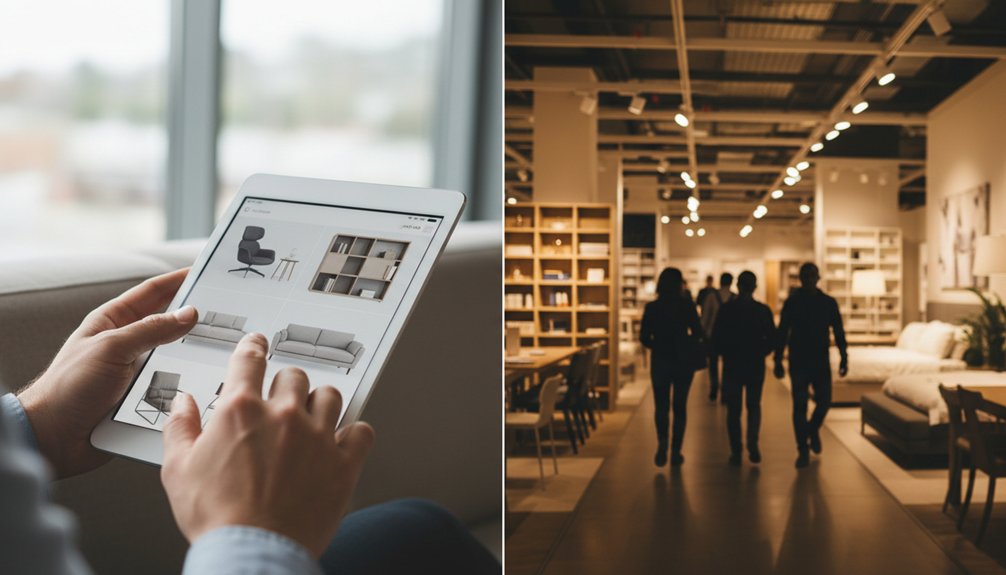
Online furniture retail and brick-and-mortar furniture retail both have their strengths, but the most effective approach combines both methods. Online platforms provide a wide selection of products, competitive pricing, and the convenience of shopping from home. In contrast, physical showrooms allow customers to feel fabrics and evaluate comfort.
Retailers are increasingly adopting omnichannel strategies that integrate digital tools, such as augmented reality (AR) visualization, with traditional in-store experiences. This combination allows customers to visualize how furniture will look in their homes while still experiencing the products in person. By blending these methods, retailers can effectively address the limitations of each model.
This hybrid approach enhances the customer experience and highlights the future of furniture shopping. Retailers who leverage both online and in-store strategies can attract a broader audience and meet various consumer needs.
The Rise of Digital Furniture Shopping: Market Trends and Consumer Behavior
Traditional furniture stores have long held a significant share of the market. However, digital furniture shopping has seen impressive growth recently. E-commerce trends have changed how consumers shop for furniture, allowing them to browse and buy from home easily.
Since 2020, online furniture sales have surged, with digital adoption rates rising by over 40%. Consumers now prefer convenience and a wider selection, which pushes retailers to improve their online user experience. Retailers implement virtual showrooms and augmented reality tools, enabling consumers to visualize furniture in their own spaces before making a purchase.
This shift demonstrates a broader change in consumer behavior regarding substantial purchases. Today, shoppers prioritize thorough research and comparison over immediate decisions in brick-and-mortar stores.
The clear trend is that digital furniture shopping isn’t just a temporary change; it represents a fundamental shift in how people approach furniture buying. Retailers who adapt to this trend will succeed in meeting the evolving preferences of consumers. Additionally, the rise of affordable handmade quality furniture reflects a growing demand for sustainable options in the market.
Traditional Showroom Advantages: The Power of Physical Experience
Traditional furniture showrooms provide advantages that online shopping cannot match. When customers visit a physical store, they can touch fabric textures, test the comfort of furniture, and evaluate the build quality directly. This hands-on experience builds the confidence needed for making a purchase.
Physical showrooms create a sensory experience. Customers feel the softness of leather, hear the creak of a recliner, and see how colors look in various lighting conditions. These aspects significantly influence purchasing decisions.
| Physical Advantage | Online Limitation |
|---|---|
| Customers touch fabric texture | Online shoppers view photos only |
| Customers test comfort levels | Online shoppers read reviews only |
| Customers see true colors | Online shoppers deal with screen color variance |
| Customers assess actual size | Online shoppers rely on measurements |
Additionally, sales staff in showrooms provide immediate expert assistance. They answer questions and offer personalized recommendations based on the customer’s specific needs and available space. This interaction helps customers make informed decisions about their furniture purchases. Moreover, many showrooms offer a diverse selection of wholesale furniture that can cater to various styles and budgets, enhancing the overall shopping experience.
Online Retail Benefits: Convenience, Selection, and Competitive Pricing
Online furniture retailers provide extensive product catalogs that feature thousands of items from various brands and manufacturers.
These retailers leverage digital platforms to showcase their inventories without the physical space limitations found in traditional showrooms. As a result, customers access a broader selection of furniture options in one place.
Online retailers also maintain lower overhead costs because they don’t operate expensive physical stores or employ large sales teams. This reduction in overhead allows online retailers to offer competitive pricing, which benefits customers looking for affordable furniture solutions. Additionally, many online retailers, like Artisan Furniture, provide free delivery options to all 50 states, enhancing customer convenience.
Vast Product Catalogs
Online furniture retail features extensive product catalogs that provide advantages over traditional showrooms. Customers can access a wide variety of furniture that physical stores can’t offer due to space constraints.
Online platforms allow shoppers to explore thousands of items from numerous manufacturers conveniently from their homes. Digital retailers display their full inventory through comprehensive catalogs.
Customers can find:
- Furniture from hundreds of brands and designers.
- Complete product lines, including seasonal and specialty collections.
- Detailed specifications, dimensions, and material information for every item.
- Multiple color options and finish variations for customizable pieces.
- Cross-referenced similar products and style recommendations.
This extensive selection allows customers to compare styles, prices, and features across a wide range of options. Shoppers can make informed purchasing decisions more effectively than in traditional retail environments.
The online furniture catalog empowers customers to find exactly what they need, enhancing their shopping experience.
Lower Overhead Costs
Brick-and-mortar furniture stores incur high overhead costs. These costs come from paying rent for showroom spaces and employing large sales teams.
In contrast, online furniture retailers minimize these expenses. They don’t need physical showrooms or large staff, which allows them to lower their prices for consumers.
Online furniture retailers operate from warehouses located in less expensive areas. This strategic choice reduces their operational costs. They use automated systems to process orders efficiently.
These lower operational costs enable online retailers to offer better deals and promotions to customers.
Additionally, online retailers don’t maintain large floor inventories. This approach decreases their storage and display costs.
As a result, these savings are passed on to you, the consumer, making online furniture shopping a more cost-effective option.
Key Challenges Facing Brick-and-Mortar Furniture Stores
Traditional furniture retailers face significant challenges that threaten their survival in the current market. Physical stores must deal with issues that online competitors don’t face.
First, high operational expenses reduce profit margins. Rent, utilities, and staffing costs take a large chunk out of revenue.
Second, managing inventory is complex. Storing bulky furniture needs a considerable amount of warehouse space and requires precise planning.
Third, limited customer engagement hampers sales. Competing with the convenience of online shopping while trying to attract foot traffic is difficult.
Fourth, showroom space constraints restrict the ability to display a full range of products.
Finally, price competition from online retailers adds pressure. Online sellers can often offer lower prices because they’ve fewer overhead costs.
Additionally, traditional stores may struggle to match the seamless integration options for e-commerce platforms that online sellers provide, making it harder to compete effectively.
These challenges create a tough environment for traditional furniture retailers. To thrive, stores must develop effective strategies to address high costs, improve inventory management, engage customers, maximize showroom space, and compete on price.
Addressing these issues is essential to remain relevant in the evolving furniture market.
Digital Platform Limitations: Overcoming the Touch-and-Feel Barrier
Online furniture shopping limits customers’ ability to physically touch items, which is a significant challenge for those wanting to assess fabric textures and cushion firmness.
Virtual reality shopping solutions enable customers to navigate digital showrooms and view furniture from multiple angles, simulating the experience of being in a physical store.
Augmented reality tools allow customers to position realistic 3D furniture models in their homes using smartphone cameras, enabling them to visualize how pieces will integrate with their existing decor and space.
These technologies help bridge the gap created by the inability to physically touch furniture, making online shopping a more effective and fulfilling experience. Additionally, understanding the unique characteristics of handcrafted furniture can help customers appreciate the quality and craftsmanship behind each piece, even without a physical inspection.
Virtual Reality Shopping Solutions
Virtual reality (VR) technology provides a practical solution for consumers struggling to buy furniture online. VR allows users to visit virtual furniture showrooms from their homes. This immersive experience mimics the layout and feel of physical stores.
Modern VR shopping platforms include several essential features:
- 3D room visualization allows users to see how specific furniture pieces fit within their actual living spaces.
- Material texture simulation uses advanced haptic feedback so users can feel textures, such as fabric and wood grain, enhancing their understanding of product quality.
- Scale accuracy ensures that furniture dimensions are precise, preventing sizing issues before purchase.
- Color matching provides true-to-life lighting, allowing users to view accurate colors and finishes of furniture items.
- Interactive product demos enable users to test features like opening drawers and adjusting reclining mechanisms, giving them a better sense of functionality.
These VR solutions empower consumers to make informed furniture decisions without needing to visit physical stores.
Augmented Reality Product Visualization
Augmented reality (AR) technology brings furniture into your home environment, allowing you to visualize pieces in your actual space. You can use a smartphone or tablet to see how a sofa fits in your living room or if a dining table complements your existing décor.
AR apps enable you to walk around virtual furniture, inspecting it from various angles without needing to visit a store. This AR technology combines the convenience of online shopping with the tactile experience of in-person product interaction.
You receive accurate size representations and color matching based on your lighting conditions. Many retailers now incorporate AR features to help you make informed purchasing decisions. This technology reduces uncertainty regarding fit and style, leading to lower return rates.
Using AR for furniture shopping enhances your ability to visualize how a piece integrates into your home, ultimately making the selection process more straightforward and reliable.
Omnichannel Strategies: Blending Physical and Digital Experiences
Modern furniture retailers recognize the importance of integrating online and physical shopping experiences. Retailers combine these channels to enhance value for customers. Successful furniture businesses implement omnichannel strategies to engage customers throughout their shopping journey. For instance, customers can research products online and then visit stores to interact with the items before making a purchase.
Effective omnichannel strategies include:
- Click-and-collect services that enable customers to buy online and pick up products in-store. This process saves time and provides convenience.
- Virtual showroom tours offered through mobile apps, allowing customers to explore products from home. This feature helps customers visualize items in their spaces.
- In-store tablets that provide access to extended online inventory. Customers can browse additional options while shopping in-store, enhancing their selection.
- Cross-channel customer service that tracks the entire shopping journey. This service ensures that customer inquiries and support are consistent, regardless of the channel used.
- Mobile apps that allow customers to scan barcodes for instant product information. This feature helps customers make informed decisions quickly.
These strategies improve customer engagement by delivering consistent experiences across all touchpoints. As a result, retailers see increased sales and customer satisfaction.
Future Outlook: Which Model Will Dominate the Furniture Industry
Which retail model will dominate furniture sales in the next decade? I believe hybrid models will take the lead. Hybrid models combine online and brick-and-mortar sales to meet consumer needs effectively.
Technology advancements will enhance the shopping experience. For instance, virtual reality showrooms will allow customers to visualize furniture in their homes. Augmented reality apps will let shoppers see how different pieces fit in their spaces before making a purchase.
Consumer habits are evolving. Many customers prefer the convenience of online shopping but still want to interact with products physically. Retailers must balance these preferences.
Economic pressures will push companies towards cost-effective omnichannel strategies. These strategies will help reduce overhead while ensuring customer satisfaction.
Sustainability practices will also shape the industry. Companies that optimize delivery routes and minimize returns will have a competitive edge. In this context, businesses that prioritize ethical manufacturing practices will resonate with environmentally conscious consumers.
Better integration of online and offline experiences will lead to improved customer engagement. Overall, the future furniture retail landscape will rely on digital tools to enhance physical shopping, ensuring that the two channels support each other rather than compete.