
Understanding Bespoke Furniture Orders for Interior Design Projects
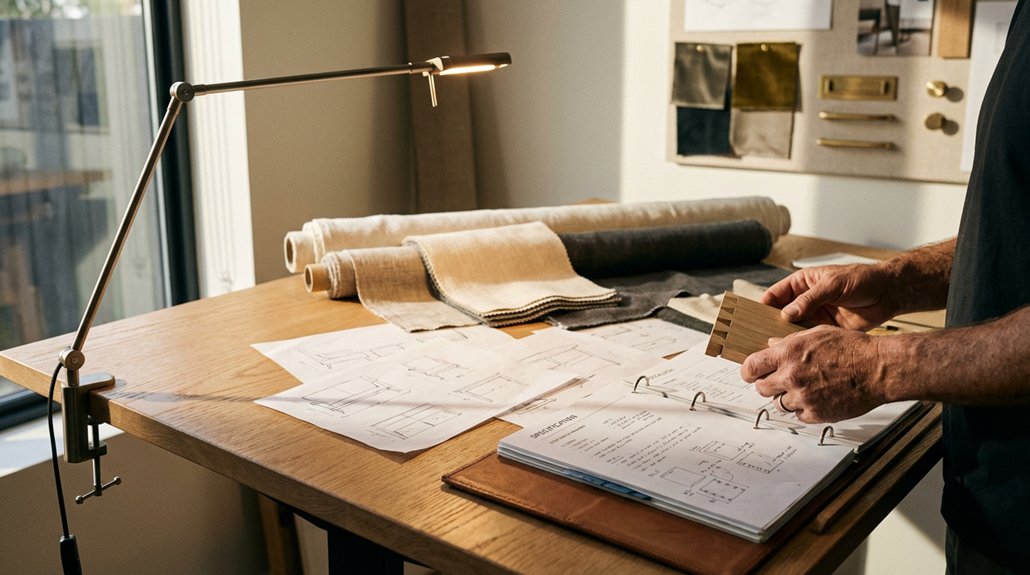
Before specifying bespoke furniture for an interior project, clarify lead times, minimum order quantities, and material options. Factory-direct ordering reduces costs and enhances communication with makers. Document precise dimensions, finishes, and intended uses before placing an order. Request physical material samples and evaluate them under the project’s actual lighting conditions.
Lead Times and Planning
Lead times for bespoke furniture typically range from 8 to 16 weeks. Therefore, plan your project schedule to accommodate these timelines. Factor in potential delays due to material sourcing or production issues.
Minimum Order Quantities
Verify minimum order quantities with your furniture maker. Some manufacturers require a minimum purchase for custom orders, which can impact your project budget. Always confirm these details upfront to avoid unexpected costs.
Material Variables and Samples
Material choices directly affect both aesthetics and functionality. Request physical samples to ensure the selected materials meet your project’s requirements. Test these samples under the lighting conditions present in the intended space to ensure color accuracy and texture suitability.
Documentation and Approval
Maintain thorough documentation of all specifications, including exact dimensions and finishes. Obtain client approval on these details before finalizing the order. This step prevents miscommunication and ensures that the final product aligns with the project vision.
Conclusion
Bespoke furniture orders require careful planning and clear communication. By understanding lead times, minimum order quantities, and material specifics, you can streamline the process and achieve successful outcomes for your interior design projects.
Why Factory-Direct Is the Only Model That Makes Bespoke Furniture Viable
Factory-direct ordering eliminates middlemen, significantly reducing costs for bespoke furniture. When you bypass traditional retail chains, you avoid multiple markups that inflate prices.
This direct approach allows you to communicate with craftspeople who manage every production stage, ensuring high quality from materials to finishing touches.
Direct Communication Enhances Design Flexibility
Direct relationships with manufacturers facilitate real-time adjustments. You can change dimensions, materials, and finishes without navigating through layers of sales staff.
Direct manufacturer relationships mean real-time design adjustments—no middlemen, no delays, just immediate creative control.
This immediate feedback loop allows for quick modifications during production, ensuring your design vision is realized without delays.
Cost Efficiency Improves Project Viability
Factory-direct ordering provides clearer pricing structures. You gain a straightforward understanding of costs, helping you budget effectively for projects. Additionally, wholesale furniture options can provide significant savings, making it more feasible to incorporate bespoke pieces into your designs.
This transparency not only enhances financial planning but also empowers you to make informed decisions when specifying custom pieces.
Accountability Streamlines Production
Working directly with craftspeople ensures higher accountability. When issues arise, you can address them immediately, reducing the risk of costly mistakes.
This level of oversight contributes to smoother production timelines and ultimately leads to higher client satisfaction.
Conclusion: Factory-Direct Is Key for Custom Furniture
For interior designers, factory-direct ordering isn’t just a viable option—it is the only model that supports bespoke furniture’s financial and creative demands.
How to Specify Bespoke Furniture Without Costly Mistakes
Specifying bespoke furniture correctly protects your budget and timeline. Document every design consideration before submitting an order. Include exact dimensions, finish requirements, and intended use for each piece. Specify wood species, fabric grades, hardware finishes, and structural requirements in writing to eliminate ambiguity.
Vague briefs lead to costly revisions and production delays. Use dimensioned drawings for clarity. Confirm that your manufacturer understands load-bearing needs and environmental conditions, such as humidity or heavy traffic.
Request material samples before approval to ensure quality and suitability. Build a detailed specification sheet for every piece you order, outlining all attributes clearly. Clear communication at the start prevents misunderstandings later.
The more precise your documentation, the smoother your project runs from production through final delivery. For example, if a table needs to withstand heavy use, state the required thickness of the tabletop and the type of finish that can endure wear.
Incorporating options for customizable dimensions and finishes ensures that your bespoke pieces align perfectly with the overall design vision. Avoiding vague terms ensures everyone involved understands expectations, reducing the risk of errors and additional costs.
Request Samples Before Finalising Your Bespoke Furniture Specification
Requesting samples before you finalize your bespoke furniture specification prevents costly mistakes.
Samples provide a clear reference for color, texture, and finish, allowing you to verify that your selected materials work harmoniously in your project space.
Samples give you a tangible reference for color, texture, and finish, confirming your materials work together in the space.
Follow These Steps:
1. Request Samples: Contact your manufacturer to obtain physical samples of fabrics, timbers, and finishes.
2. Test Under Actual Lighting****: Evaluate the samples in the same lighting conditions present in your project area.
This helps you see how colors and textures appear in the intended environment.
3. Compare with Existing Materials****: Assess samples against your current finishes, flooring, and furnishings to ensure compatibility.
4. Document and Attach: Keep a record of your approved samples and attach them to your specification sheet for reference.
This sampling process minimizes miscommunication and strengthens your relationship with clients. It ensures that the final furniture piece aligns with your design intent before production starts, while also considering the extensive product range available to suit diverse styles and preferences.
What MOQs Apply When Ordering Custom Furniture Lines
When planning a custom furniture line for an interior design project, know the minimum order quantities (MOQs). MOQs differ by manufacturer and the degree of customization. Some manufacturers set low MOQs for standard custom pieces, while others require higher orders for fully bespoke designs.
| Furniture Type | Typical MOQ |
|---|---|
| Standard custom chairs | 10–20 units |
| Upholstered sofas | 5–10 units |
| Bespoke dining tables | 2–5 units |
| Custom storage units | 6–12 units |
| Fully bespoke bedroom sets | 1–3 units |
Always verify MOQs with suppliers before placing an order. If your project needs fewer units, ask the manufacturer about flexible terms or low-volume premiums. Additionally, consider that handcrafted furniture often entails unique characteristics that can affect MOQs.
Confirm MOQs with Suppliers
Confirming MOQs with suppliers ensures you understand their requirements. Each supplier has different MOQ policies based on the furniture type and design complexity. Knowing these specifics helps you plan your budget and project timelines effectively.
Understand Customization Levels
Customization levels influence MOQs. Standard custom furniture typically has lower MOQs because manufacturers produce these items more efficiently. For fully bespoke designs, manufacturers often set higher MOQs to justify the additional labor and materials involved.
Ask About Flexibility and Premiums
If your project requires fewer units than the MOQ, inquire about flexibility. Some manufacturers may accommodate small orders but might apply a low-volume premium to cover costs. Understanding these terms helps you make informed decisions about your orders.
Plan for Production Times
Consider production times that vary by manufacturer and furniture type. Standard custom pieces usually have faster turnaround times compared to bespoke items. Knowing these timelines helps you align your project schedule with delivery dates.
Identify Constraints and Limitations
Recognize that certain constraints exist within MOQ policies. Manufacturers may not offer customization options for orders below the MOQ threshold. Understanding these limitations helps you avoid unexpected delays or additional costs.
Realistic Lead Times for Bespoke Furniture From India
Material Sourcing: Expect 2 to 4 weeks for acquiring wood, fabric, or hardware. Availability of specific materials can affect this timeline.
Production: Skilled craftsmen typically require 6 to 10 weeks to complete handcrafted furniture. The complexity of the design directly influences this timeframe.
Quality Inspection and Finishing: Allocate 1 to 2 weeks for thorough quality checks and finishing processes before shipment approval. This step ensures that the furniture meets required standards.
Shipping and Customs Clearance: Plan for an additional 4 to 6 weeks for sea freight shipping to most destinations. Customs clearance can add to this duration, particularly for specific countries.
Overall, budget a total of 13 to 22 weeks from order confirmation to delivery. Always verify these timelines with your supplier to align with client deadlines. Additionally, consider the benefits of free delivery to all 50 states when planning your logistics.
Incorporating buffer time in your project schedule helps avoid costly delays and ensures smooth delivery.
How to Schedule a Project Around Bespoke Lead Times
Scheduling your interior design project around bespoke lead times requires precise planning from order confirmation to installation. Start by determining the installation date and work backward to create a timeline. Account for shipping, customs clearance, and site preparation to ensure all elements align. Additionally, consider establishing a partnership with trade only furniture suppliers to enhance your access to unique products.
| Project Phase | Action Required | Timeframe |
|---|---|---|
| Order Confirmation | Finalize specifications with clients | Week 1 |
| Production Period | Monitor manufacturer updates weekly | Weeks 2–14 |
| Delivery & Installation | Coordinate site access and preparation | Weeks 15–16 |
Share your timeline with contractors and clients at the start to maintain alignment. If production delays occur, your built-in buffer time helps mitigate impact. Proactive scheduling reduces costly setbacks and keeps your project on track.
Limitations exist. Supply chain disruptions can extend lead times, affecting your overall schedule. Adjust timelines as needed based on real-time updates from manufacturers. Always remain flexible to adapt to unforeseen circumstances, ensuring your project remains within the defined scope and stays on schedule.
What to Tell Clients About Lead Times and Finish Variations
Communicating lead times and finish variations early prevents misunderstandings and sets realistic expectations. Clients need to know what to expect regarding timelines and material finishes. Clear communication fosters trust and helps avoid costly delays and disappointments.
Understand Lead Times
Lead times for bespoke pieces typically range from 8 to 16 weeks. This timeframe depends on the workload of the maker and the availability of materials. Clients should know that these timelines can fluctuate based on project complexity.
Acknowledge Finish Variations
Finish options can differ from batch to batch. Natural materials like wood and leather exhibit variations that may not match previous samples exactly. Clients should understand that these differences are inherent to the materials used.
Emphasize Sample Approval
Clients must approve physical samples before production starts. This step ensures that clients are satisfied with the chosen finishes and dimensions. Without sample approval, the risk of misalignment between expectations and the final product increases.
Prepare for Potential Delays
Delays can occur for various reasons, including material sourcing issues or unforeseen production challenges. Building buffer time into the project schedule is essential. Clients should be informed about these potential delays to manage expectations effectively.
Conclusion
Setting clear expectations early in the process keeps projects running smoothly. Open communication about lead times, finish variations, sample approvals, and potential delays protects both the client’s interests and your professional reputation. Additionally, ensuring that clients understand the importance of regular maintenance can help preserve the beauty and longevity of their bespoke pieces.