
AI Is Reshaping Furniture Dropshipping — Most Suppliers Haven’t Noticed Yet
Search interest in “AI dropshipping” has surged more than 450% in 2026. Furniture retailers who treat this as background noise are about to find out why that was a mistake.
Let me be direct: AI dropshipping is not a new business model. It is the same model — no inventory, supplier ships direct — but with machine learning now embedded across every stage of it: product research, listing creation, pricing, customer service, and logistics routing. The question for furniture retailers is not whether this wave is real. It is whether you are going to be ahead of it or behind it when it arrives fully.
The numbers from Sell The Trend’s 2026 State of AI Dropshipping report are clarifying. Sellers using AI-assisted workflows are cutting product research time by up to 85% and seeing 45% fewer failed product tests. They are identifying trending products three to four weeks before mainstream demand peaks — a window that, in most categories, is the difference between 40% margins and a race to zero.
Furniture is where this gap will be the most brutal. The category has always been operationally harder than soft goods — heavier shipments, assembly requirements, higher return rates, longer decision cycles. Generic dropshippers will struggle here regardless of their AI stack. But that is precisely why tech-forward furniture suppliers have an unusual window: the competitive set is thin, the barriers are real, and AI tools are only now mature enough to handle category-specific complexity.
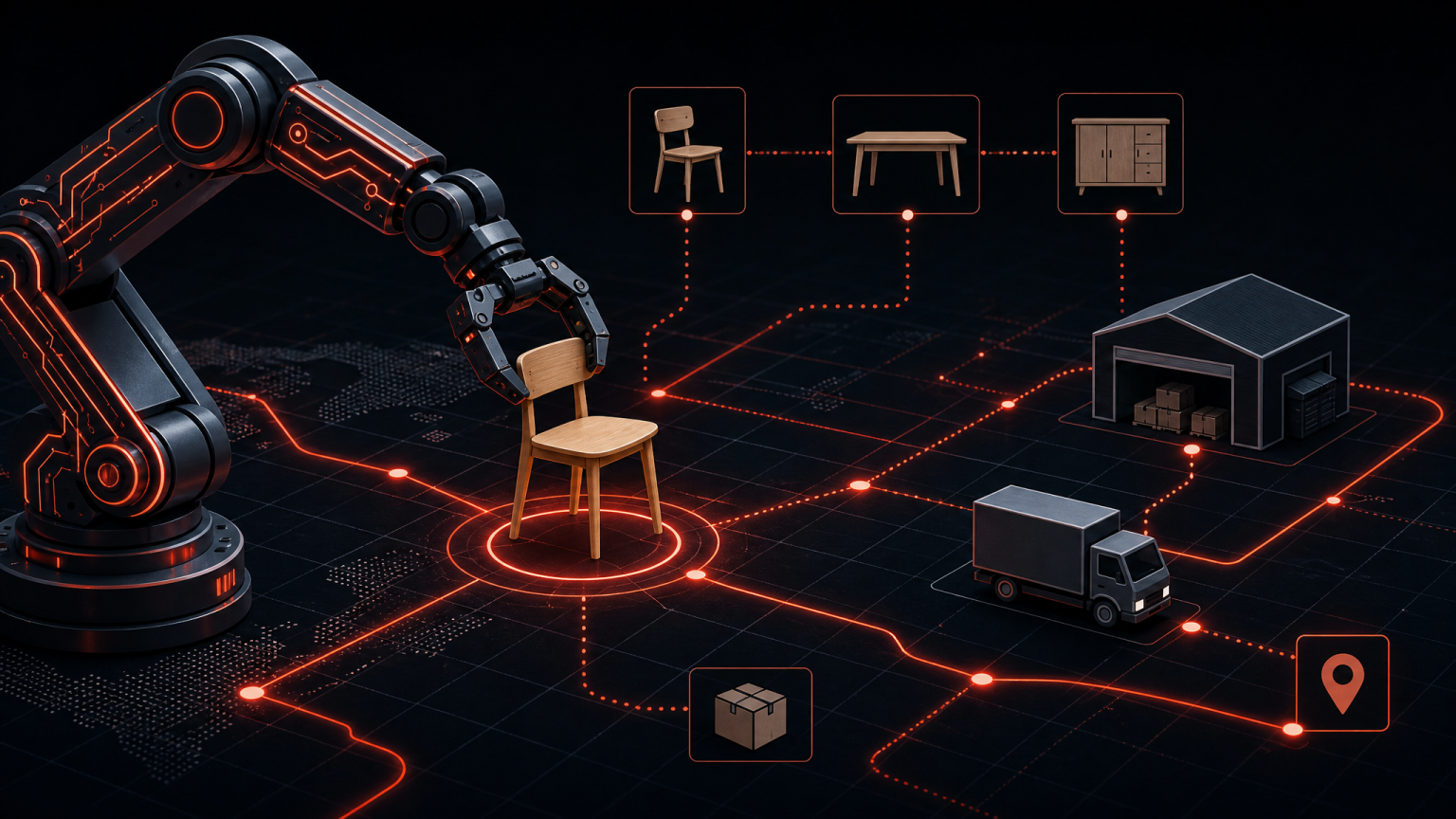
What does AI dropshipping actually look like in practice for furniture? It means automated product data syncing at scale — syncing thousands of SKUs, stock levels, and attributes across Shopify, WooCommerce, Wix and BigCommerce without human touch. It means AI-written product descriptions generated from supplier specs. It means dynamic pricing tools monitoring competitor changes in real time. And it means AI chatbots handling the volume of pre-purchase questions that furniture buyers always generate — dimensions, lead times, returns policies — 24 hours a day.
The counter-argument is worth hearing: AI cannot curate quality, and furniture buyers buy on trust. That is true. A system that can automate 10,000 product listings cannot tell you whether a dining chair will feel solid after three years, or whether a sofa fabric will photograph well for a retailer’s Instagram. Relationships, craftsmanship reputation, and supply chain integrity are not automatable. But this is not an either-or. The suppliers who will win are those who use AI to eliminate the operational drag — data entry, listing creation, pricing maintenance — so their people can focus on the parts that actually require human judgement.
A 2025 Shopify survey of 500 merchants found that businesses earning over £100k are significantly more likely to use AI for process automation and scaling with small teams. The correlation is not accidental. The advantage compounds: faster research leads to better product selection, which leads to better sell-through, which funds better tools.
I have been building Artisan Furniture for over 25 years. The shift to AI-assisted operations is the most significant change in the dropshipping model since the shift to digital in 2016. Suppliers who adapt early will not just be more efficient — they will be structurally harder to compete with. The ones who wait for the dust to settle will find the dust has already settled over them.